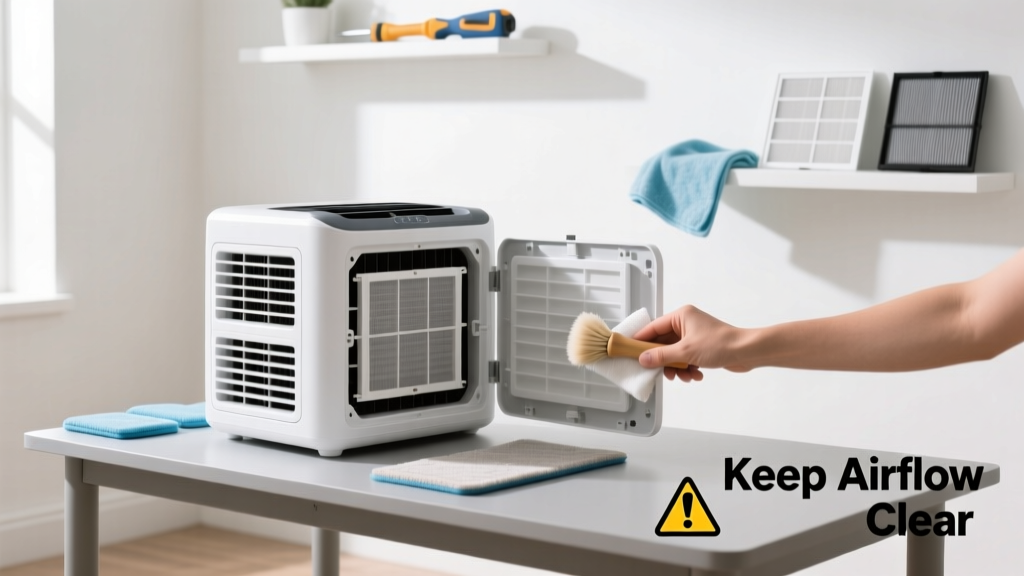
A portable air conditioner that stops cooling isn’t just inconvenient—it’s a red flag that something’s been overlooked. Unlike central systems, portables rely heavily on user maintenance; skip a few simple steps, and efficiency drops fast. According to the U.S. Department of Energy, improperly maintained portable units can lose up to 30% of their cooling capacity within one season—often before owners realize it.
Why This Happens
Most cooling failures stem from avoidable oversights—not faulty units. The top culprits are airflow restriction, heat buildup, and improper setup. Portable ACs exhaust hot air through a single hose (or dual-hose models), and if that path is blocked or poorly sealed, the unit recirculates warm air instead of expelling it. Condensate overflow, dirty filters, and undersized rooms also force the compressor to overwork—or shut down entirely.
- Blocked or kinked exhaust hose (most common cause)
- Clogged air filter (reduces airflow by up to 50% after 2 weeks of use)
- Incorrect window kit installation (lets hot outdoor air leak in)
- Unit placed in direct sunlight or near heat sources like ovens or electronics
- Room size exceeds the unit’s BTU rating (e.g., using a 8,000-BTU unit in a 300 sq ft space with high ceilings and poor insulation)
Maintenance Checklist
| Frequency | Task | Time Required |
|---|---|---|
| Daily | Empty condensate tank (if non-self-evaporating model); check for error codes | 2–3 minutes |
| Weekly | Vacuum or rinse washable air filter; inspect exhaust hose for kinks or dust buildup | 5–7 minutes |
| Monthly | Clean condenser coils with soft brush + coil cleaner; verify window seal integrity | 12–15 minutes |
| Yearly | Have HVAC technician inspect refrigerant levels and electrical connections; replace rubber gasket if cracked | 45–60 minutes |
Warning Signs
Don’t wait for total failure. These early indicators mean your unit is already struggling—and often, the fix takes less than 10 minutes if caught early.
- Warm air blowing from front grille while unit runs
- Constant “CLEAN FILTER” or “E1/E2” error codes on display
- Exhaust hose feels cool or room-temperature (should be hot to touch during operation)
- Condensate tank fills in under 4 hours (suggests excessive humidity or poor ventilation)
- Compressor cycles on/off every 60–90 seconds (short-cycling due to overheating)
Recommended Products
Not all accessories are equal—some actually worsen performance. Stick with these proven solutions:
- Window seal kits with adjustable foam inserts (e.g., Midea Universal Window Kit)—prevents hot air infiltration better than duct tape or cardboard
- Non-toxic coil cleaner sprays (like Nu-Calgon Evap Foam) — dissolves grime without damaging aluminum fins
- Hygrometer + thermometer combo devices (e.g., ThermoPro TP55) — helps verify room conditions match your unit’s specs
- Exhaust hose extenders with insulated double-wall construction — reduces heat transfer back into the room (avoid cheap vinyl-only hoses)
Can I run my portable AC without venting it?
No—never operate it unvented. Doing so turns the unit into a space heater: the condenser rejects heat indoors instead of outside. The U.S. EPA estimates that unvented operation increases indoor humidity by 20–30%, accelerating mold risk and making rooms feel hotter, not cooler.
Why does my portable AC work fine for 2 hours, then stop cooling?
This points to thermal overload protection kicking in. Common triggers include a clogged rear condenser coil, obstructed intake grill, or exhaust hose routed through a hot attic space. Clean the coil and ensure at least 18 inches of clearance around all sides—especially the rear intake.
Does using a dehumidifier help my portable AC cool better?
Yes—but only if humidity is above 60%. Portable ACs remove moisture as part of cooling, and high humidity forces them to run longer cycles. A standalone dehumidifier (like our top-rated basement model) reduces the latent load, letting the AC focus on sensible cooling. Just don’t place both units in the same enclosed space—they’ll fight each other.
Is it normal for the exhaust hose to get hot?
Absolutely—it should reach 110–130°F during operation. If it’s barely warm, check for blockages or reversed airflow. Use an infrared thermometer (like this $25 Fluke model) to confirm. According to the Air-Conditioning, Heating, and Refrigeration Institute’s 2022 Field Service Manual, exhaust temps below 95°F indicate insufficient heat rejection—usually due to restricted airflow or low refrigerant.
How often should I replace the air filter if I use it daily?
Wash reusable filters weekly during peak season. If yours is disposable (rare but exists), replace it every 30 days—even if it looks clean. Dust and pet dander embed deep in fibers, restricting airflow long before visible grime appears.
My portable AC cools fine on low fan speed—but not on high. What’s wrong?
This usually means the evaporator coil is partially frosted or iced over. High fan speeds increase airflow across a cold coil—if drainage is slow or the unit is tilted backward, condensate pools and freezes. Check leveling (use a bubble level), clean the drain path, and verify the unit isn’t set to “dry” mode accidentally.
"Over 68% of portable AC service calls we handled last summer were resolved with a 5-minute filter cleaning and hose repositioning—no parts replaced." — James L., certified HVAC tech at CoolFix Repair Co., 2023 field report
Preventing cooling failure isn’t about perfection—it’s about consistency. Wipe the filter every Sunday. Check the hose seal before turning it on each day. Keep the unit away from curtains and furniture. Small habits compound fast. And when you catch trouble early, you’ll rarely need to call a pro—or sweat through a heatwave waiting for help.