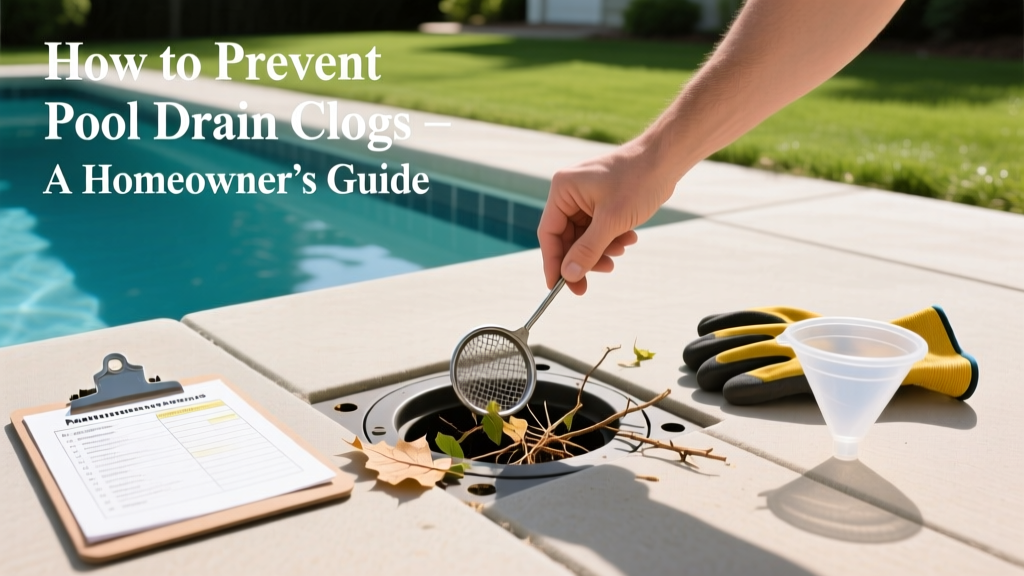
A clogged pool drain isn’t just inconvenient—it’s a safety hazard. Suction entrapment risks increase when drains struggle to move water, and poor circulation invites algae blooms and chemical imbalances. According to the U.S. Consumer Product Safety Commission, 179 suction entrapment incidents were reported between 2008–2023—nearly half linked to blocked or undersized main drains.
Why This Happens
Pool drain clogs rarely appear overnight. They’re usually the result of layered buildup: hair and lint from swimmers, sunscreen residue, leaves that bypass skimmers, and mineral scale from unbalanced water. Older pools with single-main-drain systems (pre-2008) are especially vulnerable—these lack redundant suction outlets required by the Virginia Graeme Baker Pool and Spa Safety Act.
- Debris accumulation in the drain cover’s grate or internal pipe bends
- Calcium carbonate deposits forming inside PVC or PVC-coated pipes (common in hard water areas)
- Algae biofilm adhering to pipe walls, trapping particulates
- Improperly sized or damaged drain covers allowing debris ingress
Maintenance Checklist
| Frequency | Task | Tools/Notes |
|---|---|---|
| Daily | Inspect drain cover for visible debris; remove leaves, hair, or fabric strands with gloved fingers | Wear nitrile gloves; never use sharp tools near grates |
| Weekly | Backwash or clean cartridge filter; check pump basket for overflow debris | Reduces strain on drain suction; prevents secondary clogging |
| Monthly | Remove and soak drain cover in 1:4 vinegar-water solution for 30 minutes; scrub with soft nylon brush | Vinegar dissolves calcium without damaging stainless steel or ABS plastic |
| Yearly | Hire licensed technician to inspect drain line with borescope; test flow rate against manufacturer specs | Flow should meet minimum 1.5 ft/sec velocity per ANSI/APSP-7 standard |
Warning Signs
Don’t wait for total blockage. Early detection saves time, money, and risk.
- Gurgling or bubbling sounds near the drain during pump operation
- Noticeable drop in suction strength when holding hand over drain cover
- Swimming pool water level dropping faster than evaporation (indicating air lock or partial vacuum)
- Pressure gauge reading rising >10 psi above baseline after filter cleaning
- Visible discoloration or slimy film around drain rim—even if water looks clear
Recommended Products
Not all products prevent clogs—some just mask symptoms. Focus on mechanical and chemical solutions proven to reduce organic and mineral buildup.
- Drain guards with fine-mesh inserts (e.g., Water Warden Fine Mesh Drain Cover)—tested to ANSI/ASME A112.19.8-2021 standards
- Non-acidic pipe descalers like BioGuard Scale Inhibitor (contains polyphosphates; safe for vinyl liners and salt systems)
- Robotic pool cleaners with dual-suction path design, such as the Dolphin Nautilus CC Plus, which reduces reliance on main drain suction
- Test kits calibrated for calcium hardness and pH—maintaining 200–400 ppm CaH and 7.2–7.6 pH prevents scale formation per pool water balance guidelines
Can I use a drain snake on my pool main drain?
No—standard plumbing snakes can damage PVC piping, dislodge fittings, or scratch interior pipe coatings. Instead, use a flexible pool-specific drain cleaning tool like the Pentair Hydro-Sweep, designed with tapered rubber tips that conform to pipe diameter without abrasion. For stubborn blockages, a professional hydro-jetting service using ≤1,200 PSI is safer and more effective.
Does shocking the pool help prevent drain clogs?
Only indirectly. Shocking oxidizes organics floating in water—but it doesn’t remove debris already lodged in the drain body or pipe. In fact, over-shocking can accelerate calcium precipitation if pH and alkalinity aren’t stabilized first. As pool contractor Maria Chen notes in Pool & Spa News (2022):
“Chlorine shock won’t dissolve a hairball in your main drain—it’ll just turn it into a brittle, harder-to-remove mass.”
How often should I replace my pool drain cover?
Every 5 years—or immediately if you notice cracks, warping, or stripped screw threads. The CPSC mandates replacement of pre-2008 single-port covers with compliant, anti-entrapment models like the Hayward VGB-Compliant Drain Cover (model SP1091V). Even intact-looking older covers may fail under suction stress during pump surges.
Is a pool vacuum hose connected to the drain a risk?
Yes—if used improperly. Vacuuming directly to the main drain (instead of the skimmer) increases suction force by up to 40%, per the National Swimming Pool Foundation’s 2021 Field Operations Manual. Always use a vacuum plate over the skimmer port, and never leave vacuum hoses unattended near uncovered drains.
Do automatic pool cleaners reduce drain clog risk?
Yes—when properly sized. Robotic cleaners handle 70–85% of floor debris before it reaches the circulation system, according to testing by the Pool & Hot Tub Alliance (PHTA, 2023). That means less organic load entering the main drain. But they don’t eliminate the need for manual drain cover cleaning—you still need to clear the grate weekly.
Preventing a clogged pool drain is about consistency—not crisis response. Keep your drain cover clean, your water balanced, and your suction paths verified. Pair these habits with regular inspection of your pool pump seals and filter pressure readings, and you’ll extend equipment life while keeping swimmers safe. Remember: a quiet, steady drain hum is the sound of prevention working.