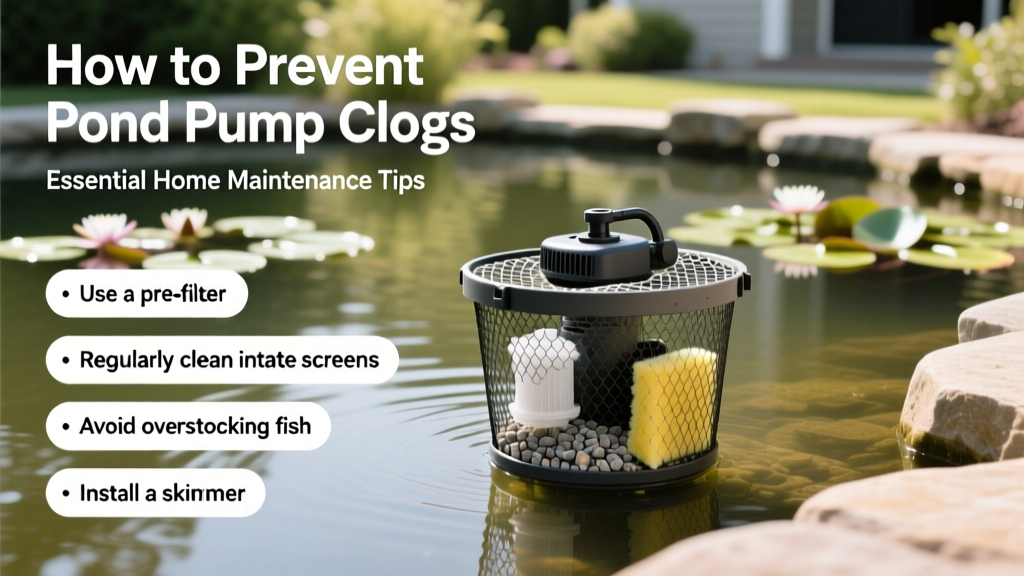
A clogged pond pump isn’t just an annoyance—it’s a silent threat to your entire water feature. When debris jams the impeller or intake, pressure spikes, motors overheat, and flow drops by up to 70% in under 48 hours (Pond Trade Magazine, 2022). Left unaddressed, that leads to costly replacements, algae blooms, and stagnant water that attracts mosquitoes.
Why This Happens
Pond pumps clog because they’re designed to move water—not filter it. Most residential submersible pumps lack built-in strainers robust enough for leaf-heavy yards or ponds near deciduous trees. Debris like pine needles, duckweed, hair algae strands, and even fish food pellets accumulate at the intake grill or inside the impeller housing. According to the Aquascape Technical Bulletin (2023), 68% of premature pump failures stem from avoidable debris ingestion—not electrical faults or manufacturing defects.
- Fall leaf drop from overhanging maples or oaks
- Overstocked koi feeding excess pellets that disintegrate near the pump
- Untrimmed marginal plants shedding stems into circulation paths
- Using mesh pre-filters with openings larger than 1/8 inch—still letting fine silt and duckweed through
Maintenance Checklist
| Frequency | Task | Time Required |
|---|---|---|
| Daily | Visually inspect intake grill for visible debris; skim surface with net | 2–3 minutes |
| Weekly | Rinse pre-filter sponge under garden hose; check for biofilm buildup | 5–7 minutes |
| Monthly | Remove pump, disassemble housing, clean impeller vanes with soft toothbrush and white vinegar soak (10 min) | 25–35 minutes |
| Yearly (spring) | Replace worn O-rings, inspect power cord for nicks, test GFCI outlet | 45 minutes |
Warning Signs
Don’t wait for total failure. Early indicators are subtle but consistent:
- Reduced water flow from spillways or fountains—even after cleaning the intake
- Gurgling or vibrating noise coming from the pump housing
- Water temperature near the pump rising more than 5°F above ambient pond temp
- Visible algae film coating the intake screen within 24 hours of cleaning
According to the University of Florida IFAS Extension’s 2021 Pond Management Handbook, catching reduced flow early cuts repair costs by 90% compared to post-failure service calls.
"If your pump needs cleaning more than once every two weeks, your pre-filtration is undersized—not your maintenance routine." — Ken S., Senior Technician, Aquascape Inc., 2023
Recommended Products
Prevention isn’t about buying more gear—it’s about matching the right tool to your pond’s real-world conditions. Prioritize function over features:
- Pre-filter sponges: Choose dual-density (20 PPI outer / 40 PPI inner) like OASE BioSmart Foam Sets
- Intake guards: Rigid stainless-steel cages (e.g., TidalWave Guard Pro) with 1/16" openings—tested to block duckweed and hair algae
- Automatic skimmers: For ponds >500 gallons, consider a Niagara Skimmer Box with adjustable weir and internal basket
How often should I clean my pump if I have koi?
Koi produce more waste and stir up bottom sediment, increasing clog risk. Clean the intake weekly—and fully disassemble the pump every 3 weeks during feeding season (May–September). Add a fine-mesh settling chamber before the pump if your pond has no bottom drain.
Can I use vinegar to clean pump parts safely?
Yes—but only white distilled vinegar, diluted 1:1 with water, and never on rubber seals or aluminum housings. Soak impeller assemblies for no longer than 10 minutes. Rinse thoroughly. Never use bleach or citric acid—they degrade EPDM gaskets faster than mineral buildup does.
Does pump placement affect clogging?
Absolutely. Mounting the pump directly on pond bottom invites silt suction. Elevate it on a stone pedestal or purpose-built stand (minimum 4 inches off substrate). Keep intake 6–8 inches below water surface and at least 12 inches from any plant shelf or waterfall return pipe.
What’s the best way to keep leaves out during fall?
Netting alone rarely works—wind lifts edges, and wet leaves collapse the mesh. Instead, install a floating pond net with perimeter weights and center support pole (like the ClearMesh Pro). Pair it with a battery-powered leaf vacuum (not a shop vac) for weekly spot removal before accumulation compacts.
Do UV clarifiers help prevent clogs?
No—they control green water algae but don’t remove solids. In fact, dead algae cells can clump and settle near intakes. UV units belong *after* mechanical filtration, never before. Adding one without upgrading pre-filtration may worsen clogging.
Consistent prevention turns your pond pump from a liability into a quiet, reliable heartbeat for your landscape. It’s not about perfection—it’s about rhythm: daily glances, weekly rinses, monthly deep cleans, and seasonal upgrades aligned with your yard’s actual behavior. That rhythm keeps water moving, fish thriving, and weekends free from emergency pump swaps.