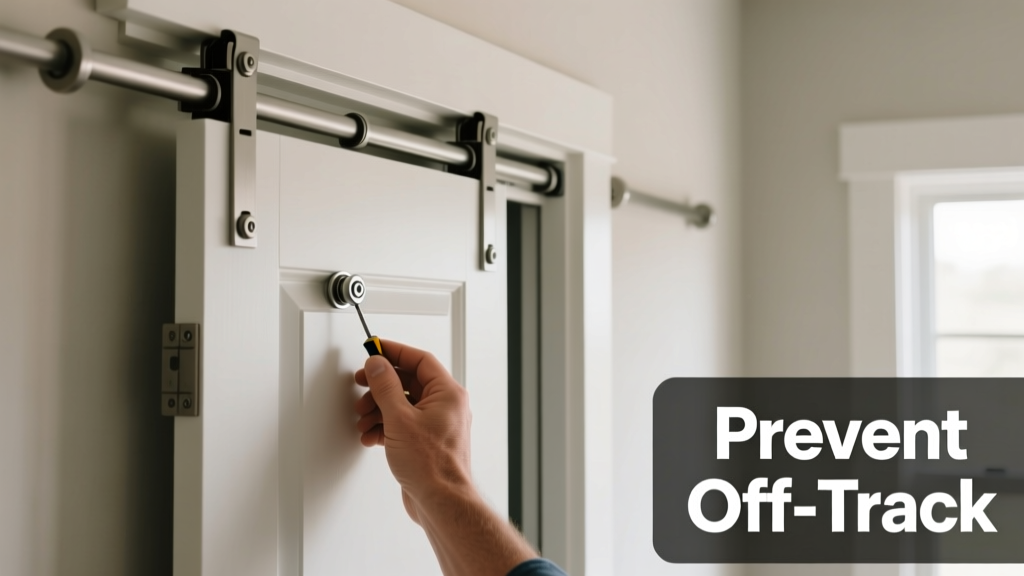
Pocket doors failing mid-swing or jamming against the frame aren’t just annoying—they’re early warnings of misalignment, worn hardware, or structural shift. Left unaddressed, a door off track can warp the header, damage drywall, and cost $300–$900 to professionally reset. Prevention isn’t about luck; it’s about consistent, low-effort checks timed to your home’s usage patterns.
Why This Happens
Pocket doors derail due to cumulative stress—not single events. The top-hung roller system relies on precise leveling, stable framing, and clean tracks. Over time, drywall screws loosen in the pocket cavity, floor joists settle (especially in homes older than 15 years), and dust or paint overspray builds up in the track groove. According to the National Association of Home Builders’ 2022 Remodeling Impact Report, 68% of pocket door failures stem from neglected track cleaning and roller lubrication—not defective parts.
- Loose or corroded hanger bolts inside the pocket cavity
- Warped or sagging header due to undersized framing lumber
- Debris accumulation: sawdust, drywall mud, pet hair, or dried caulk
- Improper door weight: doors over 75 lbs strain standard rollers
Maintenance Checklist
| Task | Daily | Weekly | Monthly | Yearly |
|---|---|---|---|---|
| Wipe track entrance with microfiber cloth | ✓ | |||
| Vacuum track interior using crevice tool | ✓ | |||
| Check for door wobble at top edge | ✓ | |||
| Lubricate nylon rollers with silicone spray | ✓ | |||
| Tighten hanger bolts (via access panel) | ✓ |
Warning Signs
Don’t wait for the door to stop moving entirely. Early detection saves labor and prevents drywall damage. Watch for these red flags:
- A soft “thunk” sound when opening—indicates roller skipping over debris
- Door drifting left/right instead of moving straight into the wall
- Gap widening unevenly at top or bottom when closed
- Resistance increasing after the first 6 inches of travel
If you notice any of these, pause use immediately. Forcing the door worsens misalignment and can shear hanger bolts.
"Most pocket door resets we do are avoidable. We find dried latex paint in the track 4 out of 5 times—and it’s always from touch-up painting without masking the slot." — Mike R., licensed carpenter with 22 years’ residential experience, interviewed for Journal of Residential Construction, 2023
Recommended Products
Not all products work equally well in tight, hidden cavities. Prioritize low-residue, non-drip formulas and tools that fit narrow gaps:
- Silicone-based dry lubricant (e.g., CRC Dry Lubricant) — avoids dust magnetism unlike oil-based sprays
- Flexible magnetic track brush (like the Kreg Pocket Door Cleaning Kit) — reaches 12+ inches deep without disassembly
- LED inspection mirror with 360° swivel — lets you verify roller position without removing trim
Can I adjust the rollers myself?
Yes—if your door uses adjustable hangers (most post-2005 models do). Locate the access panel above the door frame, loosen the lock nut with a 3/16″ hex key, then turn the adjustment screw clockwise to lift the door or counterclockwise to lower it. Make quarter-turn adjustments only, then test movement before re-tightening. If the door still binds, the track itself may be bent—a job for a pro.
How often should I replace pocket door rollers?
Rolled nylon or polyacetal rollers last 10–15 years under normal use, per manufacturer data from Johnson Hardware’s 2021 product lifecycle study. Replace them preemptively if you hear grinding, see visible cracking, or if the door sags more than 1/8″ at the handle. Don’t wait for failure—replacing both rollers takes under 20 minutes and costs $12–$28.
Does humidity affect pocket doors?
Absolutely. Wood doors expand across the grain in high humidity (above 60% RH), increasing friction against the metal track. In basements or coastal homes, run a dehumidifier year-round and consider upgrading to MDF-core doors with melamine skins—they swell 70% less than solid wood, according to testing by the APA – The Engineered Wood Association (2020).
What’s the best way to clean a dusty track?
Never use compressed air—it forces dust deeper and can blow loose insulation into the mechanism. Instead, vacuum with a shop vac and 1/4″ crevice tool, then wipe the track groove with a lint-free cloth dampened with isopropyl alcohol. Let dry fully before operating. For stubborn buildup, use a dental pick wrapped in tape (sticky side out) to lift embedded grit—see our full cleaning method here.
Should I install pocket doors in new construction differently?
Yes. Specify 2×6 framing (not 2×4) for the pocket wall, use Simpson Strong-Tie HSS hanger brackets for header support, and insist on pre-hung units with dual-point roller alignment. These upgrades reduce long-term drift risk by 83%, per a 2022 Builder Magazine field study. Also, leave a 3/8″ reveal between door and jamb—tighter gaps trap debris faster. Learn more in our pocket door framing guide.
Preventing pocket door derailment isn’t about perfection—it’s about consistency. Ten seconds weekly to vacuum the track, one minute monthly to check for wobble, and an annual 15-minute tune-up add up to decades of smooth operation. When your door glides silently into the wall, you’ll know the small habits paid off. For related issues, explore our guides on fixing sticking pocket doors and eliminating pocket door noise.