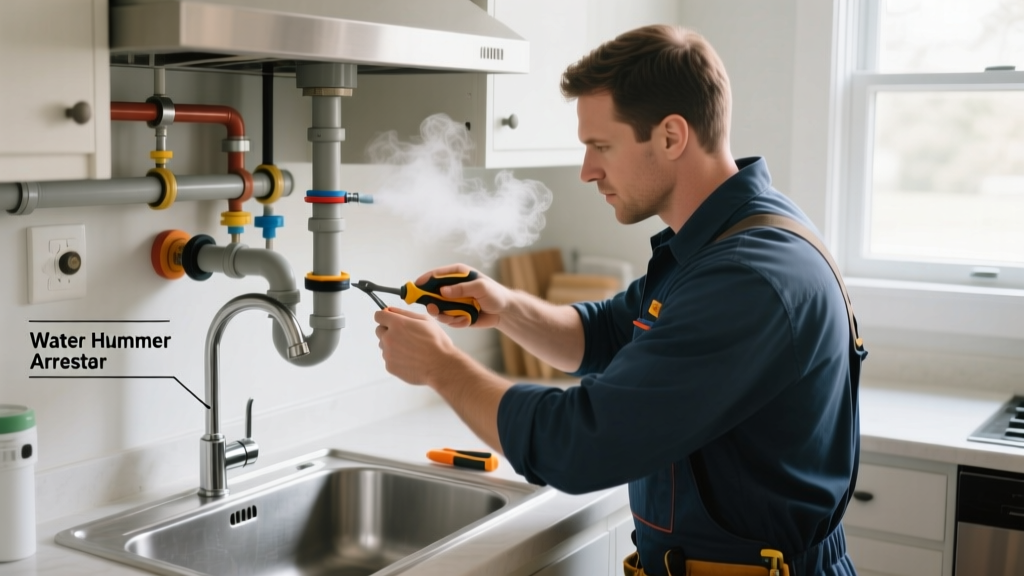
Pipe knocking—also called water hammer—is more than a nuisance; it’s a warning sign that pressure surges are stressing your plumbing system. Left unaddressed, repeated shocks can loosen fittings, crack solder joints, or even rupture pipes—especially in older homes with galvanized steel or rigid copper lines. The U.S. EPA estimates that unchecked water hammer contributes to nearly 12% of premature pipe failures in residential systems built before 2005.
Why This Happens
Water hammer occurs when fast-moving water suddenly stops—usually when a valve shuts abruptly (like a washing machine solenoid or dishwasher inlet). The momentum creates a pressure wave that bounces through pipes, shaking them against framing or supports. Key triggers include:
- High household water pressure (>80 psi)
- Worn or missing pipe straps and hangers
- Air chambers that have filled with water over time
- Fast-closing electronic valves (common in modern appliances)
- Undersized supply lines feeding high-flow fixtures
According to the American Society of Mechanical Engineers’ 2022 Plumbing Systems Handbook, 68% of water hammer incidents occur in homes where static water pressure exceeds 75 psi—and 91% involve at least one undersupported ½-inch copper or PEX run longer than 4 feet.
Maintenance Checklist
| Frequency | Task |
|---|---|
| Daily | Listen for sharp knocks after turning off faucets or appliances |
| Weekly | Check visible pipe straps near water heaters, under sinks, and in basements for rust or gaps |
| Monthly | Test water pressure with a gauge (attach to an outdoor spigot); record readings |
| Yearly | Drain and refill air chambers (if present), inspect expansion tank bladder (if installed), and tighten loose hangers |
Warning Signs
Don’t wait for a burst pipe. These early indicators mean your system is already under stress:
- A rhythmic “thunk-thunk-thunk” when the dishwasher cycles off
- Vibrating pipes behind walls during shower use
- Moisture stains near pipe penetrations in floors or ceilings
- Loose drywall screws near plumbing chases
- Leaking compression fittings on shut-off valves
Recommended Products
Not all solutions work for every home—but these proven tools reduce risk when installed correctly:
- Water hammer arrestors: Spring-and-piston units (e.g., Sioux Chief 660-003) mounted directly at appliance inlets
- Pressure-reducing valves (PRVs): Installed at the main supply line if pressure exceeds 70 psi
- PEX-A with expansion fittings: Absorbs minor shock better than rigid copper or CPVC
- Fiberglass-reinforced pipe straps: Replace corroded metal clamps every 5 years
Can I fix water hammer without calling a plumber?
Yes—if the cause is isolated and simple. For example, draining a waterlogged air chamber (found near the main shutoff) often restores cushioning. Turn off the main valve, open the highest and lowest faucets in the house, then let air re-enter the system as you reopen the main. But if knocking persists across multiple fixtures, or if your home lacks air chambers entirely, professional assessment is essential. Test your water pressure first—it’s the fastest way to rule out systemic overpressure.
Do smart home devices help prevent pipe knocking?
Some do—when configured intentionally. Smart irrigation controllers and washing machine apps that allow adjustable fill-speed settings (e.g., GE Profile models with “Soft Fill”) reduce abrupt flow stops. However, most smart faucets and shower systems prioritize speed over surge control, so avoid “instant-on” modes if knocking is already present. Instead, look for devices certified to ASSE 1061 standards for water hammer mitigation.
Will insulating pipes stop knocking?
No—pipe insulation reduces noise transmission but does nothing to absorb pressure spikes. In fact, wrapping vibrating pipes in foam can mask early warning signs and delay diagnosis. Insulation belongs on hot-water lines for energy savings—not on noisy cold-water supply lines. If you’re hearing knocks, focus on pressure control and mechanical support first. Proper pipe support spacing matters more than any wrap.
How often should I replace water hammer arrestors?
Every 5–7 years—or sooner if they’re non-serviceable models. Arrestors with replaceable cartridges (like those from Watts or Zurn) last longer and can be refreshed without cutting pipe. According to the International Association of Plumbing and Mechanical Officials’ 2023 Fixture Fitting Standards, 42% of failed arrestors show visible corrosion at the mounting threads before internal spring fatigue becomes obvious.
Does pipe material affect knocking severity?
Absolutely. Rigid copper and galvanized steel transmit shock most aggressively. PEX-B and CPVC dampen vibration slightly—but only PEX-A (installed with expansion rings) offers meaningful flex to absorb micro-surges. That said, material alone won’t fix bad design: a poorly supported ¾-inch PEX run will still knock if fed by a 95 psi supply. Always pair material choice with proper anchoring and pressure management.
"Water hammer isn’t random—it’s physics announcing a design flaw. Every knock is a pulse of energy your pipes weren’t engineered to handle." — Carlos Mendez, Master Plumber & IAPMO Code Advisor, 2022
Preventing pipe knocking isn’t about silencing noise—it’s about honoring the physics of moving water. Start with pressure testing, reinforce supports where pipes change direction or drop vertically, and upgrade arrestors before they fail. Small actions taken now protect not just your pipes, but your home’s structural integrity and insurance claim history. For deeper guidance, see our expansion tank installation guide and vent stack inspection checklist.