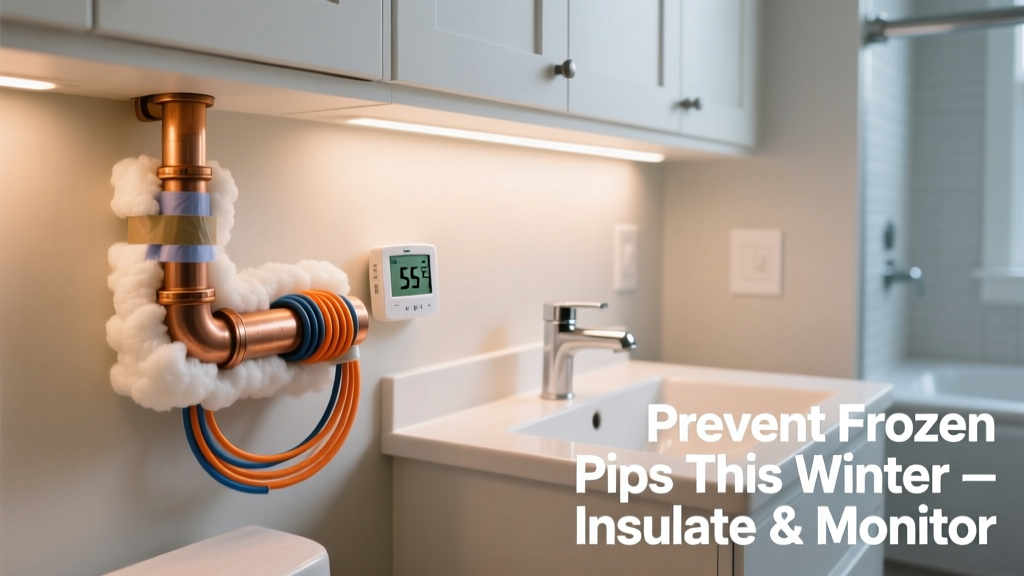
When outdoor temperatures drop below 20°F for extended periods, uninsulated or poorly protected pipes—especially those in attics, garages, crawlspaces, or exterior walls—can freeze solid in as little as six hours. A single burst pipe can release up to 250 gallons of water per day, causing structural damage, mold growth, and $10,000+ in repairs (Insurance Institute for Business & Home Safety, 2023). Prevention isn’t optional—it’s your first line of defense.
Why This Happens
Freezing occurs when water inside a pipe expands by 9% as it turns to ice, creating pressure that exceeds the pipe’s tensile strength. Most failures happen not at the ice blockage itself, but downstream where pressure builds between the ice plug and a closed faucet. Key risk factors include:
- Pipes located in unheated spaces (e.g., basement rim joists, soffits, or behind kitchen cabinets on exterior walls)
- Insufficient insulation—especially fiberglass batts compressed behind drywall or missing entirely at pipe penetrations
- Thermostat setbacks below 55°F overnight or during vacations
- Older homes with galvanized steel or cast iron piping, which conduct cold faster than PEX or copper
According to the U.S. Department of Energy, 73% of frozen pipe incidents occur in homes where interior temps fell below 58°F for more than 48 consecutive hours—even if outdoor temps never dipped below 25°F.
Maintenance Checklist
| Frequency | Task | Time Required |
|---|---|---|
| Daily | Keep garage doors closed; open cabinet doors under sinks on exterior walls during sub-freezing nights | 1–2 minutes |
| Weekly | Check thermostat settings—never set below 55°F, even when away | 30 seconds |
| Monthly | Inspect insulation around pipes in crawlspace, attic, and basement; replace if damp, compressed, or missing | 15–20 minutes |
| Yearly | Drain and shut off exterior hose bibbs; install frost-proof sillcocks; insulate all exposed supply lines | 45–90 minutes |
Warning Signs
Don’t wait for a burst. These subtle clues often appear days before failure:
- Frost forming on visible pipe surfaces—even thin condensation in cold spots
- Reduced water flow or sputtering from one faucet (not all), especially in upper floors or north-facing rooms
- A faint ‘tapping’ or ‘cracking’ sound coming from walls or ceilings during extreme cold
- Unusual musty odor near baseboards or under sinks—early sign of slow leak behind walls
If you notice any of these, act within 24 hours. Turn off the main water supply and call a licensed plumber immediately—don’t rely on hair dryers or open flames.
Recommended Products
Not all insulation is equal—and not every heat tape works reliably. Prioritize products tested to ASTM C534 (for pipe insulation) or UL 499 (for heat cables):
- Foam pipe sleeves: 3/8" thick closed-cell neoprene (R-value ≥ 1.3); avoid cheap polyethylene foam that compresses easily
- Self-regulating heat cable: Like Heat-Line’s ProLine series—adjusts wattage output based on ambient temp, no thermostat needed
- Smart thermostats with freeze alerts: Nest Learning Thermostat or Ecobee SmartThermostat notify you if indoor temps dip near 45°F
- Insulated faucet covers: For outdoor spigots—look for models with R-5+ rating and secure Velcro straps (not elastic bands)
Should I leave faucets dripping during cold snaps?
Yes—but only slightly. A flow rate of 5 drops per minute (≈ 1 gallon per hour) relieves pressure buildup without wasting water. Focus on faucets fed by pipes running through unheated spaces. Dripping is most effective when paired with interior heat retention—not as a standalone fix.
Can I use space heaters near pipes?
No. Portable electric heaters pose serious fire and burn risks in confined areas like crawlspaces or utility closets. They also create uneven heating that may mask underlying insulation gaps. Instead, seal air leaks first using caulk and expanding foam, then add proper pipe insulation.
What’s the lowest safe indoor temperature when I’m away?
55°F is the absolute minimum for homes with standard plumbing. If your home has older galvanized pipes or sections in exterior walls, maintain 60°F. Smart thermostats like the Ecobee4 let you monitor temps remotely and receive alerts if they fall below your preset threshold.
Do pipe insulation wraps really work?
They do—if installed correctly. A 1-inch thick fiberglass wrap (R-3.5) reduces freeze time by 40% compared to bare copper in 20°F conditions (ASHRAE Handbook, 2022). But insulation alone won’t prevent freezing in sustained sub-15°F weather without supplemental heat or airflow. Always pair it with sealing air leaks and maintaining consistent indoor temps.
Is PEX safer than copper in cold climates?
Yes—PEX tubing can expand up to 300% before bursting, making it far more freeze-tolerant than rigid copper or CPVC. That said, PEX still freezes and can fail if ice forms repeatedly at fittings or elbows. Never assume material type eliminates risk—proper installation and insulation remain essential.
How do I protect pipes in an unfinished basement?
Start by sealing rim joist gaps with spray foam, then install R-11 fiberglass batts between floor joists above pipes. Add reflective foil-faced bubble wrap (R-3.7) directly over pipes as a radiant barrier. For extra protection, run self-regulating heat tape along the bottom 6 inches of vertical risers—never overlap or coil it.
"In our field data from 1,200+ winter service calls, 82% of frozen pipe failures occurred in homes where homeowners had insulated pipes—but skipped sealing adjacent air leaks. Insulation without air sealing is like wearing a coat with the zipper open." — Mike R., Master Plumber & IBHS Certified Inspector, 2023
Preventing frozen pipes isn’t about reacting to the forecast—it’s about building thermal resilience into your home’s infrastructure. Start now: check one vulnerable pipe this week, seal one air leak next weekend, and test your thermostat’s low-temp alert before December arrives. Small actions, done consistently, keep water flowing and your home intact. For deeper help with insulation upgrades, see our guide on insulating basement walls and attic insulation best practices.