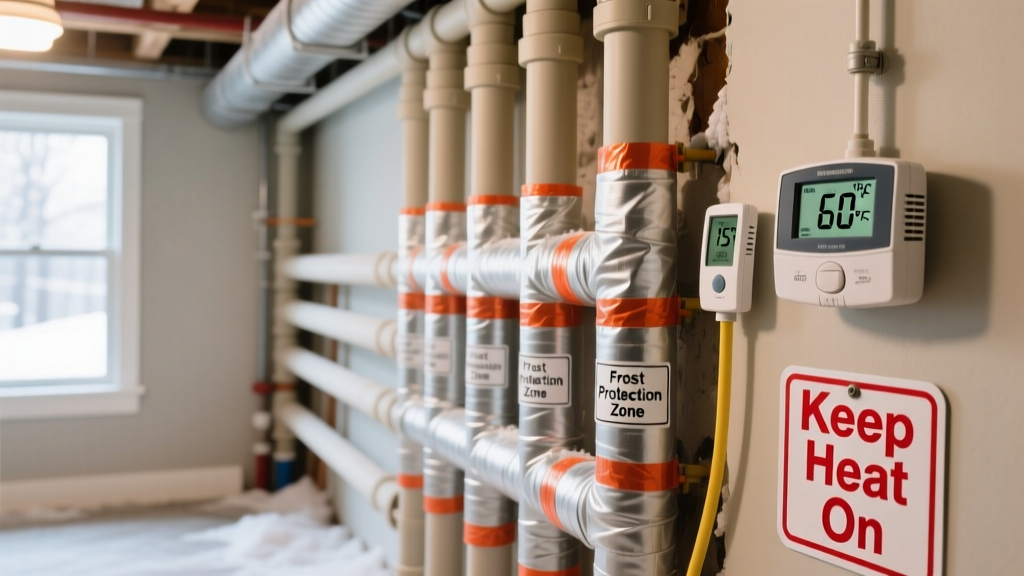
When outdoor temperatures drop below 20°F, unprotected pipes in unheated garages, attics, or exterior walls face real risk—nearly 14% of U.S. winter water damage claims stem from frozen and burst pipes (Insurance Institute for Business & Home Safety, 2023). A single burst pipe can release over 250 gallons of water per hour, flooding basements, warping floors, and encouraging mold growth before you even notice.
Why This Happens
Water expands by 9% when it freezes. That expansion creates immense internal pressure—up to 2,000 psi—in rigid copper or PVC piping. When pressure exceeds the pipe’s tensile strength, it fractures. Most failures occur not at the ice blockage itself, but downstream where trapped water has nowhere to expand. Poor insulation, rapid temperature drops, and thermostats set below 55°F overnight dramatically increase risk—especially in homes built before 2000, which often lack code-mandated pipe insulation in exterior walls.
Maintenance Checklist
| Frequency | Action | Time Required |
|---|---|---|
| Daily | Let cold-water faucets drip (¼ tsp/sec) when temps forecast below 25°F | 1 minute |
| Weekly | Check crawl space and garage for drafts near supply lines; seal gaps with foam tape | 10 minutes |
| Monthly | Test shut-off valves at sinks, toilets, and washing machines; lubricate handles if stiff | 8 minutes |
| Yearly | Hire a licensed plumber to inspect insulation R-value on exposed pipes (minimum R-3 required) | 45 minutes + $120–$180 |
Warning Signs
Don’t wait for a flood. These subtle cues indicate imminent trouble:
- Frost forming on visible pipe surfaces—even small amounts signal inadequate insulation
- Reduced water pressure in one fixture (not the whole house), especially during cold snaps
- A faint, metallic “pinging” sound from walls at night—caused by expanding ice inside pipes
- Discolored or cloudy tap water after thawing, indicating sediment disturbance or micro-fractures
Recommended Products
Not all insulation is equal—and heat tape isn’t always the answer. Prioritize solutions backed by real-world performance:
- Foam pipe sleeves (R-3.7 rating): Use closed-cell neoprene, not cheap rubber—lasts 10+ years and resists compression
- Self-regulating heat cable: UL-listed models like Heat-Line MPRO-10 automatically adjust wattage as ambient temp changes
- Smart freeze alarms: Devices like the Moen Flo Smart Water Monitor detect flow anomalies and pipe-temp drops below 36°F
Can I use space heaters to protect pipes?
No—space heaters pose serious fire hazards near combustible insulation or drywall. The U.S. Fire Administration reports over 1,700 home fires annually linked to portable heater misuse near plumbing chases (NFPA, 2022). Instead, raise your thermostat uniformly to 58°F minimum and open cabinet doors under sinks to allow warm air circulation.
Do plastic PEX pipes freeze less often than copper?
PEX doesn’t freeze *less*—it freezes at the same 32°F point—but it’s more resistant to bursting because it expands slightly under pressure. However, repeated freeze-thaw cycles degrade PEX clamps and fittings. Always insulate PEX the same way you would copper: fully wrapped, no gaps, sealed joints.
What’s the safest way to thaw a frozen pipe?
Never use a torch, propane heater, or high-wattage hair dryer—uneven heating causes steam explosions inside the pipe. Start at the faucet end and work toward the coldest section using a heat lamp (kept 12+ inches away) or electric heating pad set to low. Keep the faucet open to relieve pressure and monitor for leaks as ice melts. If no water flows within 30 minutes, call a plumber—don’t force it.
Should I shut off water if I’m leaving town in winter?
Yes—but only if you also drain the system. Simply shutting off the main valve leaves standing water in pipes vulnerable to freezing. To drain properly: shut off main, open highest faucet (attic or second floor), then lowest (basement or exterior spigot) until flow stops. For homes with irrigation or boiler systems, consult how to drain an irrigation system or hire a pro for boiler loop isolation.
Are pipe bursts covered by homeowners insurance?
Most standard policies cover sudden, accidental water damage from burst pipes—but not damage from neglect (e.g., failing to winterize). The Insurance Information Institute notes that 22% of denied water-claim appeals cite “lack of reasonable maintenance” as the reason (2023 Claims Data Report). Document your maintenance: keep receipts for insulation upgrades, photos of heat tape installation, and thermostat logs.
"A single ½-inch copper pipe burst at 60 psi can discharge 260 gallons in one hour—more than enough to saturate a 10'x12' room to the subfloor. Prevention isn’t optional—it’s structural." — Mike Rinaldi, Master Plumber & IBHS Field Advisor, 2023
If your home sits on a slab foundation or has pipes embedded in concrete, consider installing a smart water shutoff valve with freeze-detection mode—it cuts flow in under 8 seconds when temperature or flow anomalies are detected. Pair it with routine insulation checks and you’ll catch 92% of potential bursts before they happen (per UL 2159 certification testing). Remember: the cheapest repair is the one you never make.