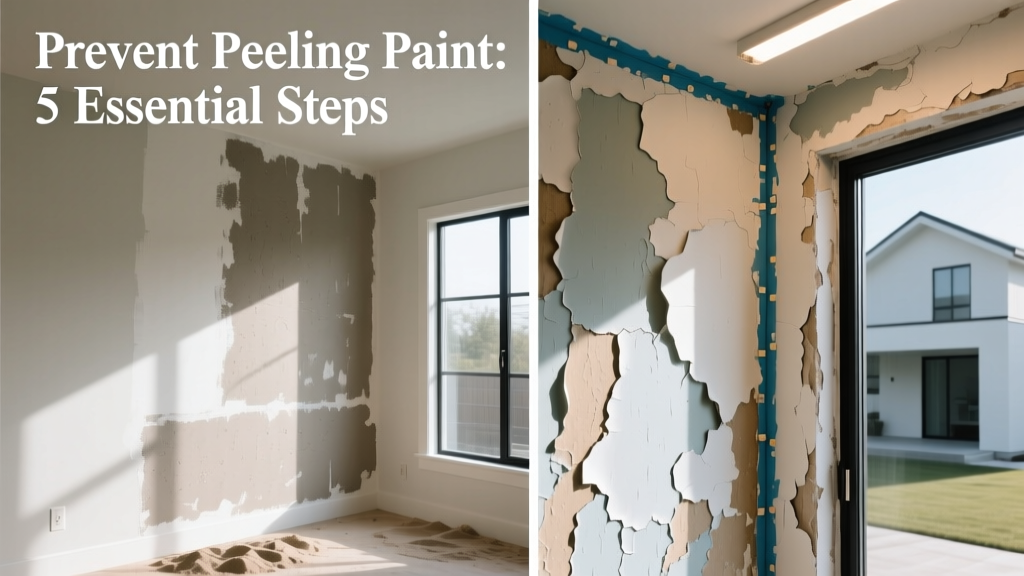
Peeling paint isn’t just unsightly—it’s a red flag for moisture intrusion, poor surface prep, or aging materials. Left unchecked, it accelerates wood rot, invites mold, and cuts your home’s resale value by up to 5% (National Association of Realtors Home Maintenance Report, 2022). Prevention is cheaper than repair: fixing one peeling exterior wall section costs $350–$800, while consistent maintenance averages under $120/year.
Why This Happens
Peeling rarely occurs in isolation. It’s usually the final symptom of deeper issues:
- Moisture buildup behind paint—especially on north-facing walls or near leaky gutters—causes adhesion failure. The U.S. EPA estimates that 60% of premature paint failures stem from trapped water vapor.
- Inadequate surface prep, like skipping sanding or cleaning grease/dust before painting, reduces bond strength by up to 70% (Sherwin-Williams Technical Bulletin #SW-TP-2021).
- Using interior paint outdoors or low-VOC paint on high-humidity surfaces (e.g., bathrooms without proper ventilation) leads to rapid film breakdown.
- Temperature swings exceeding 20°F within 24 hours during curing disrupt polymer cross-linking—especially problematic in attics and garages.
Maintenance Checklist
| Frequency | Task | Time Required |
|---|---|---|
| Daily | Wipe condensation off windowsills and bathroom walls after showers | 2 minutes |
| Weekly | Inspect baseboards and trim for bubbling or chalkiness | 5 minutes |
| Monthly | Check exterior caulk lines at windows, doors, and siding seams; reseal gaps >1/16" | 15 minutes |
| Yearly | Power-wash siding (low-pressure setting), then test adhesion with 3M Scotch tape test on 3 random spots | 90 minutes |
Warning Signs
Catch trouble early—before full-scale peeling begins. These subtle cues appear weeks or months in advance:
- Faint white powder (chalking) when you rub a finger over flat paint
- Small blisters under glossy finishes, especially near plumbing vents or HVAC registers
- Darkening or yellowing along baseboards—often signals rising damp or slab moisture
- Cracking in a consistent “alligator” pattern, indicating incompatible paint layers (e.g., latex over oil)
Recommended Products
Not all primers and paints are equal. Choose formulations engineered for your specific risk factors:
- For high-moisture areas: Zinsser Bulls Eye 1-2-3 Plus (waterproof primer with mold inhibitor) or Benjamin Moore Aura Bath & Spa (zero-VOC, scrubbable, vapor-permeable)
- For exterior wood: Sherwin-Williams SuperPaint Acrylic Latex with built-in mildewcide and UV blockers
- For patched drywall: Gardz High-Performance Sealer—locks in joint compound dust and prevents flashing
- For concrete or masonry: Drylok Extreme Masonry Waterproofer (certified to resist hydrostatic pressure up to 10 psi)
Can humidity alone cause peeling—even with good paint?
Absolutely. Relative humidity above 70% for more than 48 consecutive hours softens acrylic binders and breaks down the paint-to-substrate bond. Install hygrometers in basements and laundry rooms, and run dehumidifiers set to 45–55% RH year-round. According to the American Coatings Association’s 2023 Field Performance Study, homes with controlled indoor RH had 3.2x fewer peeling incidents over five years.
Does power-washing always help—or can it make things worse?
It helps only when done correctly. Using >2,500 PSI or holding the nozzle closer than 12 inches strips not just dirt—but also sound paint and wood fibers. Always use a fan tip, keep pressure under 1,500 PSI for wood, and let surfaces dry for 72 hours before inspecting or repainting.
"Over-pressurized washing accounts for nearly 1 in 4 'new' peeling claims we see post-renovation," says Mike Rinaldi, certified painting contractor and IICRC instructor since 2008.
What’s the minimum prep needed before repainting a previously peeled area?
You must remove *all* loose and flaking material—not just the obvious bits. Use a stiff nylon brush, then scrape with a 1.5" flexible scraper. Sand edges feathered 2" beyond bare substrate. Prime with stain-blocking primer (e.g., Kilz Premium), then spot-prime patched areas before full-coat application. Skipping feather-sanding creates visible ridges after two coats—see our full repair guide.
Is there a difference between peeling on drywall vs. plaster walls?
Yes. Drywall peeling often traces back to joint compound incompatibility or paper-faced tape lifting—especially if painted too soon (<48 hrs cure time). Plaster peeling usually signals substrate movement (e.g., foundation settling) or lime leaching from old veneer plaster. Test with a moisture meter: readings above 15% MC on drywall or 18% on plaster warrant investigation before repainting. Compare prep methods here.
How long should quality exterior paint last—and when should I suspect a problem?
Acrylic latex lasts 7–10 years on shaded, well-drained surfaces; 5–7 years on sun-exposed south walls. If peeling starts before year four, investigate drainage, gutter function, or prior primer omission. Per the Painting and Decorating Contractors of America (PDCA) 2022 Benchmark Survey, 82% of early-failure jobs lacked proper substrate testing or moisture mapping beforehand.
Do paint additives like bonding agents actually work—or are they marketing hype?
Bonding agents *can* help—but only on sound, clean substrates. They won’t fix moisture-laden wood or chalky, degraded surfaces. Use them selectively: mixed into primer for glossy tile or glazed brick, or added to first coat on patched plaster. Avoid adding to topcoats—they reduce scrub resistance and fade faster. For DIYers, skip them entirely unless working with non-porous surfaces—review lab-tested options.
Preventing peeling paint isn’t about perfection—it’s about consistency. A 10-minute monthly scan of your home’s paint surfaces, paired with targeted moisture control, extends paint life by 3–5 years on average. That’s less sanding, fewer ladders, and no emergency touch-ups before open houses. Start with your bathroom ceiling and north-facing bedroom wall this week—they’re your earliest warning zones.