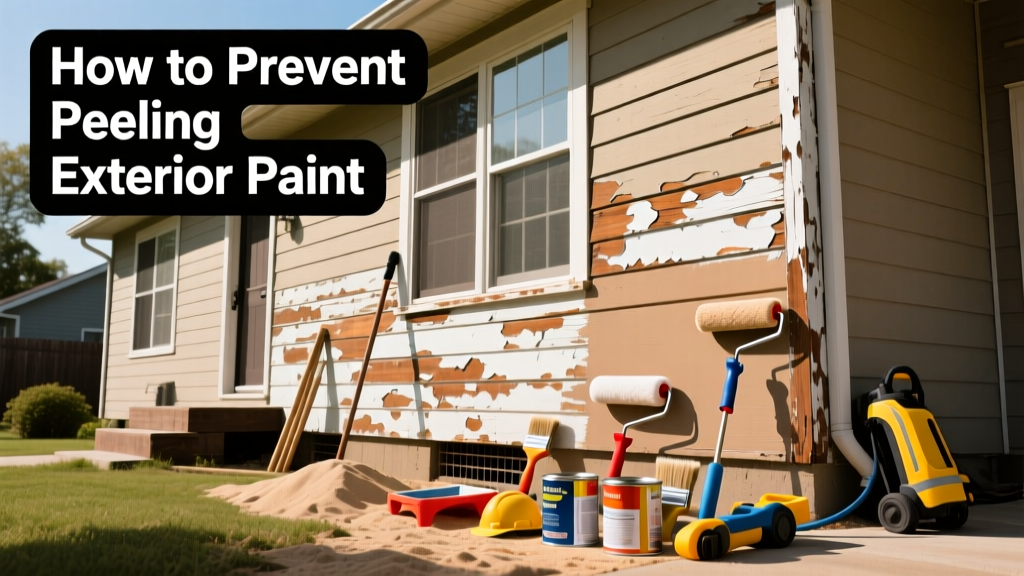
Peeling exterior paint isn’t just an eyesore—it’s your home’s first line of defense failing. When paint lifts, moisture sneaks into wood, stucco, or siding, accelerating rot, mold, and structural decay. Left unchecked, a $200 touch-up becomes a $4,000 siding replacement.
Why This Happens
Peeling rarely starts with bad paint—it starts with poor preparation or environmental stress. Moisture infiltration is the top culprit: trapped water beneath the film breaks the bond between paint and substrate. According to the U.S. Department of Housing and Urban Development’s Residential Exterior Maintenance Guide (2022), 68% of premature paint failure traces back to inadequate surface drying before application or insufficient priming of bare wood or masonry.
- High humidity during painting (above 85%) prevents proper curing
- Using interior-grade paint outdoors—especially on trim or doors
- Skipping primer on patched areas or new cedar/redwood siding
- Alkaline efflorescence on stucco or concrete block lifting acrylic films
Maintenance Checklist
| Frequency | Task | Time Required |
|---|---|---|
| Daily | Wipe down painted door frames after heavy rain to prevent water pooling | 2 minutes |
| Weekly | Inspect gutters and downspouts for clogs near painted soffits or fascia | 5 minutes |
| Monthly | Check for chalking or powder residue when rubbing painted surfaces with gloved hand | 10 minutes |
| Yearly | Power-wash walls at 1,200 PSI max; rinse vertically to avoid forcing water behind lap joints | 2–3 hours |
Warning Signs
Catch trouble early—before blisters swell or edges curl. The earliest indicators aren’t dramatic, but they’re consistent:
- Faint white chalkiness when wiping a south-facing wall with a dark cloth
- Small, hairline cracks radiating from nail heads or corner joints
- Soft, spongy feel under light pressure on wood clapboard or shingle siding
- Discoloration streaks below windowsills or above garage doors (sign of chronic moisture exposure)
Recommended Products
Not all paints and prep products deliver equal protection. Prioritize formulations engineered for your climate and substrate:
- 100% acrylic latex (e.g., Sherwin-Williams Duration Home or Benjamin Moore Aura Exterior) — flexible enough to bridge micro-movements without cracking
- Alkali-resistant primer for stucco, concrete, or CMU (e.g., Zinsser Bulls Eye 1-2-3 Plus)
- Oil-based primer for bare cedar or redwood (e.g., Kilz Original) to block tannin bleed
- Micro-ventilated caulk like Sashco Big Stretch for expansion joints—lets moisture escape without shrinking
Can I repaint over peeling paint?
No—painting over loose film guarantees failure within 6–12 months. You must remove all compromised layers down to sound substrate using a stiff brush, scraper, or low-pressure abrasive (never sandblast fiber-cement or older lead-paint surfaces). Then prime bare spots before applying full coats. Skipping this step wastes labor and materials—and violates ASTM D7234 adhesion standards for field-applied coatings.
Does pressure washing cause peeling?
Yes—if done incorrectly. Using >2,000 PSI or holding the wand closer than 12 inches fractures paint edges and drives water behind siding seams. The exterior power washing safety guide recommends fan tips, 1,200–1,500 PSI, and rinsing from bottom to top on vertical surfaces to avoid trapping runoff.
How long should quality exterior paint last?
In most U.S. climates, properly applied 100% acrylic lasts 7–10 years on walls and 5–7 years on high-wear zones like doors, railings, and trim. A 2023 study by the Paint Quality Institute found homes repainted every 8 years had 42% fewer moisture-related repairs than those waiting 12+ years.
Is elastomeric paint worth it for stucco?
Only if your stucco has hairline cracks and you’ve confirmed no underlying moisture intrusion. Elastomerics seal surfaces—but trap vapor if applied over damp substrates. They also yellow faster in direct sun. For most homes, high-build 100% acrylic (like Behr Marquee) delivers better UV resistance and breathability without the cost premium.
What’s the best time of year to paint exterior surfaces?
Air temperature between 50°F–90°F and surface temperature within 15°F of ambient is ideal. Avoid painting when dew forms overnight—condensation under fresh paint causes blistering. Spring and early fall provide the most stable conditions across most zones. The exterior painting timing guide includes regional charts showing optimal 3-week windows for 12 metro areas.
"If you skip cleaning and priming, no paint—no matter the price—will stick longer than three seasons. Surface prep isn’t 30% of the job. It’s 70%." — Carlos Mendez, 28-year exterior painting contractor and NAHB Certified Remodeler (2024)
Preventing peeling isn’t about perfection—it’s about consistency. A 10-minute monthly scan, one thorough clean per year, and choosing the right product for your walls’ material and exposure will keep your home sealed, protected, and looking sharp for years. Don’t wait for the first flake—start today with a walk-around inspection and note anything soft, chalky, or discolored. That small habit pays off in durability, curb appeal, and real dollars saved.