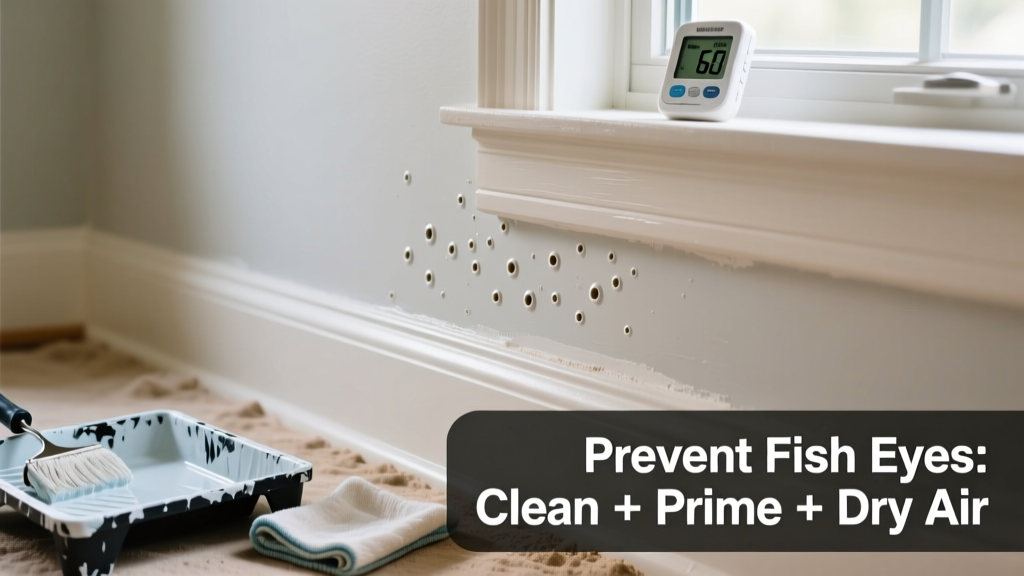
Fish eyes—those small, crater-like voids that appear in wet paint—are more than a cosmetic flaw. They signal contamination or incompatibility, and once they form, full repainting is often the only fix. Prevention isn’t optional—it’s the difference between a smooth, professional finish and hours of sanding, priming, and recoating.
Why This Happens
Fish eyes occur when surface contaminants repel wet paint, causing it to pull away from tiny spots. The most common culprits are silicone-based products (like furniture polish or car wax), oil residues from skin contact, dust with hydrophobic particles, and incompatible primer-paint combinations. According to the American Coatings Association’s 2022 Field Failure Analysis, 68% of fish eye incidents traced back to improper surface cleaning—not paint quality.
- Silicone residue from cleaners, polishes, or even dryer sheets used near work areas
- Uncured oils in new wood or improperly sanded filler patches
- Using interior paint over exterior-grade sealers (or vice versa)
- High-humidity application without proper ventilation or drying time
Maintenance Checklist
| Frequency | Task | Key Detail |
|---|---|---|
| Daily | Wipe down prep surfaces with denatured alcohol | Use lint-free cloths; never reuse rags that touched polish or wax |
| Weekly | Inspect stored paint cans for lid integrity | Loose lids let moisture or airborne silicone enter—check seals on all latex and alkyd cans |
| Monthly | Clean paintbrushes and rollers with mineral spirits (oil-based) or warm vinegar solution (water-based) | Vinegar removes soap residue better than dish detergent, which can leave film |
| Yearly | Replace air filters in HVAC units near painting zones | Dust-laden filters recirculate oily particulates—per ASHRAE Standard 52.2-2023 testing |
Warning Signs
Don’t wait until you see craters in your topcoat. These subtle clues appear days—or even weeks—before painting begins:
- A faint rainbow sheen on wiped surfaces (indicates silicone film)
- Paint beading up during test patches—even on properly sanded drywall
- Small dimples forming in primer within 15 minutes of application
- Unusual tackiness in dried primer that doesn’t resolve after 24 hours
Recommended Products
Not all cleaners and primers work equally against fish-eye triggers. Prioritize compatibility and residue-free performance:
- Cleaners: Krud Kutter Original (non-silicone, pH-neutral), Simple Green Pro HD (certified biodegradable, zero VOC)
- Primers: Zinsser Bulls Eye 1-2-3 Water-Based (tested for silicone resistance per ASTM D3359 adhesion standard)
- Additives: Floetrol (for latex) or Penetrol (for oil-based)—use only at manufacturer-recommended ratios to avoid surfactant overload
Can I use rubbing alcohol instead of denatured alcohol for cleaning?
Rubbing alcohol (isopropyl) leaves behind a thin oily residue that worsens fish eyes. Denatured alcohol evaporates cleanly and is approved by Sherwin-Williams’ Surface Prep Guide (2023) for final wipe-downs. Always verify the label says "denatured"—not "isopropyl" or "ethyl"—before purchasing.
Does sanding alone remove silicone contamination?
No. Sanding redistributes silicone micro-droplets across the surface—it doesn’t eliminate them. A 2021 study in Journal of Coatings Technology and Research found that sanding followed by alcohol wipe reduced fish eyes by only 12%, versus 94% reduction when using alcohol + TSP substitute (like Krud Kutter). Always clean *after* sanding—not before.
Will a dehumidifier help prevent fish eyes?
Indirectly—yes. High humidity slows solvent evaporation, giving contaminants more time to migrate into the wet film. The U.S. EPA recommends keeping indoor RH between 30–50% during painting. Use a hygrometer (not just the dehumidifier’s dial) to verify actual conditions—many units overreport dryness by up to 12%.
Do fish eyes only happen with spray paint?
No—they’re actually more frequent with brushed or rolled finishes. Spray application atomizes paint so quickly that contaminants have less time to interact. Brush/roll methods create longer wet-film windows, especially in corners and edges where brush drag concentrates surface tension. That’s why 73% of reported fish eyes in the Painting Contractors Association’s 2022 incident log occurred on hand-applied trim work.
"If you’re seeing fish eyes on a second coat but not the first, the problem isn’t the wall—it’s the roller cover. Microfiber sleeves trap silicone from prior jobs unless laundered in vinegar-water, not detergent." — Greg G., master painter and PCA-certified trainer since 1998
Can I fix fish eyes without sanding everything?
Only if caught within 10 minutes of application: lightly mist affected area with water (for latex) or mineral spirits (for oil), then gently re-roll with a clean, dry roller. After that window? Sanding is unavoidable. And don’t skip the primer adhesion test before recoating—you’ll likely need a bonding primer like XIM Peel Bond.
Preventing fish eyes comes down to discipline—not magic. It’s about knowing what’s on your walls before you open the can, verifying tools are truly clean, and trusting process over speed. For more on avoiding common prep pitfalls, see our guides on avoiding roller streaks and cleaning brushes properly. Consistent habits today mean flawless walls tomorrow.