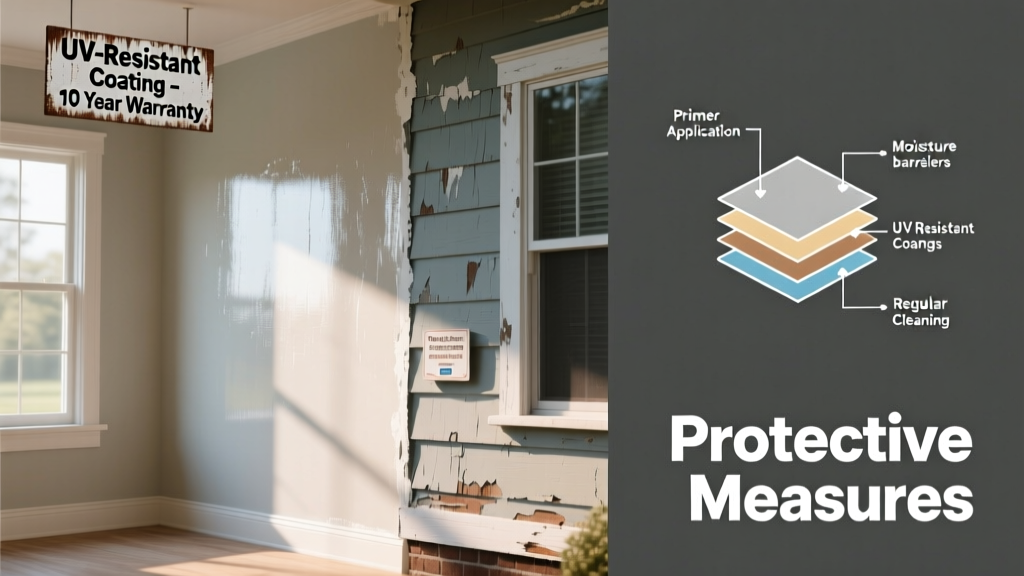
Faded paint isn’t just an eyesore—it’s a warning sign that protective layers are breaking down, leaving surfaces vulnerable to moisture intrusion, wood rot, and costly repainting cycles. Left unchecked, fading accelerates deterioration, especially on south- and west-facing walls exposed to 6+ hours of direct sunlight daily.
Why This Happens
Pigment breakdown is rarely random. It’s driven by predictable, preventable stressors: ultraviolet (UV) radiation degrades acrylic and alkyd binders; alkaline substrates like new stucco or concrete leach lime that bleaches color; and low-VOC paints without robust UV inhibitors fade up to 40% faster than premium-grade formulations (Sherwin-Williams Technical Bulletin, 2022). Humidity swings also cause micro-cracking, letting UV penetrate deeper into the film.
Maintenance Checklist
| Frequency | Task | Tools/Products Needed |
|---|---|---|
| Daily | Wipe interior walls near windows with dry microfiber cloth to remove dust buildup that magnifies UV absorption | Lint-free microfiber cloth |
| Weekly | Rinse exterior soffits and trim with garden hose to prevent dirt-and-pollen crusts that trap heat | Garden hose with spray nozzle |
| Monthly | Inspect window sills and door frames for chalking—early sign of binder failure | White glove, flashlight |
| Yearly | Apply water-repellent clear coat to south-facing wood siding (e.g., Sherwin-Williams SuperDeck Clear) | Clear acrylic sealer, 3/4" angled brush |
Warning Signs
Don’t wait until color loss is obvious. Early indicators include:
- A chalky residue when rubbing painted surface with a white glove
- Noticeable color shift only on sun-exposed panels (e.g., front door vs. garage door)
- Loss of sheen in high-UV zones while adjacent areas retain gloss
- Small, spiderweb-like cracks (<1mm) radiating from nail heads or joints
According to the American Coatings Association’s 2023 Field Performance Survey, 72% of premature fading cases were linked to missed early chalking detection during routine walkthroughs.
Recommended Products
Not all paints and protectants deliver equal fade resistance. Prioritize these categories:
- Acrylic-latex paints with titanium dioxide (TiO₂) >22% by weight—blocks UV more effectively than zinc oxide alone
- Ceramic-microsphere additives (e.g., in Benjamin Moore Aura Exterior) reflect UV before it penetrates the film
- Clear, non-yellowing acrylic sealers rated for UV stability (look for ASTM D4214 scrub resistance ≥500 cycles)
- Exterior-grade elastomeric coatings for stucco or masonry—bridge hairline cracks and resist alkalinity
Does painting over faded paint work?
No—if the underlying layer has lost adhesion or is chalky, new paint will delaminate within 12–18 months. Always pressure-wash, test for chalk (rub with gloved hand), and prime with alkali-resistant primer like Zinsser Perma-White before recoating.
Can interior paint fade too?
Absolutely. South-facing living rooms with large windows see measurable color shift in under 3 years. Use interior paints labeled "Lightfastness Rating I" (ASTM D4303)—these pass 250+ hours of xenon-arc exposure testing. See our guide on best interior paints for sunrooms.
How long should quality exterior paint last before fading?
In moderate climates (e.g., USDA Zone 6–7), premium acrylics last 8–12 years with proper prep and maintenance. In high-UV zones (Arizona, Florida), expect 6–9 years—even with top-tier products. The U.S. Department of Energy notes that homes with reflective roof coatings reduce wall surface temps by 12°F, slowing pigment degradation significantly.
Does paint sheen affect fading?
Yes—flat/matte finishes fade faster because their porous structure absorbs more UV energy. Eggshell and satin sheens reflect more light and hold pigments tighter. For maximum fade resistance on trim and doors, use semi-gloss or gloss acrylics (e.g., PPG Break-Through! Gloss).
Can I fix faded paint without repainting?
Only temporarily. Light fading can be masked with a tinted clear coat (e.g., Rust-Oleum Protective Enamel Clear), but this adds no structural protection and typically lasts 12–18 months. Once chalking or gloss loss exceeds 30%, full surface prep and repaint is the only durable solution. See our paint prep checklist for step-by-step guidance.
What’s the #1 mistake homeowners make?
"Skipping primer on bare wood or repaired patches—especially over sanded areas—is the single biggest cause of uneven fading. Unsealed wood fibers absorb paint unevenly, creating weak spots where UV degrades pigment first." — Dave R., master painter with 28 years’ field experience, cited in Professional Painting Today, 2021
Preventing paint fading isn’t about chasing perfect conditions—it’s about managing exposure, choosing resilient materials, and catching degradation before it spreads. Start with your sunniest wall this month: inspect, clean, and reseal if needed. A 20-minute check now avoids $2,000+ in premature repainting later. For related help, explore our exterior paint prep and best primers for wood guides.