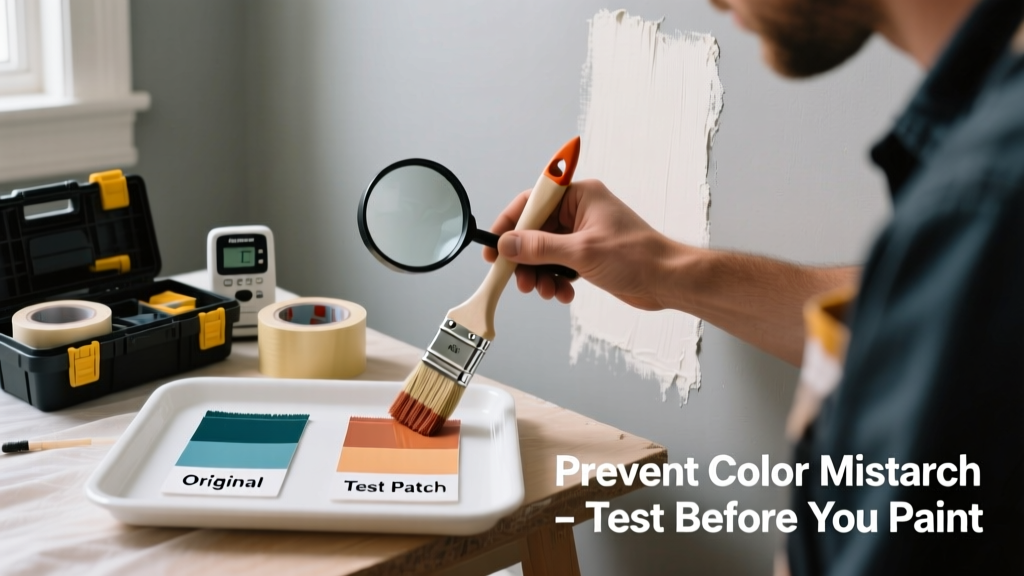
Paint color mismatch isn’t just an eyesore—it’s a symptom of overlooked environmental exposure, inconsistent product sourcing, or poor documentation. A single wall that looks washed out next to its neighbor can cost $300–$600 to correct, according to HomeAdvisor’s 2023 Renovation Cost Report. Worse, mismatched trim or ceilings often trigger full-room repaints when early intervention could’ve avoided them entirely.
Why This Happens
Three main culprits drive paint color mismatch: UV exposure, chemical degradation, and manufacturing variance. Sunlight breaks down chromophores in acrylic and alkyd paints—especially on south- and west-facing walls—causing yellowing or dulling within 18–24 months (American Coatings Association, 2022). Interior lighting also plays a role: LED bulbs with high CRI (90+) reveal subtle undertones that incandescent or cool-white LEDs mask, making the same paint look warmer or cooler depending on fixture type.
Batch variation is another silent factor. Even with identical product codes, pigment dispersion differences between production runs can shift hue by up to ΔE 1.5—a visible difference to the trained eye (ASTM D2244-20 standard). That’s why keeping original paint cans—even empty ones—is critical for touch-ups.
Maintenance Checklist
| Frequency | Task | Notes |
|---|---|---|
| Daily | Rotate window coverings to distribute UV exposure evenly across walls | Use blackout liners on east/west windows during peak sun hours (10 a.m.–4 p.m.) |
| Weekly | Wipe dust from walls with microfiber cloth (no cleaners) | Dust buildup scatters light and exaggerates perceived color shifts |
| Monthly | Compare wall sections under consistent lighting (same bulb, same time of day) | Use a north-facing room as baseline reference |
| Yearly | Test one square foot of suspect area with fresh paint from original batch | If match is off, contact manufacturer for batch records before ordering new |
Warning Signs
Early detection prevents cascading corrections. Watch for:
- A chalky or powdery film on walls (sign of UV-induced binder breakdown)
- Noticeable warmth shift near windows vs. interior walls (e.g., beige turning peachy)
- Sheen inconsistency—flat paint developing unintended eggshell appearance due to oxidation
- Discoloration along baseboards where cleaning solutions have splashed repeatedly
These aren’t just cosmetic—they signal accelerated aging. According to the U.S. Department of Energy, walls exposed to >300 foot-candles of direct sunlight degrade 3.2× faster than shaded surfaces.
Recommended Products
Not all paints or accessories are equal when consistency matters. Prioritize these:
- UV-resistant interior paints: Look for “exterior-grade” acrylics labeled for interior use (e.g., Benjamin Moore Aura® Exterior Interior or Sherwin-Williams Duration Home®)
- Light-stable pigments: Iron oxides and titanium dioxide hold up better than organic reds and violets—ask your supplier for pigment composition sheets
- Color-matching tools: Use a handheld spectrophotometer like the X-Rite ColorChecker Passport Photo for spot verification (not phone apps—they lack calibration)
- Batch-tracking labels: Apply paint storage tags with batch number, date opened, and room location to every can
Can I trust my phone’s camera to match paint colors?
No. Phone cameras auto-correct white balance and compress color data—introducing up to ΔE 4.7 error (Pantone Color Institute, 2023). That’s enough to mistake a soft sage for dusty olive. Always verify with physical swatches under the same lighting conditions where the paint will live. Keep a dated swatch log pinned to your utility closet door.
What if I lost the original paint can and batch number?
Contact the retailer first—they often retain batch logs for 24 months. If that fails, scrape a 1/4″ chip from an inconspicuous area (behind a door jamb or inside a closet) and bring it to a certified paint lab. Most major brands offer free spectral analysis if you’re buying 1+ gallons of replacement. Don’t rely on store-matched samples without side-by-side dry-down testing.
Does humidity affect paint color consistency over time?
Yes—especially in basements and bathrooms. High RH (>60%) accelerates hydrolysis of acrylic binders, causing subtle graying or yellowing in whites and pastels. The EPA recommends maintaining indoor RH between 30–50% year-round using a dehumidifier with a built-in hygrometer. In humid zones, specify paints with added mildewcide and hydrophobic resins like PPG Diamond Interior.
How often should I replace interior light bulbs to avoid color perception issues?
Every 12–18 months—even if they still glow. LED output degrades unevenly: blue diodes dim faster than red, shifting CCT (correlated color temperature) upward by 200K over time. That makes warm whites appear cooler, throwing off your perception of wall color. Replace all bulbs in a room simultaneously and choose ones with CRI ≥90 and R9 ≥50 for accurate red rendering.
"We see at least two jobs per week where clients repainted entire rooms because they misdiagnosed lighting shift as paint failure. Document your bulbs, windows, and wall orientation—it’s cheaper than a gallon of custom-matched paint." — Maria Chen, Lead Color Consultant, Farrow & Ball North America, 2024
Should I repaint all walls at once, even if only one looks off?
Only if the mismatch exceeds ΔE 2.0 across multiple viewing angles and lighting conditions. Otherwise, targeted touch-ups with original-batch paint applied using a mini-roller (not brush) and feathered into adjacent areas preserve value and reduce VOC exposure. For best results, lightly sand and prime the repair zone first—especially over flat finishes, which absorb touch-up coats differently.
Preventing paint color mismatch is less about perfection and more about consistency: consistent lighting, consistent documentation, and consistent maintenance. Small habits—like rotating art prints, logging bulb changes, and saving batch numbers—add up to walls that look cohesive for a decade, not three years. And when you do need a refresh, knowing exactly what you’re matching means fewer trips to the hardware store and more confidence in your final result.