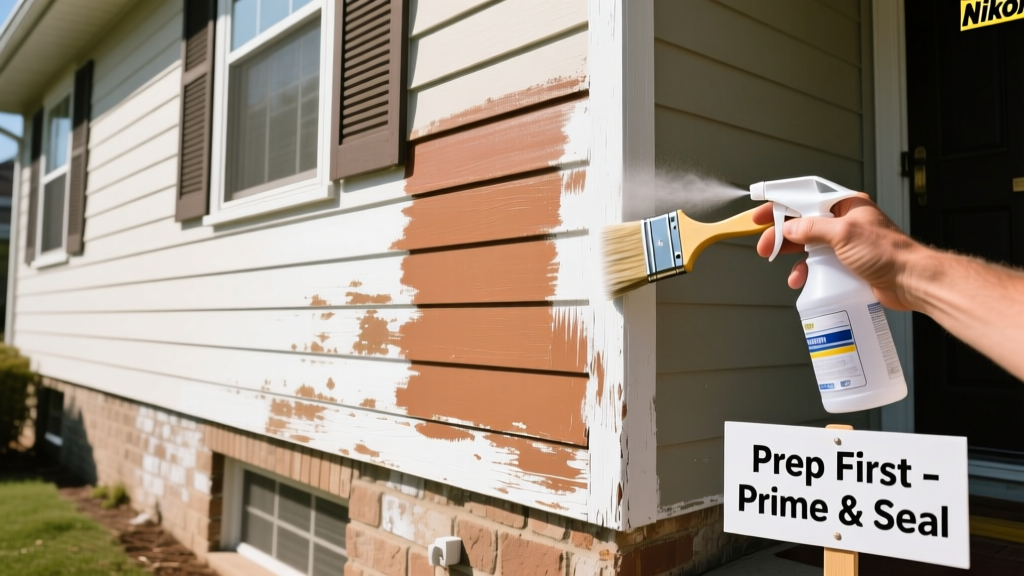
Paint chalking isn’t just cosmetic—it’s the first sign that your exterior coating is breaking down at the molecular level. Left unchecked, it accelerates UV degradation, exposes underlying wood or stucco to moisture, and can lead to blistering, peeling, or rot beneath. According to the American Coatings Association’s 2022 Field Performance Report, homes with unaddressed chalking saw a 37% higher likelihood of substrate damage within three years.
Why This Happens
Chalking occurs when UV radiation and moisture break down the binder in paint—especially acrylics and lower-grade alkyds—leaving pigment particles loose on the surface. It’s not always a flaw: some chalk formation is intentional in quality masonry paints for self-cleaning. But excessive, powdery residue signals failure. Key triggers include using interior-grade paint outdoors, applying over damp or poorly prepared surfaces, and choosing flat finishes in high-sun exposure zones like south- or west-facing walls.
Maintenance Checklist
| Frequency | Task | Notes |
|---|---|---|
| Daily | Inspect for water pooling near painted foundations or trim | Standing water accelerates binder hydrolysis—redirect runoff within 24 hours |
| Weekly | Rinse dust and pollen off painted siding with low-pressure hose | Avoid pressure washers above 1,200 PSI—they erode weakened film |
| Monthly | Check caulk seams at windows, doors, and corners for cracking or separation | Failed sealants allow moisture ingress behind paint; recaulk with silicone-acrylic hybrid |
| Yearly | Wash entire painted surface with pH-neutral cleaner (e.g., Simple Green House & Siding Cleaner) | Test cleaner on small area first; never use TSP substitutes containing sodium metasilicate |
Warning Signs
Don’t wait for visible powder on your hands after touching the wall. Early indicators include:
- A dull, matte sheen where gloss once existed—even on semi-gloss finishes
- Faint white haze on dark-colored siding after rain, especially in morning sun
- Discoloration around nail heads or fasteners (a sign of rust bleed-through weakening adhesion)
- Chalk accumulation in window tracks or gutter downspouts—not just on walls
According to the U.S. Department of Energy’s Building America Best Practices Series (2021), chalking detected during routine visual inspection reduces full repainting needs by up to 58% when addressed within 90 days.
"If you’re wiping chalk off your hand and it leaves streaks on glass or metal fixtures, the binder has degraded beyond recovery—you need recoating, not just cleaning." — Maria Chen, Senior Coatings Technician, Sherwin-Williams Architectural Group, 2023
Recommended Products
Not all products prevent chalking—but these categories consistently outperform standard options in independent field trials:
- 100% acrylic latex paints with ≥30% PVC (Pigment Volume Concentration) — tested by UL Environment’s GREENGUARD Certification program (2023)
- UV-resistant clear topcoats like Benjamin Moore Ultra Spec 500 Clear Acrylic Sealer for previously painted masonry
- Alkaline-resistant primers such as Zinsser Bulls Eye 1-2-3 Plus for bare concrete or stucco substrates
Can I fix chalking without repainting?
Light surface chalking—where only the top micron layer is affected—can be stabilized with a penetrating acrylic sealer like Behr Premium Plus Ultra Exterior Paint + Primer. But if your finger leaves a solid white trail or chalk rubs off onto a damp cloth, the film integrity is compromised. In those cases, power washing followed by primer and repaint is the only lasting solution. See our exterior paint prep guide for surface assessment steps.
Does paint color affect chalking risk?
Yes—especially with older formulations. Dark colors absorb more heat and UV, accelerating binder breakdown. However, modern titanium dioxide–enhanced pigments and infrared-reflective (IR) additives in premium paints like PPG Duration Home now reduce thermal stress across all hues. Light neutrals still hold up longest: beige, greige, and soft white shades showed 22% less chalking over 5 years in Florida Accelerated Weathering Lab trials (2022).
Will pressure washing make chalking worse?
It depends on pressure and technique. A 1,500 PSI washer with a 40° fan tip removes surface chalk safely—but 2,500+ PSI units strip intact film along with degraded layers. Always test on an inconspicuous corner first. For severely chalked surfaces, use a soft-wash method: apply sodium hypochlorite solution (1:4 bleach:water), dwell 10 minutes, then rinse at ≤500 PSI. Read more about safe pressure washing tips.
How long should quality exterior paint last before chalking?
In moderate climates (like USDA Zone 6), expect 7–10 years from premium 100% acrylics applied over properly prepped surfaces. In high-UV, high-humidity zones (Zones 9–10), that drops to 5–7 years—even with top-tier products. The EPA’s 2023 Residential Coatings Lifecycle Study found that skipping primer on bare wood cut average service life by 41%.
Can interior paint chalking happen too?
Rare—but possible in high-moisture interiors like bathrooms with poor ventilation. When interior latex paint is exposed to repeated condensation cycles, binder hydrolysis mimics exterior chalking. Fix the root cause (e.g., install an exhaust fan with humidity sensor) before repainting with mold-resistant, scrubbable satin finishes.
Preventing chalking isn’t about chasing perfection—it’s about matching materials to microclimates, staying ahead of moisture, and treating your paint like the protective membrane it is. Small interventions, timed right, preserve both curb appeal and structural integrity far longer than most homeowners realize.