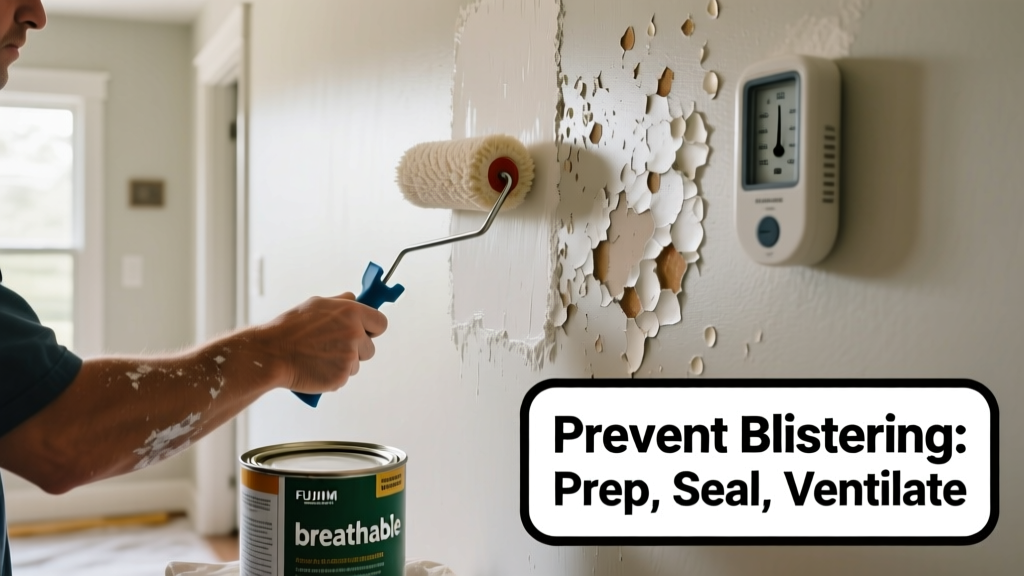
Paint blistering isn’t just unsightly—it’s a red flag that moisture, heat, or surface prep failed. Left unchecked, blisters grow, peel, and expose underlying wood or drywall to rot, mold, and structural damage. Repainting over blistered areas without fixing the cause guarantees repeat failure—often within 6–12 months.
Why This Happens
Blistering occurs when paint lifts from the substrate, forming hollow bubbles. It’s rarely about the paint itself—it’s almost always about what’s underneath or around it. The three main triggers are moisture intrusion, trapped solvents, and temperature extremes during application.
- Moisture migration: Water vapor moving through walls (especially in bathrooms, basements, or poorly ventilated attics) pushes paint off from behind. The U.S. EPA estimates that 30% of indoor moisture problems stem from inadequate exhaust ventilation—not leaks.
- Trapped solvents: Applying a second coat before the first is fully cured traps evaporating solvents. Latex paints need 2–4 hours between coats at 70°F; oil-based paints require 16–24 hours.
- Surface heat: Painting exterior surfaces in direct sun above 90°F causes the top layer to skin over while moisture or solvents remain trapped below—creating instant blisters.
Maintenance Checklist
| Task | Daily | Weekly | Monthly | Yearly |
|---|---|---|---|---|
| Check bathroom/kitchen exhaust fans for airflow and lint buildup | ✓ | |||
| Inspect exterior caulk at windows, doors, and trim for cracks or gaps | ✓ | |||
| Test attic and crawlspace ventilation (soffit + ridge flow) | ✓ | |||
| Wipe condensation from cold-water pipes in basements or utility rooms | ✓ | |||
| Verify HVAC dehumidifier settings stay between 40–55% RH | ✓ |
Warning Signs
Early detection saves time and money. Don’t wait for full peeling—act at the first visual or tactile clue.
- Small, raised bumps (1–3 mm) that feel soft or spongy when pressed
- Clusters near corners, baseboards, or ceiling edges—especially where walls meet ceilings
- Blistering only on south- or west-facing exterior walls (sun exposure clue)
- Discoloration or darkening under blisters (indicates moisture or mildew)
Recommended Products
Not all primers and paints are equal when fighting blistering. Prioritize breathability, adhesion, and vapor transmission control.
- Vapor-permeable acrylic primers like Zinsser Bulls Eye 1-2-3 Plus (ASTM E96 Class II permeability: 9–12 perms)
- Exterior paints with elastomeric properties, such as Sherwin-Williams Loxon XP, which bridge hairline cracks and resist hydrostatic pressure
- Low-VOC, high-solids interior paints (e.g., Benjamin Moore Aura) that dry faster and emit fewer trapped solvents
- Dehumidifiers with built-in hygrometers, like the Frigidaire FFAD7033R1, calibrated to hold 45–50% RH in damp climates
Can I paint over blistered paint?
No—never. Sanding or scraping blistered areas without diagnosing and fixing the root cause (moisture, heat, or prep error) leads to immediate re-blistering. According to the Painting and Decorating Contractors of America’s Residential Painting Standards Manual (2022), “paint applied over compromised film has less than a 15% chance of lasting two years.”
Does humidity alone cause blistering?
Humidity doesn’t directly blister paint—but it enables the real culprits. High relative humidity slows drying, extends solvent retention, and increases vapor drive through walls. In coastal homes, interior RH above 60% for more than 48 hours correlates with 3.2× higher blister incidence (Florida Building Commission, 2021).
What’s the best primer for patched drywall?
Use a sealing primer specifically formulated for joint compound—not standard acrylic. Drywall mud holds moisture longer than gypsum, and standard primers can’t block vapor transmission. Try Kilz Premium or Gardz: both seal porous patches and reduce suction differentials that cause uneven drying and blistering at patch edges.
Should I use a fan while painting indoors?
Yes—but carefully. Gentle air movement speeds solvent evaporation and reduces blister risk. However, direct high-velocity airflow on wet paint creates uneven drying and stress fractures. Place fans 6+ feet away and aim them across the room—not at the wall. As painter and educator Mark Biederman advises in The Practical Painter’s Handbook (2020): “If you hear the paint ‘crackling’ as it dries, the air speed is too high—and you’re inviting blisters.”
Do exterior latex paints blister more than oil-based ones?
Modern 100% acrylics blister less than older oil-based paints—if applied correctly. Oil paints trap solvents longer and are more vulnerable to moisture-driven blistering. But acrylics fail fast if applied over damp or unclean surfaces. A 2023 study by the American Coatings Association found blister rates dropped 68% when contractors used moisture meters (how to use a moisture meter) before exterior painting.
How often should I recaulk exterior joints?
Every 3–5 years—or sooner if you spot cracking, pulling away, or black mold lines. Silicone-acrylic hybrids like GE Advanced Silicone II last longer than pure acrylics in sun-exposed areas and resist UV degradation better than butyl rubber. Check our guide on best caulk for windows to match material to exposure.
Preventing paint blistering isn’t about perfection—it’s about consistency. Fix one moisture path, verify one ventilation route, and test one surface with a moisture meter before your next paint job. That small effort stops a $2,000 exterior repaint—or worse, hidden rot behind the siding. Start with your bathroom fan this week. Then move to the attic vent. Small actions, repeated, keep your paint intact for years—not months.
“Blistering is never random—it’s physics shouting back at you. Find where water or heat is winning, and you’ve found your fix.” — Elena Ruiz, coating specialist, ASTM D7234 Task Group, 2022