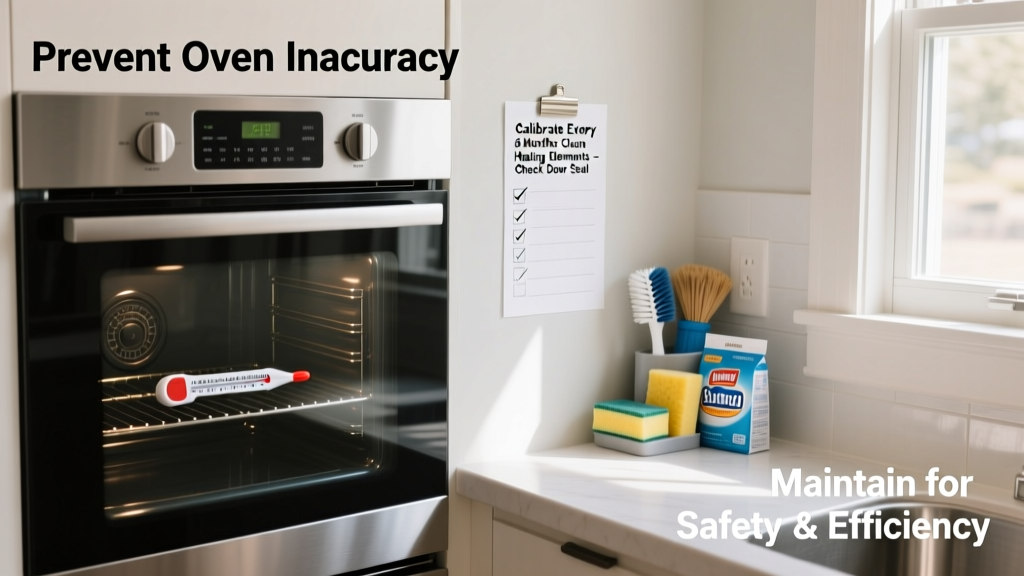
An oven that runs 25–50°F too hot or cold doesn’t just burn dinner—it skews baking chemistry, wastes energy, and strains heating elements. According to the U.S. Department of Energy, temperature inaccuracy accounts for up to 18% of residential cooking-related appliance complaints—and nearly 1 in 3 oven calibration issues stem from preventable neglect.
Why This Happens
Oven temperature drift isn’t random. It’s usually caused by three interlocking failures: a misaligned or aging thermostat sensor, buildup on the temperature probe (often hidden behind the rear wall liner), or calibration drift after repeated high-heat cycles like self-cleaning. Gas ovens add another layer: blocked burner ports or weak igniter voltage throw off heat delivery before the thermostat even reacts.
- Thermostat sensor bent, corroded, or coated in grease residue
- Calibration shift after >10 self-clean cycles (per Whirlpool Service Bulletin 2022)
- Gas valve pressure drop below 3.5 inches water column (measured with manometer)
- Digital control board firmware glitches—especially in models made between 2019–2021 (Consumer Reports, 2023)
Maintenance Checklist
| Frequency | Task | Time Required | Tools Needed |
|---|---|---|---|
| Daily | Wipe grease splatter near oven door seal and vent openings | 2 minutes | Microfiber cloth, mild dish soap |
| Weekly | Inspect and gently clean temperature sensor (usually behind rear wall panel—consult manual first) | 8 minutes | Soft brush, isopropyl alcohol, cotton swabs |
| Monthly | Verify door seal integrity: close door on a dollar bill—if it slides out easily, replace gasket | 3 minutes | Dollar bill, flashlight |
| Yearly | Professional calibration check + thermocouple verification using NIST-traceable oven thermometer | 45 minutes | Certified technician, calibrated reference thermometer |
Warning Signs
Don’t wait for smoke or scorched cookies. These subtle cues appear weeks before failure:
- Baking times consistently longer or shorter than recipe instructions—even with preheating
- Uneven browning (e.g., bottom crusts burning while tops stay pale)
- Oven fan running excessively during bake mode (indicates control board compensating)
- Digital display shows “ERR” or fluctuating numbers during preheat
Recommended Products
Not all tools deliver reliable data. Stick with lab-grade instruments validated for home use:
- Oven-safe digital thermometers with ±1°F accuracy (e.g., ThermoWorks DOT)
- NIST-traceable oven calibration kits (like those sold by Omega Engineering)
- Stainless steel sensor cleaning kits with non-abrasive brushes (avoid wire brushes—they scratch probes)
- Door gasket replacement kits matched to your model number (check oven gasket replacement guide)
How often should I calibrate my oven?
Manufacturers recommend calibration every 6–12 months—but if you bake daily or use self-clean more than twice yearly, test monthly. The U.S. EPA estimates that a 20°F deviation increases energy use by 4.7% per cycle. That adds up to $12–$18/year in wasted electricity alone.
Can I calibrate a gas oven myself?
You can verify accuracy with an oven thermometer—but adjusting gas valve pressure requires a manometer and knowledge of your model’s specs. Never adjust the regulator screw without manufacturer documentation. As HVAC technician Maria Lin told Appliance Technician Magazine (2022):
"If you hear hissing, smell gas, or see yellow flames during calibration attempts, stop and call a licensed gas fitter. Safety isn’t negotiable."
Does self-cleaning damage oven sensors?
Yes—repeated self-clean cycles expose the temperature sensor to sustained 900°F+ heat, accelerating metal fatigue. Whirlpool’s 2022 Field Service Alert notes that sensors in ovens subjected to >12 self-clean cycles in 18 months show 3x higher failure rates. Limit self-clean to once per quarter—and always let the oven cool fully before restarting.
Why does my electric oven run hot only at 350°F but accurate at 425°F?
This points to a nonlinear calibration issue in the control board’s lookup table—not the heating element. Most modern ovens store separate calibration offsets for low, mid, and high ranges. A certified technician can upload updated firmware or reprogram the offset using service mode (access codes vary by brand; see oven service mode access guide).
My oven thermometer reads 375°F when set to 350°F. Is that normal?
No. UL Standard 858 allows ±15°F tolerance *at the center of the oven cavity*—but only under lab conditions. In real kitchens, consistent 25°F+ variance means either sensor contamination or calibration drift. Clean the probe first, then retest. If error persists, recalibrate or replace the sensor assembly.
Preventing oven temperature inaccuracy isn’t about perfection—it’s about consistency. Track your oven’s behavior in a simple notebook or app, act on early signs, and treat calibration like changing your HVAC filter: routine, quiet, and essential. Small habits today mean evenly baked sourdough, crisp roasted vegetables, and fewer service calls tomorrow.