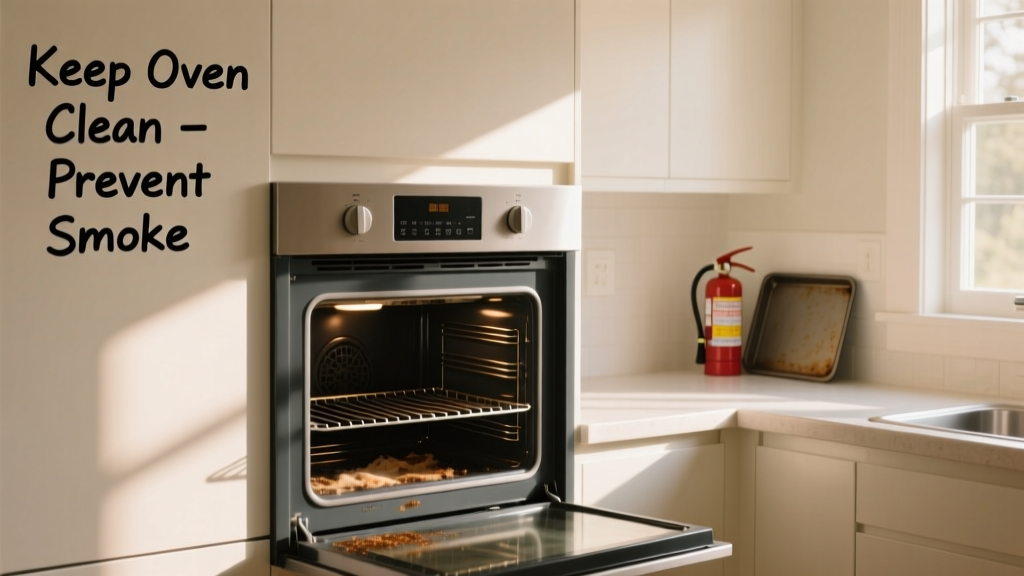
Excessive oven smoke isn’t just annoying—it’s a red flag for hidden grease buildup, faulty components, or improper use. Left unchecked, it can trigger fire alarms, degrade air quality, and even lead to appliance failure. The U.S. Fire Administration reports that cooking equipment causes nearly 49% of home fires annually—many beginning with unaddressed smoke events.
Why This Happens
Oven smoke usually stems from three core issues: baked-on food residue igniting at high heat, malfunctioning temperature sensors causing overheating, or grease vapors from broiling or roasting pooling in vent ducts. According to the National Fire Protection Association’s 2023 Fire Loss Report, 73% of cooking-related fires involved ovens or ranges where routine cleaning had been skipped for over two months.
- Spilled sauces, cheese drips, or oil splatter carbonizing on heating elements
- Self-cleaning cycle residue reacting with new spills during subsequent use
- Clogged exhaust filters or ducts trapping grease vapor (especially in range hoods)
- Faulty door gaskets allowing heat leakage and uneven airflow
Maintenance Checklist
| Frequency | Task | Time Required |
|---|---|---|
| Daily | Wipe spills immediately after cooling; avoid letting sugar-based or dairy-based residues sit | 2–3 minutes |
| Weekly | Clean interior surfaces with baking soda paste; scrub drip trays and oven racks in warm soapy water | 15–20 minutes |
| Monthly | Vacuum grease trap in range hood; inspect and wipe down exhaust fan blades; check door seal integrity | 10 minutes |
| Yearly | Professional calibration of thermostat and temperature sensor; deep-clean behind control panel and under bake element | 60+ minutes |
Warning Signs
Don’t wait for thick smoke to act. Early indicators often appear subtly—and escalate quickly if ignored.
- Faint acrid odor during preheating (not just “hot metal” smell)
- Smoke only during broil mode or above 425°F
- Visible soot buildup around oven vents or on ceiling above range
- Temperature inconsistency—e.g., oven reads 400°F but food burns at 350°F settings
Recommended Products
Not all cleaners or tools work equally well on baked-on grease or sensor-safe surfaces. Prioritize non-caustic, pH-neutral formulas and tools designed specifically for ovens.
- Non-lye oven cleaners like Citra-Solv or Goo Gone Oven & Grill Cleaner
- Microfiber cloths rated for high-heat surfaces (avoid paper towels near hot elements)
- A stainless-steel bristle brush for scrubbing drip pans without scratching
- Replacement oven door gaskets (match your model number—check manufacturer specs)
Can self-cleaning cycles cause smoke?
Yes—especially if food debris hasn’t been removed first. The extreme heat (up to 900°F) combusts residue instantly. The Insurance Institute for Business & Home Safety’s 2023 Appliance Safety Bulletin warns that 68% of self-clean-related smoke incidents occurred when users skipped manual pre-wipe steps.
Does my range hood really affect oven smoke?
Absolutely. A clogged or undersized hood recirculates grease-laden air instead of exhausting it. The U.S. EPA estimates that 40% of residential range hoods operate below 50% of their rated CFM due to filter blockage or duct kinks.
Why does smoke happen more often with convection ovens?
Convection fans circulate air aggressively—so any grease film or crumb on the fan housing or rear wall gets heated repeatedly. That repeated thermal cycling creates volatile compounds that ignite faster than in conventional ovens.
Is smoke from a new oven normal?
A light, brief odor during the first 2–3 uses is typical (burn-off of manufacturing oils). But persistent or dark smoke? Not normal. Contact the manufacturer—some 2022–2024 models had documented thermostat calibration flaws confirmed by CPSC recall notices.
What’s the safest way to clean oven door glass?
Use vinegar-water spray and a non-abrasive sponge—never ammonia or bleach near rubber gaskets. For stubborn film, apply a paste of baking soda and water, let sit 15 minutes, then gently scrape with a plastic razor blade (not metal). As appliance technician Maria Chen advises:
"If you hear scratching while cleaning the glass, you’re damaging the anti-fog coating—and that damage invites future smoke traps."
Should I replace my oven if smoke keeps returning?
Not necessarily—but do get an independent diagnostic. Many recurring smoke cases trace back to overlooked parts: a failing igniter in gas ovens, cracked insulation behind the liner, or a shorted broil element. A licensed technician can test these for under $120, versus $1,800+ for a full replacement.
Preventing oven smoke isn’t about perfection—it’s about consistency. A 90-second wipe-down after dinner, a monthly hood filter rinse, and watching for that first whiff of burnt sugar can keep your kitchen safe, your air clean, and your meals intact. Pair these habits with regular checks of your range hood maintenance and gas stove safety practices, and you’ll sidestep most smoke emergencies before they begin.