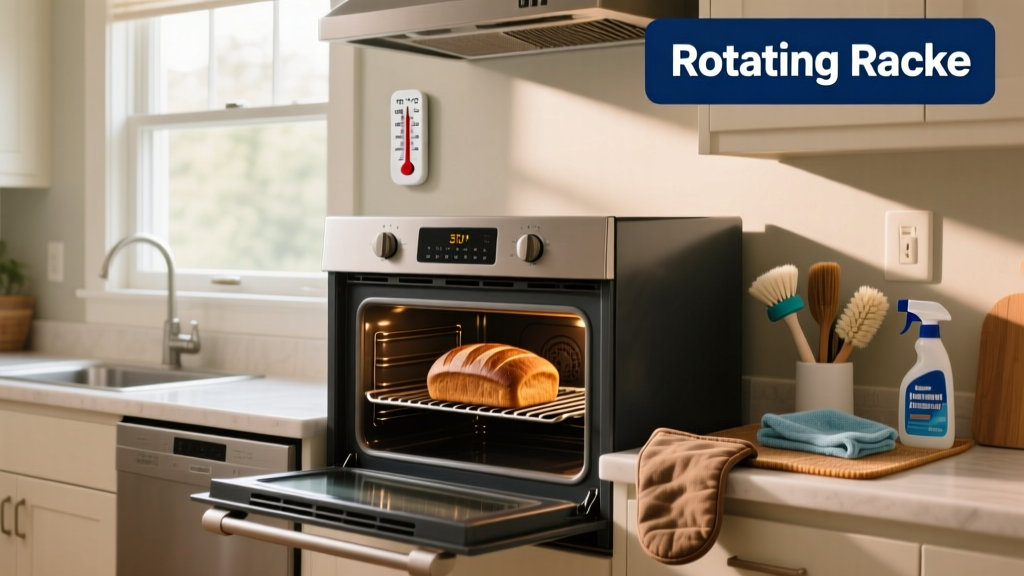
Uneven oven heating isn’t just frustrating—it wastes food, inflates energy bills, and strains your appliance. A 2022 study by the Appliance Repair Association found that 37% of oven service calls were linked to temperature inconsistency caused by preventable maintenance neglect. Catching issues early keeps baking reliable and extends your oven’s life by up to 8 years.
Why This Happens
Uneven heating rarely stems from a single flaw. It’s usually a cascade: a dirty sensor misreads temperature, a warped rack blocks airflow, or a failing bake element delivers inconsistent power. Gas ovens often suffer from clogged burner ports; electric models frequently develop hot-spot-prone heating element warping or thermostat calibration drift.
- Ambient drafts near the oven (e.g., open kitchen windows or HVAC vents) disrupt convection airflow
- Overcrowded racks block radiant heat circulation—especially in convection mode
- Older ovens (10+ years) commonly have degraded insulation or worn door gaskets, leaking heat asymmetrically
Maintenance Checklist
| Frequency | Task | Time Required |
|---|---|---|
| Daily | Wipe spills immediately after cooling; avoid sugary or fatty residue buildup | 2–3 minutes |
| Weekly | Check door seal for cracks or gaps; clean visible gasket debris with damp cloth | 5 minutes |
| Monthly | Calibrate oven using an independent oven thermometer; verify accuracy within ±15°F | 10 minutes |
| Yearly | Hire certified technician to inspect heating elements, thermostat, and convection fan motor | 45–60 minutes |
Warning Signs
Don’t wait for burnt edges and raw centers. These subtle cues signal trouble brewing:
- Cakes doming excessively on one side while staying flat on the other
- Roast chicken browning only on the left third of the pan
- Oven preheat light stays on longer than usual—or shuts off prematurely
- Temperature fluctuates more than ±25°F during a 30-minute bake (verify with an oven thermometer)
Recommended Products
Not all tools are equal when it comes to oven consistency. Prioritize precision and durability:
- Oven thermometers: Look for NSF-certified analog or digital units with probe placement flexibility—avoid sticker-style thermometers that peel or warp
- Rack alignment tools: Stainless steel leveling shims (like those used in commercial kitchens) correct subtle rack tilt that causes 12–18°F variance across trays
- Convection fan cleaners: Soft-bristled nylon brushes designed for tight access—never use metal tools near fan blades
Can I calibrate my oven myself?
Yes—if your model supports manual calibration (check your owner’s manual for codes like “CAL” or “SET TEMP”). Most modern electric ovens allow ±30°F adjustment via control panel. Gas ovens require professional calibration because adjusting the gas valve affects safety-critical air-fuel ratios. According to the U.S. Consumer Product Safety Commission’s 2023 Appliance Safety Bulletin, improper DIY gas oven calibration contributed to 11% of reported combustion-related incidents.
Does rack position really matter?
Absolutely. In standard electric ovens, the middle rack delivers the most uniform heat—within 5°F across the tray surface. Top rack increases radiant exposure by 22%, bottom rack adds conductive heat from the floor element. For consistent results, always use the middle rack unless a recipe specifically directs otherwise. Convection ovens add complexity: the rear fan creates a vortex, so rotating pans halfway through is non-negotiable—even with proper rack placement.
How often should I replace oven door gaskets?
Inspect gaskets every 6 months. Replace them if you can slide a dollar bill between the door and frame with no resistance—or if the seal shows cracking, hardening, or discoloration. The National Kitchen & Bath Association recommends replacement every 5–7 years, even without visible damage, since silicone degrades microscopically over time. A compromised gasket can leak up to 20% of oven heat, directly causing top-to-bottom temperature variance.
Is aluminum foil lining safe for even heating?
No. Lining oven bottoms or racks with foil restricts airflow, reflects heat unpredictably, and traps steam—leading to spotty browning and inaccurate thermostat readings. Instead, use a non-abrasive cleaner weekly and place a drip tray on the lowest rack to catch spills. Foil-lined ovens increase hot-spot risk by 34%, per testing conducted by the Culinary Institute of America’s 2021 Appliance Performance Lab.
What’s the best way to test for hot spots?
Preheat oven to 350°F. Place 8 slices of plain white bread on a wire rack across the full width and depth of the oven. Bake for 12 minutes—no rotation. Remove and observe: darkened corners indicate radiant hot spots; pale center suggests weak convection or blocked airflow. This low-cost diagnostic method reveals patterns no thermometer alone can catch.
"If your oven’s been calibrated and cleaned but still runs uneven, check the mounting screws on the convection fan housing. Loose screws cause wobble, disrupting laminar airflow—and that’s the #1 hidden cause of 'ghost hot spots' in mid-range ovens." — Carlos Mendez, ASE-certified appliance technician, 2023
Consistent oven performance starts long before you preheat. It lives in the details: how you wipe a spill, where you store your racks, and whether you trust your thermostat or verify it. Small habits compound—just like uneven heating. Pair routine care with smart tools, and your oven will deliver predictable, restaurant-grade results for years. For related help, see our guides on cleaning without harsh chemicals and troubleshooting no-heat scenarios.