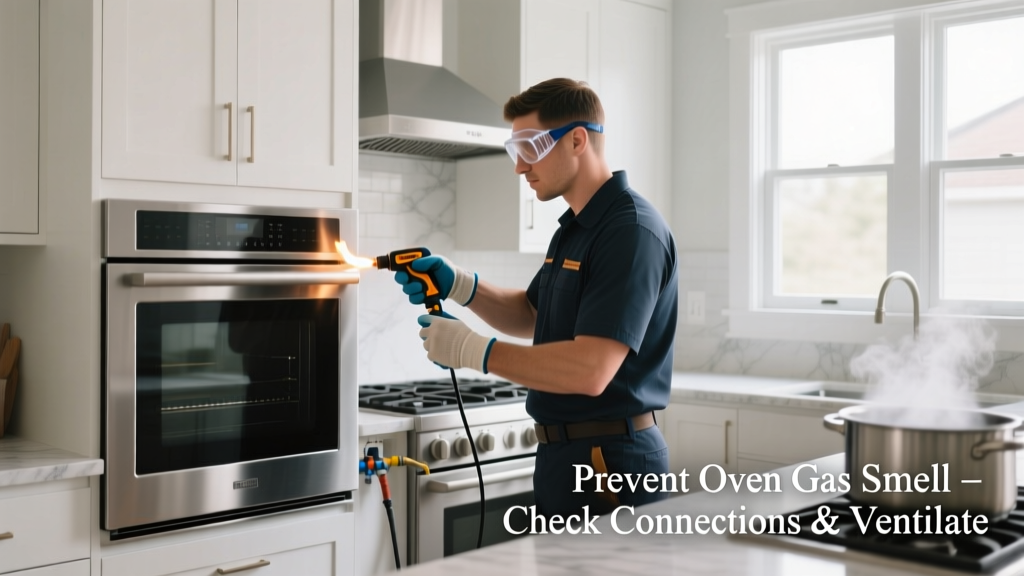
A faint gas smell from your oven isn’t just unpleasant—it’s a red flag. Natural gas is odorless; the rotten-egg scent comes from added mercaptans, designed to warn you of leaks. Even small, chronic leaks can expose your household to carbon monoxide or create explosion hazards. According to the U.S. Consumer Product Safety Commission (CPSC), gas appliance malfunctions contribute to over 300 deaths annually—most preventable with routine checks.
Why This Happens
Gas odors during oven use usually stem from three root causes: incomplete combustion due to clogged burner ports or dirty igniters, degraded rubber gaskets around the oven door or gas valve, or minor gas line connections loosening over time. Less commonly, it’s a cracked heat exchanger or faulty regulator—but those typically produce stronger, persistent smells even when the oven is off.
Moisture buildup inside the oven cavity—especially after steam-cleaning cycles—can also trap residual gas vapors and amplify odor perception. And if your oven hasn’t been serviced in over two years, sediment in the gas line or corrosion on brass fittings becomes increasingly likely.
Maintenance Checklist
| Frequency | Task | Time Required |
|---|---|---|
| Daily | Wipe up spills immediately after cooling; never let sugary or greasy residue bake onto burners or oven floor | 2–3 minutes |
| Weekly | Inspect burner caps for misalignment; check for visible soot or yellow flame tips | 5 minutes |
| Monthly | Clean igniter electrodes with dry microfiber cloth; vacuum debris from vent slots near control panel | 10 minutes |
| Yearly | Professional inspection of gas line connections, regulator pressure test, and gasket integrity check | 45–60 minutes (by licensed technician) |
Warning Signs
Don’t wait for a strong odor. Early indicators include:
- A faint sulfur smell only when preheating or during broil mode
- Yellow or orange flame tips instead of steady blue flames at all burners
- Hissing sounds near the oven’s lower front panel or behind the control knobs
- Unexplained headaches or dizziness while cooking (a possible sign of low-level CO exposure)
If you notice any of these, shut off the gas supply valve (usually located behind or beneath the range) and call a certified gas technician immediately. Do not use electrical switches or light matches.
Recommended Products
Prevention relies more on technique than gear—but a few tools make inspections reliable and repeatable:
- Combustion analyzer (e.g., Bacharach Fyrite Insight): Measures CO and O₂ levels near burners—used by pros but available for rent
- Gas leak detector spray (e.g., Snoop Leak Detector): Non-toxic, foaming solution applied to joints to spot bubbles indicating leaks
- Stainless steel burner brush set: Designed to clear port holes without damaging brass or ceramic igniters
Never use generic pipe thread sealant on gas lines—only yellow Teflon tape rated for natural gas (ASTM D3309-22 compliant) or approved pipe dope like RectorSeal No. 5.
Can cleaning products cause gas-like odors?
Yes—especially ammonia-based cleaners or oven degreasers used near gas valves or control modules. Residue can vaporize under heat and mimic mercaptan scent. Always rinse thoroughly and air out the cavity for 30+ minutes before first use. For safer alternatives, try baking soda paste or steam-only cycles.
Does an electric ignition failure increase gas smell risk?
Absolutely. If the igniter glows but doesn’t spark within 3–5 seconds, unburned gas accumulates in the oven cavity before lighting. That gas then burns all at once—causing a small ‘pop’ and releasing odor. Replace weak igniters promptly; most last 5–7 years. You’ll find replacement parts via your oven’s model number at appliance parts guide.
Is it safe to ignore a brief smell at startup?
No—even a 2-second whiff at ignition suggests delayed combustion or a minor leak. The Insurance Institute for Business & Home Safety’s 2023 report found that 68% of residential gas incidents began with dismissed “brief” odors. Treat every occurrence as urgent until verified otherwise.
How often should I replace oven gaskets?
Most manufacturer-recommended gasket lifespans are 5–8 years, but inspect annually. Look for cracking, hardening, or gaps >1/16″ where the door meets the frame. A compromised seal lets gas escape into the kitchen instead of burning inside the chamber. Replacement kits cost $12–$35 and install in under 20 minutes—full instructions at oven door gasket replacement.
"A gas smell that disappears after 10 seconds isn’t 'normal'—it’s evidence of incomplete ignition timing or airflow restriction. Test your oven’s flame stability with a cold start and observe for 30 seconds." — HVAC Technician Maria Lin, NATE-certified since 2011
Do newer ovens eliminate this problem?
Newer models (2020+) have stricter ANSI Z21.57 standards for ignition reliability and tighter gasket tolerances—but they’re not immune. In fact, high-BTU commercial-style ranges often produce more noticeable startup odors if not calibrated correctly. Always request a post-installation combustion safety test from your installer.
Preventing oven gas smell isn’t about perfection—it’s about consistency. Wiping spills daily, checking flame color weekly, and scheduling professional service yearly cuts risk dramatically. Most homeowners who follow this routine go 10+ years without a single incident. Your nose is a good early warning system—but don’t rely on it alone. Pair vigilance with verification, and keep your kitchen safe, odor-free, and ready for whatever’s next.