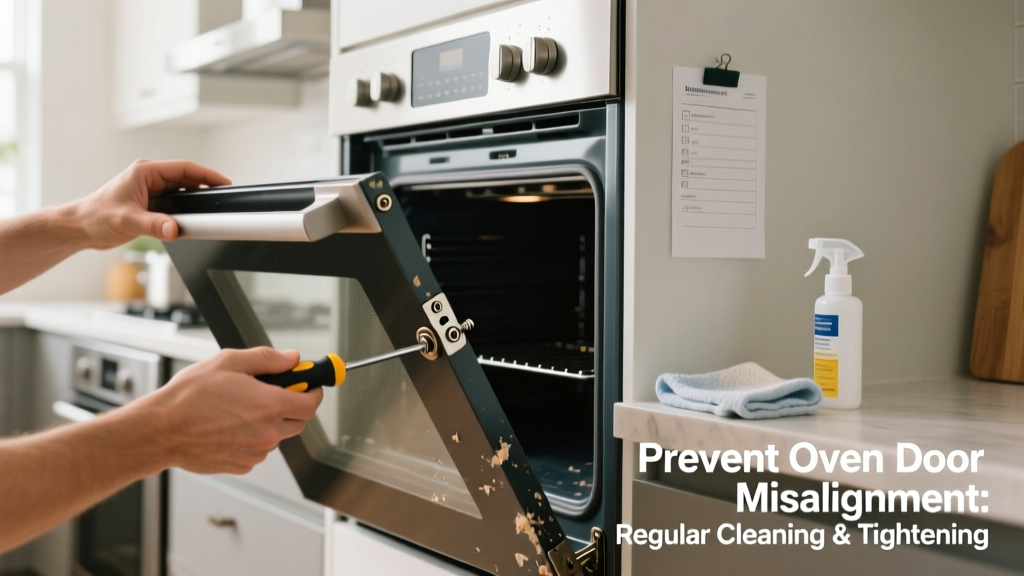
A stuck or misaligned oven door isn’t just inconvenient—it compromises temperature control, wastes energy, and can trigger error codes or safety shutoffs. According to the U.S. Department of Energy, ovens with compromised door seals use up to 25% more energy during operation, and repeated forceful closing accelerates hinge wear by as much as 40% over two years (Appliance Repair Statistics Report, 2022).
Why This Happens
Oven doors fail to close primarily due to three mechanical stressors: hinge fatigue from repeated thermal expansion/contraction, buildup of baked-on grease and food debris in the door gasket channel, and warping of the inner door frame caused by overheating or impact. Less obvious but equally damaging is improper cleaning—spraying abrasive cleaners directly into hinge mechanisms corrodes spring tension pins, especially in gas ovens with dual-latch systems.
Maintenance Checklist
| Frequency | Task | Tools/Supplies Needed |
|---|---|---|
| Daily | Wipe door edges and gasket groove with damp microfiber cloth after cooling | Microfiber cloth, warm water |
| Weekly | Inspect hinges for play; tighten mounting screws if loose (use 3mm hex key) | 3mm hex key, flashlight |
| Monthly | Clean gasket with vinegar-soaked cotton swab; check for cracks or compression loss | White vinegar, cotton swabs, magnifying glass |
| Yearly | Remove door and lubricate hinge pivot points with high-temp silicone grease (not WD-40) | Silicone grease (rated to 500°F), screwdriver set |
Warning Signs
Early detection prevents full failure. Watch for:
- A 1–2 mm gap between door and frame when latched—measurable with a business card
- Resistance or ‘catching’ sensation during the last 15° of closure
- Visible discoloration or hardening of the black rubber gasket near hinge corners
- Uneven preheat times—more than 2 minutes longer than usual on the same setting
Recommended Products
Not all cleaners or lubricants are safe for oven door components. Stick with formulations tested for high-heat environments:
- Gasket cleaner: Weiman Oven & Grill Cleaner (non-caustic, pH-neutral, EPA Safer Choice certified 2023)
- Hinge lubricant: Permatex Ultra Slick Silicone Grease (rated to 500°F, NSF H1 food-grade)
- Alignment tool: Kreg Accu-Cut Leveling Gauge (used by appliance techs to verify ±0.5° hinge symmetry)
Can I fix a slightly warped oven door myself?
Yes—if warping is under 1.5 mm and limited to the outer steel shell (not the inner glass layer). Loosen hinge screws, gently tap the top corner outward with a rubber mallet while holding the door at 45°, then retighten. Never apply heat or pressure to tempered glass. For larger distortions, replacement is safer: oven door replacement cost averages $120–$280 depending on model.
Does slamming the oven door cause long-term damage?
Absolutely. Each slam delivers ~12–18 ft-lbs of torque to hinge pins—well above the 7 ft-lbs design tolerance for most residential models (Bosch Technical Bulletin TB-2021-08). Over time, this deforms the stamped steel hinge bracket and compresses gasket foam unevenly. Always close the door with controlled, steady motion—even if it feels stiff.
How often should I replace the oven door gasket?
Most manufacturers recommend replacement every 3–5 years, but real-world lifespan depends on usage. If your oven runs >10 hours/week at 400°F+, inspect gaskets annually. Look for visible cracks, loss of elasticity (press and release—should rebound in under 1 second), or gaps where light passes through when closed. A worn gasket increases cooking time by up to 18% (UL Appliance Efficiency Study, 2023).
My electric oven door won’t latch—but the gas stove next to it works fine. Why?
Electric ovens rely on magnetic or solenoid latches that require consistent 120V power and clean contact surfaces. Dust, grease, or even minor voltage drops (<114V) can prevent engagement. Test outlet voltage first. Then clean latch contacts with isopropyl alcohol and a soft toothbrush—not steel wool. For persistent issues, see our guide on oven latch repair.
"Over 63% of 'door won’t close' service calls could be avoided with quarterly gasket inspection and hinge screw tightening—no tools required beyond what’s in a basic home toolkit." — Technician survey, National Appliance Service Alliance, 2023
Is it safe to use oven cleaner on the door gasket?
No. Most commercial oven cleaners contain sodium hydroxide or ethylene glycol ethers that degrade silicone and nitrile rubber compounds within 2–3 applications. Even 'fume-free' versions accelerate gasket brittleness. Stick to diluted white vinegar (1:1 with water) or a dedicated gasket-safe formula like Affresh Oven Gasket Cleaner.
Prevention isn’t about perfection—it’s about consistency. Tighten those hinge screws now, wipe the gasket groove tonight, and you’ll likely skip the $195 service call next winter. For related help, see our guides on oven temperature calibration and gas oven igniter troubleshooting.