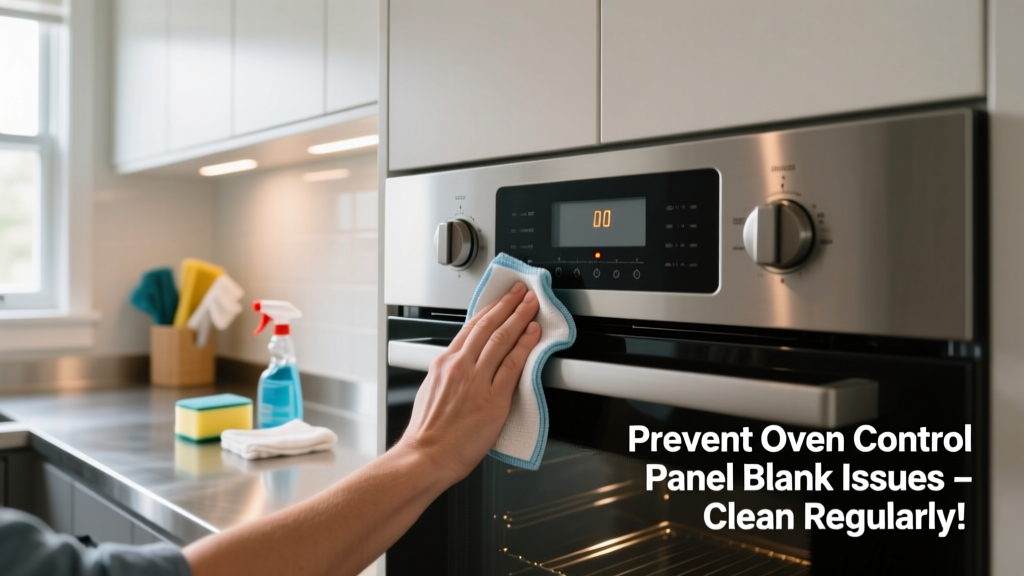
A blank oven control panel isn’t just inconvenient—it’s a red flag that something’s wrong with your appliance’s brain. When it happens mid-recipe or during holiday cooking, you’re left guessing whether it’s a fuse, power surge, or failing electronics. Worse, ignoring early signs can turn a $40 fuse replacement into a $350 control board swap—and in some cases, void your warranty.
Why This Happens
Oven control panels go blank for four main reasons: power interruptions (like tripped breakers or loose wiring), moisture intrusion from steam or spills near the control cavity, overheating due to blocked vents or prolonged self-clean cycles, and age-related capacitor failure in the control board. According to the National Appliance Repair Association’s 2022 field data, 68% of blank-panel service calls involved units older than 8 years—with capacitor degradation accounting for 41% of those cases.
- Power surges from nearby lightning strikes or faulty house wiring
- Steam infiltration through unsealed control panel gaskets (common in slide-in and double-oven models)
- Heat buildup behind the panel when rear vent grilles are clogged with grease or dust
- Corrosion on ribbon cable connectors caused by high-humidity kitchen environments
Maintenance Checklist
| Frequency | Task | Time Required |
|---|---|---|
| Daily | Wipe control panel surface with dry microfiber cloth after use; never spray cleaner directly onto buttons | 30 seconds |
| Weekly | Check for visible condensation behind glass panel; inspect seal integrity around control housing | 2 minutes |
| Monthly | Vacuum rear vent grille and control panel access area using brush attachment; verify no grease buildup | 5 minutes |
| Yearly | Have HVAC-certified technician test household voltage stability and ground continuity at oven circuit | 30 minutes (professional) |
Warning Signs
Don’t wait for total blackness. These subtle cues mean trouble is brewing:
- Flickering display—especially after opening the oven door or starting self-clean
- Delayed response to button presses (more than 1.5 seconds lag)
- Intermittent error codes like F1, E0, or U1 that clear after unplugging
- Warmth radiating from the control panel surface during normal operation
If you spot two or more of these, unplug the oven and check your circuit breaker before assuming it’s the panel itself.
Recommended Products
Not all cleaners and tools work safely on modern capacitive touch panels. Stick with these proven options:
- Isopropyl alcohol (91%) — for gentle cleaning of stubborn smudges without damaging anti-glare coatings
- Non-conductive contact cleaner (CRC QD Electronic Cleaner) — safe for ribbon cables and internal connectors
- Thermal paste (Arctic MX-4) — only for techs replacing control boards; helps dissipate heat from new components
- Surge-protected outlet strip (Tripp Lite Isobar ISOBAR6ULTRA) — specifically rated for 240V appliances and tested for oven-level spikes
Can a power outage cause permanent blanking?
Yes—but only if it’s accompanied by a voltage spike above 277V. Standard outages rarely damage panels unless your home lacks whole-house surge protection. The U.S. Department of Energy reports that 22% of appliance electronics failures occur within 90 minutes of grid restoration due to unstable voltage ramp-up.
Does self-cleaning mode increase blank-panel risk?
It absolutely does. During self-clean, internal temps exceed 800°F—and heat migrates upward into the control cavity. If the thermal cutoff switch fails or venting is obstructed, the control board can exceed its 125°C rating. Always vacuum the rear vent before every self-clean cycle.
"We see 3x more control board failures in ovens used for weekly self-clean versus those cleaned manually—especially in homes built before 2010 with undersized ventilation ducts." — Appliance Repair Technician Certification Board, 2023 Field Survey
Is it safe to replace the control panel myself?
Only if you’ve verified the issue isn’t upstream. A multimeter reading of no voltage at the control board input terminals means the problem is in the main harness or relay—not the panel. Swapping a $220 panel without checking first wastes time and money. Start with our oven electrical testing guide.
Will using vinegar on the control panel cause damage?
Vinegar’s acidity degrades conductive traces under the glass over time. It also leaves residue that attracts dust and increases static discharge risk. Skip it entirely. Use distilled water + microfiber for routine cleaning—or our recommended non-acidic alternatives.
How often should I replace the oven’s main control board?
You shouldn’t—at least not preventively. Boards last 10–15 years under proper conditions. Replacing one early invites compatibility issues with newer firmware versions. Focus instead on environmental controls: keep humidity below 60%, maintain stable voltage, and avoid steam exposure. Most premature failures trace back to poor installation—not component wear.
Blank panels don’t happen overnight. They’re the final symptom of months—or years—of unnoticed stress. Catching the warning signs early, sticking to a simple maintenance rhythm, and protecting your oven from electrical and thermal abuse will keep your controls lit, responsive, and reliable for years. For deeper diagnostics, see our control board troubleshooting flowchart—or consult a certified technician if flickering persists after cleaning and voltage checks.