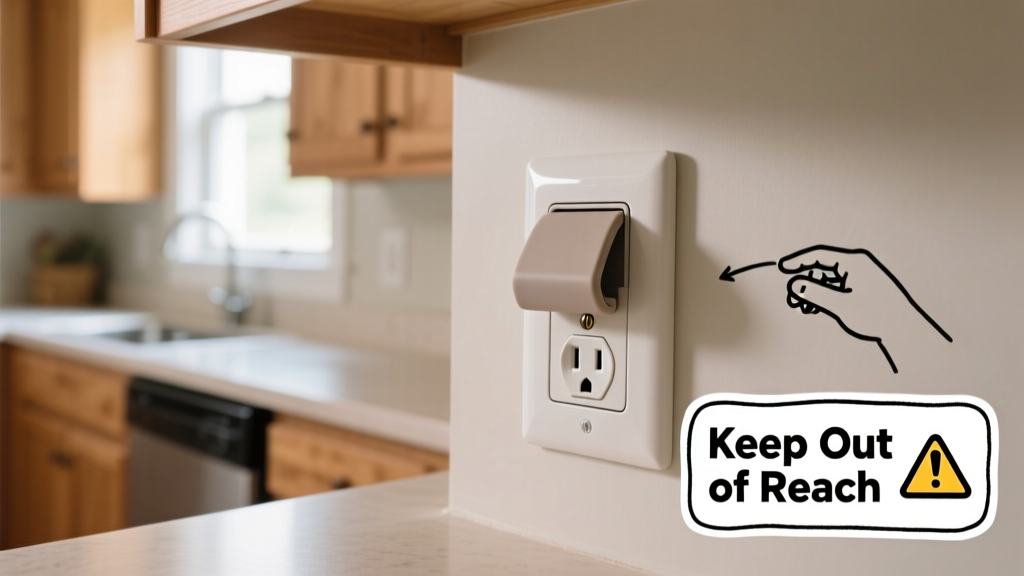
A warm outlet isn’t just uncomfortable—it’s a red flag. According to the U.S. Fire Administration’s 2022 report, electrical distribution equipment (including outlets and switches) caused an estimated 31,700 home structure fires annually between 2018–2022. Most were preventable with routine inspection and load management.
Why This Happens
Outlets heat up when electrical resistance increases—often due to loose connections, worn contacts, or circuit overload. Over time, repeated plugging/unplugging degrades internal brass contacts. Aluminum wiring (common in homes built 1965–1973) expands and contracts more than copper, loosening connections without visible signs. A 2021 NFPA study found that 42% of outlet-related fires originated from improper installation or aging components—not faulty appliances.
- Loose terminal screws behind the outlet faceplate
- Damaged or corroded internal contacts
- Overloaded circuits (e.g., using multiple high-wattage devices on one 15-amp circuit)
- Backstabbed wiring (push-in connections instead of screw terminals)
- Undersized or degraded wiring in older homes
Maintenance Checklist
| Frequency | Task |
|---|---|
| Daily | Unplug space heaters, hair dryers, and other >1,000W devices when not in use |
| Weekly | Feel outlet faceplates for warmth during peak usage hours (e.g., evenings) |
| Monthly | Check for discoloration, buzzing, or burning odor near outlets |
| Yearly | Hire a licensed electrician to torque terminal screws to manufacturer specs (typically 0.5–0.7 N·m) and test ground-fault protection |
Warning Signs
Don’t wait for smoke. Early indicators include subtle but consistent cues:
- Faceplate feels warmer than surrounding wall surface—especially after 10+ minutes of use
- Faint humming or buzzing sound when a device is plugged in
- Discoloration (yellowing, brown scorch marks) around outlet slots or cover plate
- Plug fits loosely or wobbles; requires wiggling to maintain power
- GFCI or AFCI breakers trip intermittently on the same circuit
Recommended Products
Not all outlets are equal. Prioritize safety-rated upgrades over convenience:
- Self-grounding tamper-resistant (TR) outlets — Required by NEC since 2017; reduces arcing risk and prevents child insertion
- Leviton Decora Smart Switches with load monitoring — Shows real-time wattage and alerts via app if draw exceeds safe thresholds
- Thermal imaging plug-in testers — Like the Klein Tools IR1, detects hotspots behind faceplates before they’re touchable
- Copper-only pigtailing kits — For aluminum wiring homes, use COPALUM crimps (not wire nuts) per CPSC guidelines
Can I tighten outlet screws myself?
Yes—if you turn off the correct breaker and verify no voltage with a non-contact tester. But don’t overtighten: brass terminals strip easily. Use a torque screwdriver set to 0.6 N·m. If the outlet feels brittle or the yoke bends, replace it immediately. Aluminum wiring demands special handling—never use standard outlets or DIY connectors.
Is it safe to use a power strip on a warm outlet?
No. Power strips compound load and trap heat. The U.S. Consumer Product Safety Commission warns that daisy-chained strips increase fire risk by 300% when used on compromised outlets (CPSC Report #2023-017). Instead, unplug nonessential devices and redistribute loads across circuits—learn how to identify overloaded circuits.
How often should outlets be replaced?
Every 15–20 years—even if they seem fine. Internal spring tension degrades, increasing contact resistance. In kitchens and bathrooms, replace every 10 years due to moisture exposure. Homes with frequent lightning strikes or brownouts may need replacement as early as 7 years.
"We see 80% of overheated outlets in homes over 25 years old have never been serviced—just swapped for cosmetic reasons," says master electrician Maria Chen, IBEW Local 1245, 2023.
Do LED bulbs affect outlet temperature?
No—but their low wattage lets people add more devices to a circuit without noticing strain. That hidden load can push a marginal outlet past its thermal limit. Always calculate total circuit load: a 15-amp circuit maxes out at 1,800W continuous (80% of 2,250W). Add up everything on the circuit—including refrigerators, microwaves, and smart home hubs.
What’s the safest way to test an outlet’s temperature?
Use your knuckle—not fingertips—to gently brush the faceplate. Fingertips acclimate too quickly; knuckles register subtle warmth faster. If it’s noticeably warmer than adjacent outlets or the wall, stop using it and call an electrician. Infrared thermometers (like the Fluke 62 Max+) read surface temps from 6 inches away—ideal for hard-to-reach locations like behind dressers or entertainment centers.
Should I install AFCI outlets instead of breakers?
AFCI outlets (e.g., Eaton’s BR115AFCI) provide arc-fault protection right at the point of use—critical for older homes with knob-and-tube or deteriorating NM cable. They cost more upfront but eliminate the need to rewire entire circuits. NEC 2023 requires AFCI protection for all 120V, 15–20A outlets in living areas—compare AFCI vs GFCI functions here.
Warm outlets rarely fix themselves—and waiting invites disaster. Most incidents begin with a barely perceptible warmth, ignored for months until insulation chars or a connection fails catastrophically. Catch it early: inspect, test, and upgrade with purpose. Your home’s electrical system should stay invisible—until it’s working exactly as designed.