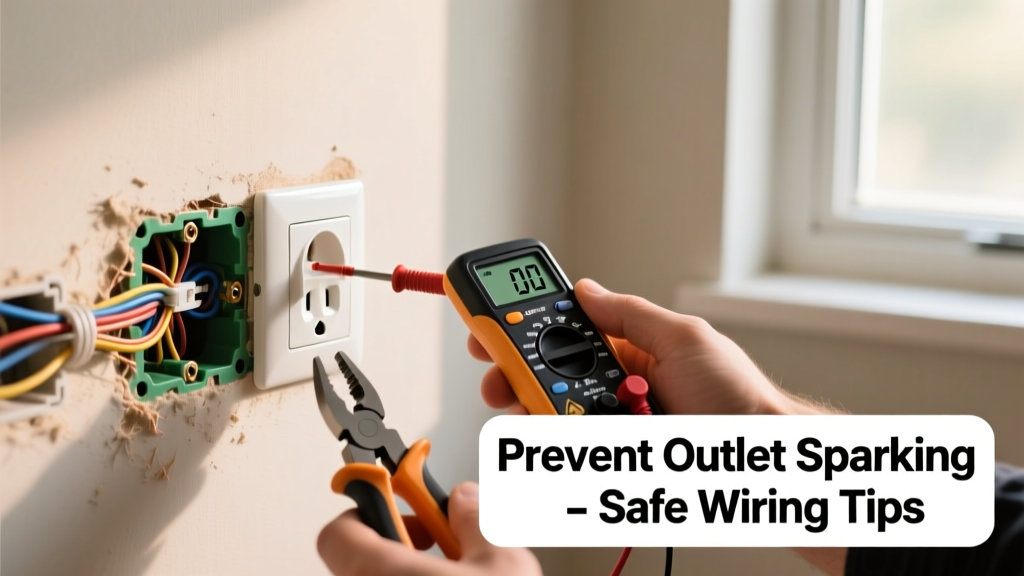
Outlet sparking isn’t always dramatic—but even a tiny blue flash can signal dangerous arcing, overheating, or failing connections. According to the U.S. Fire Administration’s 2022 report, electrical distribution and lighting equipment caused an estimated 34,000 home structure fires annually, with faulty outlets and receptacles involved in over 12% of those incidents. Prevention isn’t just about convenience—it’s about stopping fire before ignition.
Why This Happens
Sparking occurs when electricity jumps across a gap—usually due to compromised integrity in the outlet’s internal components. Common root causes include:
- Loose or corroded terminal screws connecting wires to the outlet
- Worn-out internal contacts that no longer grip plugs tightly (especially after 15+ years of use)
- Overloaded circuits drawing more current than the outlet’s 15- or 20-amp rating
- Moisture intrusion in bathrooms, kitchens, or basements causing short paths
- Backstabbed wiring—where wires are pushed into spring-loaded holes instead of secured under screws—known to loosen over time (a flaw documented in NECA Standard 100-2021)
Maintenance Checklist
| Frequency | Task |
|---|---|
| Daily | Unplug devices gently—don’t yank cords; avoid forcing plugs into loose or wobbly outlets |
| Weekly | Inspect visible outlets for discoloration, warmth, or cracked faceplates—especially behind furniture or entertainment centers |
| Monthly | Test GFCI outlets using their TEST/RESET buttons; replace if they fail to trip (per NEC 210.8) |
| Yearly | Hire a licensed electrician to torque terminal screws to manufacturer specs (typically 0.4–0.5 N·m) and replace outlets older than 15 years |
Warning Signs
Don’t wait for a spark to act. These subtle cues often precede visible arcing:
- Faint buzzing or sizzling sound near an outlet—even when nothing is plugged in
- Warm or hot faceplate during normal use (not just during high-load operation like space heaters)
- Burn marks, brownish discoloration, or melted plastic around the slots
- Plugs falling out without being touched, or requiring excessive force to insert
- Tripping breakers or flickering lights on the same circuit
Recommended Products
Not all outlets are equal—and upgrading key ones significantly reduces risk. Prioritize these types:
- Self-grounding tamper-resistant (TR) outlets: Required by NEC since 2017 for new installations; prevent accidental insertion and maintain ground continuity even if the box isn’t grounded
- Heavy-duty commercial-grade outlets (e.g., Leviton Decora 20A): Rated for 15,000+ insertions vs. standard 5,000—ideal for high-use areas like kitchens and home offices
- Smart AFCI/GFCI combo receptacles: Detect both arc faults (preventing fire) and ground faults (preventing shock)—like Eaton’s BRD115AFI
Can I replace a sparking outlet myself?
Only if you’re experienced with residential wiring—and only after turning off power at the breaker and verifying zero voltage with a non-contact tester. The National Electrical Contractors Association warns that 62% of DIY electrical injuries involve improper grounding or miswired neutrals (NECA Safety Survey, 2023). When in doubt, call a licensed pro. For guidance, see our how to replace an outlet walkthrough.
Do surge protectors prevent sparking?
No—they suppress voltage spikes but don’t stop internal outlet degradation or loose connections. A surge protector plugged into a failing outlet may overheat or fail silently. Always address the outlet first. Learn more about proper surge protector installation.
Why do outlets spark when I plug something in?
A brief, tiny spark (less than 1mm, gone in under 0.1 second) is normal during initial contact—it’s the arc as current bridges the tiny air gap. But sustained sparking, loud pops, or sparks that happen repeatedly with the same device indicate worn contacts or overloaded capacity. As electrician Maria Chen notes in Electrical Safety Today (2022):
"If you see yellow or white sparks—or smell ozone (a sharp, metallic scent)—that’s not ‘normal’ arcing. That’s ionized air from dangerous, high-energy fault conditions. Turn off the circuit and call someone immediately."
Are aluminum-wired homes more prone to sparking?
Yes—aluminum oxidizes faster than copper, increasing resistance and heat at connections. Homes built between 1965–1973 often used aluminum branch-circuit wiring. Outlets must be rated CO/ALR (copper-aluminum rated), and connections should be tightened to exact torque specs every 5 years. See our aluminum wiring safety guide for inspection tips.
How often should I replace outlets?
Every 15 years minimum—even if they seem fine. Internal spring tension degrades, contacts wear, and insulation becomes brittle. In high-use locations (kitchens, laundry rooms, garages), consider replacement every 10 years. The Consumer Product Safety Commission found that 41% of outlet-related fires involved units installed more than 20 years prior (CPSC Report #E22-004, 2022).
Preventing outlet sparking starts long before the first flash appears. It’s in the tightness of a screw, the age of a receptacle, and the habit of checking what’s hidden behind the faceplate. Treat each outlet like a small engine: it runs silently until it doesn’t. Stay proactive—not reactive—and your home stays safer, longer.