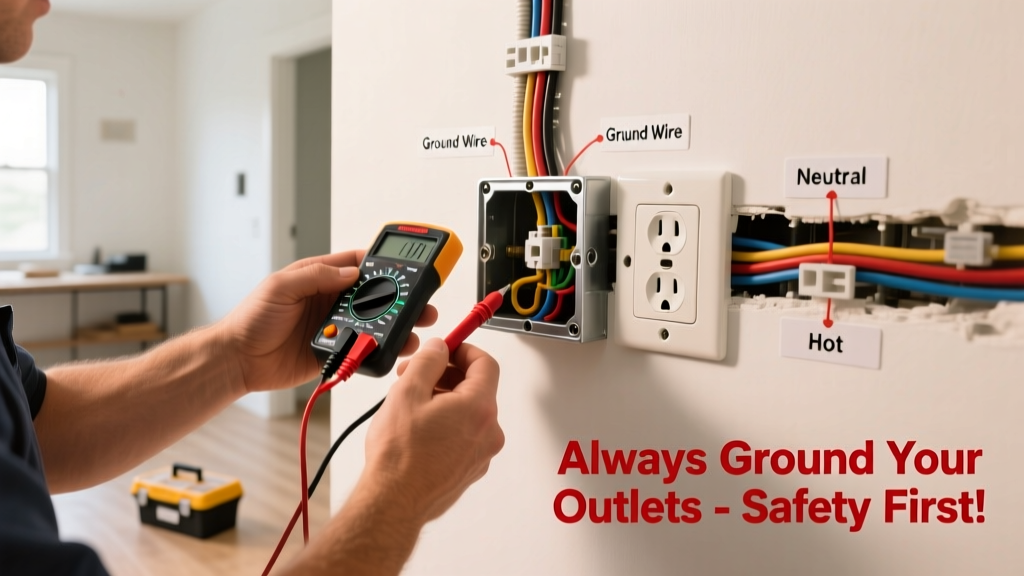
A missing ground wire at an electrical outlet isn’t just outdated—it’s dangerous. Ungrounded outlets can’t safely divert fault current, raising the risk of electric shock, equipment damage, and fire. According to the U.S. Fire Administration’s 2022 report, faulty wiring—including improper grounding—accounts for nearly 17% of home structure fires.
Why This Happens
Most 'no ground' outlets appear in homes built before 1962, when the National Electrical Code (NEC) first required grounding for all 120-volt receptacles. Older two-prong outlets were never designed with a ground path. But even newer homes aren’t immune: DIY repairs gone wrong, corroded ground wires, or miswired GFCI installations can silently eliminate grounding.
- Knob-and-tube or early NM cable lacking a ground conductor
- Ground wire disconnected or cut behind the outlet box
- GFCI installed without proper grounding—and mislabeled as 'GFCI protected' instead of 'No equipment ground'
- Aluminum wiring with failed crimps or oxidation at ground terminals
Maintenance Checklist
| Frequency | Task |
|---|---|
| Daily | Visually inspect for cracked faceplates, discoloration, or warmth near outlets |
| Weekly | Test GFCIs using their 'Test' button (they should trip; reset after) |
| Monthly | Use a $12 outlet tester (like the Klein Tools RT210) on every receptacle—verify green light pattern for proper grounding |
| Yearly | Hire a licensed electrician to perform ground resistance testing (<5 ohms per NEC 250.56) and verify continuity from outlet to panel ground bar |
Warning Signs
If you notice any of these, stop using the outlet and schedule an inspection:
- Faint buzzing or humming sound coming from the outlet
- Three-prong plug fits loosely—or the third prong wobbles visibly
- Surge protectors blink 'ground fault' or refuse to power on
- Electronics behave erratically (e.g., monitors flicker, chargers overheat)
Recommended Products
These tools and components help identify, verify, or remediate grounding issues:
- Outlet testers: Sperry Instruments GFI6302 (certified to UL 1436, includes open-ground detection)
- GFCI receptacles: Leviton SmartlockPro GFCI (designed for ungrounded circuits with clear 'No Equipment Ground' labeling)
- Grounding adapters: Only use UL-listed, three-prong-to-two-prong adapters with attached grounding screw—and only if connected to a grounded metal box
- Ground continuity testers: Fluke 1625-2 GEO Earth Ground Tester for professional-grade verification
Can I add a ground wire to an old outlet?
Yes—but only if a continuous, code-compliant grounding path exists back to your panel. That usually means running a new 12 AWG bare copper ground wire through the same conduit or raceway to the main service panel. Retrofitting ground wires is permitted under NEC 250.130(C), but it’s rarely practical in finished walls. A licensed electrician must verify the path’s continuity and bonding.
Is a GFCI enough if there’s no ground?
It’s better than nothing—but not equivalent. GFCIs detect current imbalances (as low as 4–6 mA) and cut power in <25 ms, reducing shock risk. However, they don’t prevent voltage surges or stabilize reference potential like a true ground. The NEC requires GFCIs installed on ungrounded circuits to be labeled 'No Equipment Ground'.
According to the 2023 NFPA 70E Handbook, 'GFCI protection does not replace grounding—it mitigates one hazard, not all.'
Why do some outlets test 'open ground' while others on the same circuit are fine?
Ground paths can break at junction boxes, splices, or even inside walls where wires pass through nails or staples. A single loose ground wire under a wire nut in a downstream box will cause every outlet past that point to fail grounding tests—even if upstream outlets read fine. That’s why full-circuit tracing matters.
Do surge protectors work without a ground?
No—they rely on the ground wire to shunt excess voltage (e.g., from lightning or utility spikes) safely away. Without a ground, MOVs inside the protector have nowhere to dump energy, which can lead to overheating, failure, or fire. Choose models with ground-fault indicators and pair them only with properly grounded outlets.
Can aluminum wiring cause 'no ground' readings?
Yes—especially in homes wired between 1965–1973. Aluminum oxidizes quickly at connections, increasing resistance and breaking ground continuity. Even if the wire looks intact, a high-resistance joint can read as 'open ground' on a tester. Always use CO/ALR-rated devices and antioxidant paste during repairs. See our aluminum wiring safety checklist for step-by-step verification.
Preventing 'no ground' isn’t about chasing perfection—it’s about consistent verification and knowing when to call in a pro. Most homeowners can catch 80% of grounding failures with a $10 tester and monthly checks. When in doubt, hire a licensed electrician who carries liability insurance and uses a calibrated ground resistance meter. Your outlets shouldn’t just look safe—they need to function safely, every time.