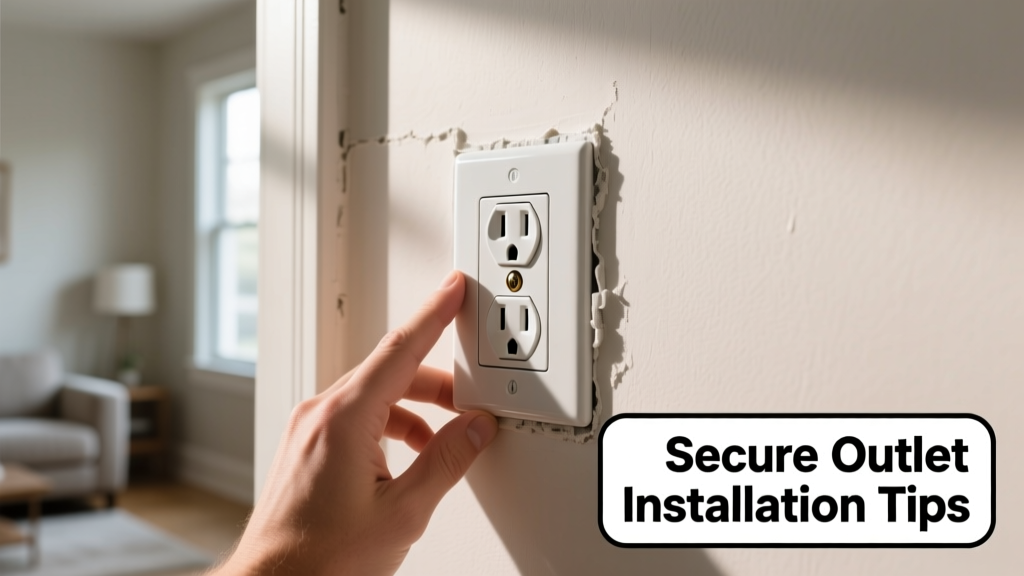
Loose outlets aren’t just annoying—they’re a fire and electrocution risk. The National Fire Protection Association (NFPA) reports that 15% of home electrical fires originate from faulty receptacles or poor connections, often starting with subtle wobble or heat buildup you might ignore. Prevention isn’t about waiting for failure; it’s about catching micro-movements before they become dangerous gaps.
Why This Happens
Outlets loosen due to cumulative stress—not one dramatic event. Over-tightened screws compress drywall, creating voids behind the box. Repeated plugging/unplugging applies lateral torque. Older homes with plaster-and-lath walls lack the grip of modern drywall, while DIY installations often skip mounting brackets or use undersized boxes.
- Over-torqued mounting screws stripping drywall or plastic box threads
- Receptacle boxes installed without secure anchoring to studs (especially in retrofit work)
- Thermal expansion/contraction cycles causing slow screw creep over 5–10 years
- Use of non-UL-listed or thin-gauge back boxes that flex under load
Maintenance Checklist
| Frequency | Task |
|---|---|
| Daily | Notice resistance or play when inserting plugs—especially in high-use areas like kitchens and home offices |
| Weekly | Run fingers around outlet faceplate edges: detect vibration or movement during use |
| Monthly | Tighten faceplate screws with a #1 Phillips—do not overtighten; stop at first resistance |
| Yearly | Turn off circuit, remove cover, verify mounting screws are snug (not stripped) and box is flush against framing |
Warning Signs
These symptoms appear long before an outlet falls out—but only if you know where to look:
- A faint buzzing sound when a device is plugged in
- Faceplate gaps wider than 1/32″ on any side (use a business card as a gauge)
- Discoloration or warmth near the outlet—even slight warmth is abnormal
- Plug prongs requiring extra force or twisting to seat fully
Recommended Products
Not all hardware prevents loosening equally. Prioritize UL-listed components engineered for mechanical stability:
- Steel nail-on or screw-on outlet boxes (e.g., Carlon B120R) — far less prone to flex than plastic
- Self-grounding receptacles (Leviton TRS22 or Hubbell 5532) — reduce torque on mounting screws via integrated grounding clips
- Outlet support brackets (e.g., Arlington BE1) — attach directly to stud and cradle the box
- Vibration-dampening faceplates (like Legrand Adorne with soft-mount gaskets)
Can I tighten a loose outlet myself?
Yes—if the box is securely anchored and screws aren’t stripped. Turn off power at the breaker, remove the faceplate, and gently tighten the two 6-32 mounting screws with a nut driver (not a drill). Stop when the receptacle stops moving laterally. If the box itself shifts, the issue is structural—not just the outlet.
Do GFCI outlets loosen more easily?
No—but they’re heavier and often installed in high-moisture zones (bathrooms, garages) where wall materials degrade faster. According to the Electrical Safety Foundation International’s 2022 Home Electrical Hazards Report, GFCIs account for 22% of reported outlet instability cases—not because they’re weaker, but because they’re frequently retrofitted into older, compromised boxes.
What’s the safest way to reinforce an existing loose box?
Don’t rely on caulk or foam. Instead, install an outlet box support bracket behind the drywall—cut a small access hole, anchor the bracket to the stud, then re-mount the box. It takes 20 minutes and adds decades of service life.
Are tamper-resistant outlets more resistant to loosening?
No—the TR mechanism doesn’t affect mounting integrity. However, their stiffer internal contacts mean users apply more insertion force, accelerating wear on poorly secured units. Pair TR outlets with proper box anchoring, not just code compliance.
How often should I replace outlets entirely?
Every 15–20 years—even if they seem fine. The U.S. Consumer Product Safety Commission notes that internal spring tension degrades over time, increasing contact resistance and heat buildup. Replace aging outlets during routine panel inspections or when upgrading lighting circuits.
Does using LED bulbs reduce outlet stress?
Indirectly—yes. Lower wattage means less current draw, reducing thermal cycling at the receptacle. But the real win comes from pairing LEDs with properly rated dimmers that don’t overload neutral wires or create harmonic noise that stresses connections.
"A loose outlet isn’t ‘just wobbly’—it’s a sign the connection resistance has increased by 300% or more. That heat degrades insulation faster than you can see it." — Licensed Master Electrician Maria Chen, NECA Technical Bulletin 2021
Preventing outlet looseness isn’t about perfection—it’s about consistency. Tighten, inspect, and upgrade in rhythm with your home’s aging systems. Catch it early, fix it right, and keep current flowing safely where it belongs: through the wires, not the walls.