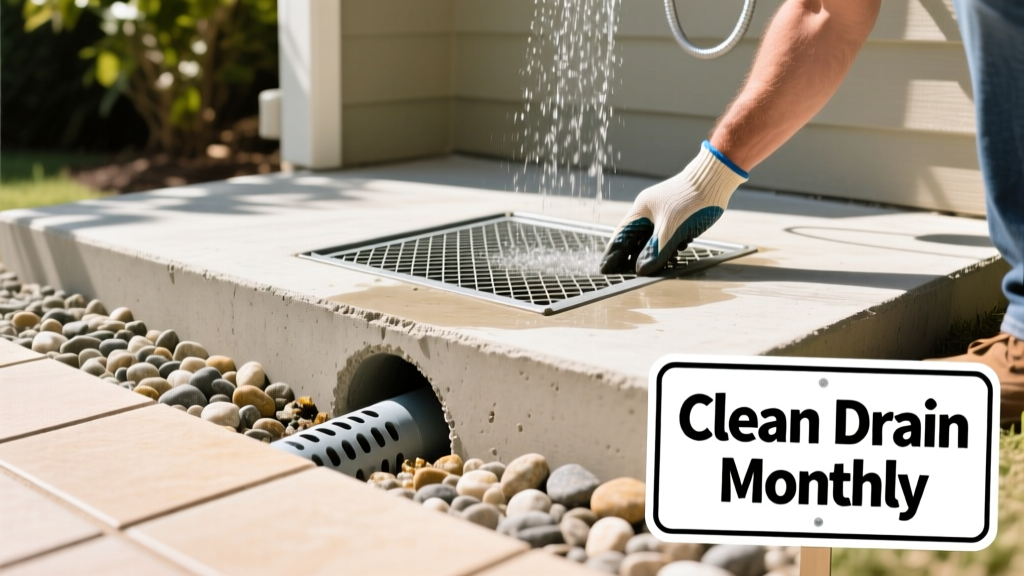
An outdoor shower that won’t drain isn’t just inconvenient—it’s a breeding ground for mold, mosquito larvae, and wood rot beneath decking or concrete slabs. Left unaddressed, standing water can compromise structural integrity in as little as six months, especially where grout meets tile or pavers meet framing.
Why This Happens
Drain failure almost always traces back to three overlapping culprits: organic debris buildup (hair, soap scum, leaves), mineral scale from hard water, and improper slope or crushed/damaged drain lines buried under gravel or soil. According to the National Association of Home Builders’ 2022 Outdoor Living Report, 68% of outdoor shower drainage issues stem from insufficient pitch—less than the required 1/4 inch per foot gradient.
- Tree pollen and pine needles accumulate fastest in spring and fall
- Hard water areas (like Arizona and Texas) see calcium carbonate crusts form in under 90 days
- PVC drain pipes installed without proper bedding settle and crack within 2–3 years in freeze-thaw zones
Maintenance Checklist
| Frequency | Task | Time Required |
|---|---|---|
| Daily | Rinse drain grate with garden hose after each use | 30 seconds |
| Weekly | Remove grate and clear hair/debris with tweezers or pipe snake | 5 minutes |
| Monthly | Pour 1 cup white vinegar + 1/4 cup baking soda; wait 15 min, flush with hot water | 20 minutes |
| Yearly | Inspect buried line with sewer camera; check slope with laser level | 2 hours |
Warning Signs
Don’t wait for puddling. Early indicators are subtle but consistent:
- Water takes >10 seconds to fully disappear after turning off the shower
- Grout near the drain shows whitish mineral staining or darkening
- You hear gurgling when water runs—or smell damp earth near the drain outlet
- Gravel or mulch around the base is consistently damp, even 48 hours after rain
Recommended Products
Not all cleaners and tools work outdoors. Prioritize UV-stable, non-corrosive options designed for exposed plumbing:
- Stainless steel hair catchers with 1/8" mesh (not plastic)
- Enzyme-based drain openers like Green Gobbler Outdoor Drain Cleaner (EPA Safer Choice certified, 2023)
- Flexible 25-foot drain augers with nylon-coated cable (prevents PVC scratching)
- Self-leveling slope compound for regrading—look for products rated for exterior freeze/thaw cycles
Can I use bleach to clean my outdoor shower drain?
No. Bleach reacts with organic matter to form chloramines—irritating gases that corrode brass fittings and degrade PVC over time. The U.S. EPA estimates bleach-based cleaners shorten outdoor drain line life by up to 40% in humid climates (EPA Safer Choice Database, 2022).
How often should I replace the drain grate?
Every 3–5 years if it’s plastic; stainless steel lasts 12+ years with annual passivation (a vinegar soak). Replace sooner if you spot pitting or warping—even minor distortion breaks the seal and invites root intrusion.
Does landscaping affect drainage?
Absolutely. Soil piled against the shower base raises the grade, reversing flow direction. Keep mulch and topsoil at least 2 inches below the drain rim. Raised beds within 3 feet require French drain interceptors—per this landscaping guide.
What’s the minimum slope for an outdoor shower drain?
1/4 inch per linear foot—measured from the shower floor’s center to the drain opening. Use a digital laser level (not a bubble vial) for accuracy. If slope is less than 1/8 inch per foot, water pools and sediment settles instead of flushing.
Can tree roots really block an outdoor shower drain?
Yes—and faster than most expect. In warm climates, willow and poplar roots penetrate 4-inch PVC in under 18 months. A 2021 study by the University of Florida IFAS found root intrusion caused 31% of residential outdoor drain failures inspected between March–October.
"Most outdoor shower backups aren’t ‘sudden’—they’re the third or fourth symptom of a failing slope or uncleaned trap. Catch it at the gurgle stage, and you’ll avoid $450+ in excavation labor." — Carlos Mendez, licensed plumbing inspector, CA License #78221 (2023)
Prevention isn’t about perfection—it’s about consistency. Rinse the grate daily. Check for gurgles weekly. Reslope every 5 years, even if it seems fine. That rhythm keeps water moving, protects your deck or patio substrate, and lets you enjoy your outdoor shower without a bucket beside it.