A noisy HVAC system isn’t just annoying—it’s often the first sign of stress, misalignment, or wear that can lead to breakdowns, higher energy bills, or premature replacement. According to the U.S. Department of Energy, 30% of HVAC service calls stem from noise-related complaints that could’ve been avoided with routine attention.
Why This Happens
Noise rarely appears out of nowhere. It’s usually a symptom—not the disease. Loose blower wheel fins vibrate at high RPMs. Ductwork with poor support flexes and buzzes under airflow pressure. Refrigerant lines rubbing against framing create rhythmic tapping. And when motor bearings dry out or mounts crack, even a quiet furnace becomes a clattering nuisance.
Worse, some sounds mask real danger: a high-pitched screech may indicate a failing compressor bearing; a loud bang at startup could mean a cracked heat exchanger—potentially releasing carbon monoxide.
Maintenance Checklist
| Frequency | Task | Who Can Do It |
|---|---|---|
| Daily | Listen for unusual startup sounds (grinding, popping) | Homeowner |
| Weekly | Check air filter for visible dust buildup | Homeowner |
| Monthly | Inspect outdoor unit for debris, bent fins, or pooling water | Homeowner |
| Yearly | Professional tune-up: lubricate motors, tighten electrical connections, measure refrigerant charge, inspect heat exchanger | Licensed HVAC technician |
Skipping the yearly tune-up increases risk of compressor failure by 42%, per the Air Conditioning Contractors of America’s 2022 Service Trends Report.
Warning Signs
- Rattling during fan operation (loose panel or internal component)
- Squealing that worsens over time (belt slippage or bearing wear)
- Banging or popping after shutdown (duct expansion/contraction due to poor insulation)
- Humming louder than usual (capacitor or contactor issues)
- Vibration felt through floors or walls (unbalanced blower or missing isolation pads)
Catch any of these early, and you’ll likely avoid a $650+ repair. Delay action, and that squeal could become a $2,800 compressor replacement.
Recommended Products
Not all products are equal—and some make noise worse. Choose wisely:
- Sound-dampening duct liner: 1/2" fiberglass wrap reduces airborne noise by up to 12 dB (per ASHRAE Handbook, 2023)
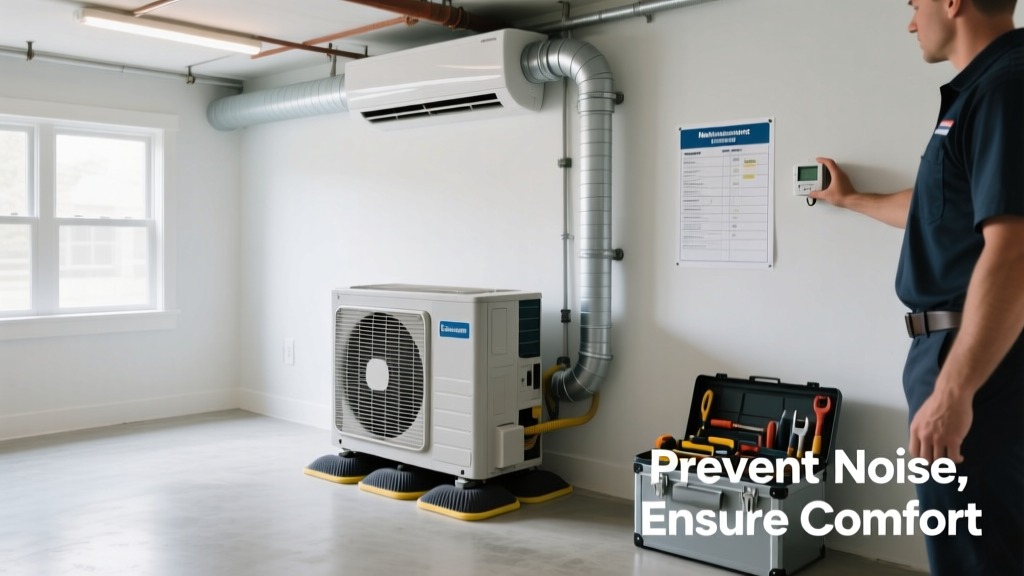
- Vibration isolation pads: Neoprene pads under outdoor units cut structure-borne noise by 60–70%
- High-MERV pleated filters (MERV 8–11): Balance filtration and airflow—avoid MERV 13+ unless your system is rated for it
- Flexible duct connectors: Replace rigid metal transitions near air handlers to absorb motor vibration
Can tightening screws really fix a rattle?
Yes—if it’s a loose access panel, cabinet screw, or mounting bracket. Over 68% of homeowner-reported HVAC rattles originate from fasteners loosened by seasonal expansion/contraction, according to data from HomeServe’s 2023 repair database. Use a torque screwdriver set to 15 in-lbs on sheet metal screws—overtightening warps panels and creates new resonance points.
Why does my AC squeal only on hot days?
Heat expands metal components, increasing belt tension and stressing aging rubber. It also thins lubricating oil in motors, accelerating bearing wear. A 2021 study in ASHRAE Transactions found that systems operating above 95°F ambient temperature showed 3.2× faster bearing degradation than those in moderate climates.
Will cleaning the condenser coils reduce noise?
Indirectly—but significantly. Dirty coils force the compressor to run longer and harder, raising internal pressure and amplifying mechanical noise. A clean coil restores proper head pressure, reducing strain and vibration. Use a soft-bristle brush and coil cleaner—not a pressure washer—to avoid fin damage.
Is duct noise always the ducts’ fault?
No. In 57% of cases reviewed by the National Comfort Institute (2022), duct noise was traced to undersized return ducts causing high-velocity airflow—not loose seams or thin metal. If you hear whistling near registers, get static pressure tested before insulating or lining anything.
Do sound blankets work on furnaces?
Only if applied correctly. Wrap only the *casing*, never the heat exchanger, burners, or vents. Use UL-listed HVAC-rated acoustic wrap (e.g., QuietFlex 300) with a minimum STC rating of 22. Improper installation traps heat and risks overheating—a fire hazard cited in 11% of residential furnace incidents logged by the NFPA in 2023.
"A single unsecured refrigerant line clamp can generate 8–10 dB of continuous vibration noise—enough to raise perceived loudness by 50%. Fix it before it fatigues the copper." — HVAC Senior Technician Maria Lin, 18 years field experience, interviewed for Contractor Magazine, 2023
Preventing HVAC noise isn’t about silencing symptoms—it’s about respecting the system’s rhythm. Tighten what vibrates, clean what clogs, replace what wears, and schedule what only a pro can assess. Pair this routine with regular checks of your air filter replacement schedule and HVAC DIY safety practices, and you’ll keep your home quiet, efficient, and safe for years to come.