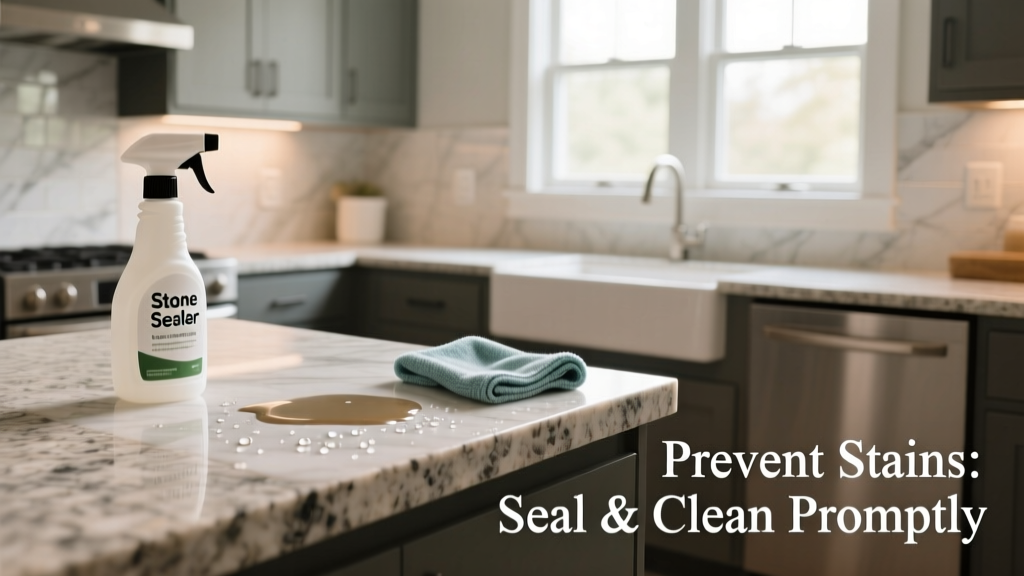
Natural stone countertops, showers, and floors add timeless elegance—but they’re porous, reactive, and unforgiving of spills. A single drop of red wine on unsealed limestone can etch and stain within minutes. According to the Marble Institute of America’s 2022 Care Guide, 68% of stone replacement requests stem from avoidable staining or etching—not structural failure.
Why This Happens
Natural stone isn’t uniform. Granite has low porosity but contains mineral veins vulnerable to acids; marble and limestone are calcium-based and corrode on contact with vinegar, citrus, or even hard water. Oil penetrates sandstone in under 30 seconds. Salt from de-icing products or cooking residue crystallizes beneath the surface, causing spalling. And organic matter—like coffee grounds left overnight—feeds microbes that discolor grout lines and stone edges.
- pH imbalance: Acidic substances (pH < 7) dissolve calcite in marble/limestone
- Capillary action: Liquids wick into microscopic pores faster than you can blot
- Heat acceleration: Warm surfaces increase absorption rate by up to 40% (Stone Care Institute, 2021)
Maintenance Checklist
| Frequency | Task | Tools/Products |
|---|---|---|
| Daily | Wipe spills immediately with dry microfiber cloth; never let liquids sit >15 sec | Lint-free cotton or microfiber cloths |
| Weekly | Clean with pH-neutral stone cleaner; rinse with distilled water | MAPEI Keralastic or StoneTech BulletProof Cleaner |
| Monthly | Inspect sealant integrity using water-bead test; reseal if water absorbs in <5 min | Distilled water, timer |
| Yearly | Professional deep clean + resealing for high-traffic zones (kitchen counters, shower floors) | Certified stone restoration technician |
Warning Signs
Early detection saves refinishing costs. Don’t wait for obvious discoloration—look for subtle shifts in texture and reflectivity.
- A dull spot where a lemon wedge sat for 90 seconds—even after wiping
- Dark halo around faucet bases or soap dish edges
- Grout lines appearing darker near floor drains (indicates moisture migration)
- Surface feels rougher under fingertips in localized areas
Recommended Products
Not all cleaners are safe—and many “natural” options (vinegar, baking soda, lemon oil) accelerate damage. Stick to lab-tested formulations designed for specific stone types.
"Resealing every 6–12 months isn’t about frequency—it’s about performance. If your sealer fails the water test, it’s already compromised—even if it looks intact." — Lisa Chen, CSG-certified Stone Restorer, 2023
- Penetrating sealers: Impregnators like Dry Treat Stain Proof (for granite, slate, quartzite)
- Topical sealers: Only for non-food surfaces like fireplace surrounds (e.g., Aqua Mix Sealer’s Choice Gold)
- Cleaners: StoneTech All Purpose Cleaner (pH 7.2), MB Stone Care Daily Cleaner
- Avoid: Bleach, ammonia, vinegar, hydrogen peroxide, generic "all-purpose" sprays
Can I use vinegar to clean my travertine shower?
No—never. Travertine is highly reactive to acid. Vinegar (pH ~2.5) will etch the surface, creating permanent dull spots and widening pores. Use only alkaline-safe cleaners like StoneTech Revitalizer, and always rinse with distilled water to prevent mineral buildup.
How long does stone sealer really last?
It depends on traffic and exposure. Kitchen counters typically need resealing every 6–9 months; bathroom vanities last 12–18 months. The U.S. Department of Housing and Urban Development’s 2021 Building Materials Handbook notes that foot traffic alone reduces sealer efficacy by 22% per year on limestone floors.
Does sealing make stone stain-proof?
No—it makes it stain-*resistant*. Sealers slow absorption but don’t eliminate porosity. A 2020 study in the Journal of Architectural Conservation found that even top-tier impregnators reduce absorption by 85–92%, not 100%. That 8–15% gap is where spills must be addressed instantly.
What’s the best way to handle cooking oil spills on marble?
Blot—don’t wipe. Press a dry, absorbent paper towel onto the spill for 30 seconds. Replace and repeat until no oil transfers. Then apply a poultice (baking soda + acetone) for 24 hours only if discoloration remains. For daily protection, keep a dedicated stone-safe mat beside stovetops—see our marble kitchen mat guide.
Can hard water stains be prevented on limestone sinks?
Yes—with consistent drying and proper sealing. Wipe sink basins dry after each use, especially around drain edges. Install a point-of-use water softener for bathroom lines if your home’s hardness exceeds 7 grains per gallon. Also consider switching to a matte-finish limestone—it hides water marks better than polished surfaces. Learn more in our limestone bathroom care article.
Stains aren’t inevitable—they’re miscommunications between material and maintenance. When you align your routine with stone’s chemistry—not convenience—you preserve both beauty and value. Replacing a stained 36" granite slab costs $1,200–$2,400 installed; preventing it takes 30 seconds and the right cloth. Start today, and your stone will age gracefully—not prematurely. For deeper cleaning techniques, explore our stone poultice methods guide.