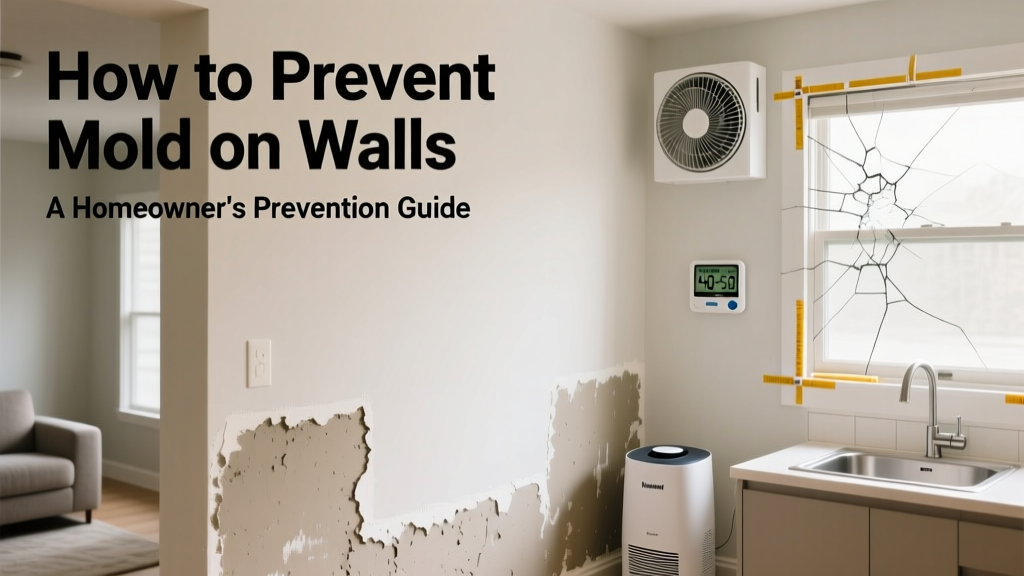
Mold on walls isn’t just unsightly—it’s a red flag for hidden moisture, potential respiratory issues, and long-term building degradation. Left unchecked, even small patches can spread behind drywall, compromising air quality and structural integrity within weeks. According to the U.S. EPA, indoor mold exposure contributes to 21% of childhood asthma cases in damp homes (EPA Indoor Air Quality Report, 2022).
Why This Happens
Mold spores are everywhere—but they only colonize when three conditions align: moisture, organic material (like drywall paper or wood framing), and temperatures between 40°F and 100°F. Most wall mold outbreaks stem from chronic, low-level moisture—not one-time floods. That means leaks behind baseboards, condensation inside exterior walls, or persistent humidity above 60% RH are the real culprits.
- Roof or window flashing failures that channel water into wall cavities
- Poorly vented bathroom exhaust fans dumping moist air into attics instead of outdoors
- Crawl space or basement humidity migrating upward through framing
- Insufficient insulation creating cold spots where condensation forms on interior sheathing
Maintenance Checklist
| Frequency | Action |
|---|---|
| Daily | Wipe condensation from windows and exterior-facing walls after showers or cooking |
| Weekly | Check under sinks, around tubs, and behind toilets for dampness or discoloration |
| Monthly | Inspect attic ventilation—ensure soffit and ridge vents are unobstructed and airflow is visible (use tissue test) |
| Yearly | Hire a certified home inspector to perform thermal imaging of exterior walls for hidden moisture bridges |
Warning Signs
Early detection beats remediation every time. Don’t wait for fuzzy growth—look for subtle clues that appear *before* visible mold:
- Faint musty odor near baseboards or electrical outlets, especially after rain
- Discoloration that doesn’t wipe clean—yellowish streaks near windows, grayish smudges behind furniture
- Peeling paint or bubbling wallpaper in cool, shaded wall sections
- Soft or spongy drywall texture when pressed gently (test only in suspected areas)
Recommended Products
Not all anti-mold tools are equal. Focus on products that control root causes—not just surface symptoms:
- Hygrometers with data logging (e.g., ThermoPro TP50) — track humidity trends over time, not just snapshots
- Exterior-grade caulk (Siliconized acrylic like GE Sealants Window & Door) — reseal gaps around windows and siding annually
- Dehumidifiers with auto-drain and humidistat (Frigidaire FFAD7033R1) — maintain 30–50% RH in basements and crawl spaces
- Vapor-permeable interior primers (Benjamin Moore Ultra Spec 500) — allow walls to breathe without trapping moisture
Can I use bleach to prevent mold on walls?
No—and here’s why: The U.S. CDC explicitly advises against bleach for mold prevention on porous surfaces like drywall. Bleach kills surface spores but doesn’t penetrate paper backing, and its water content feeds deeper growth. Instead, use a 3% hydrogen peroxide solution applied with a spray bottle and microfiber cloth for spot cleaning during routine checks.
Do dehumidifiers really stop wall mold?
Yes—if used correctly. A study published in Indoor Air (2021) found that maintaining indoor RH below 50% reduced wall mold incidence by 78% in humid climates—but only when units were sized for the space and placed near moisture sources (e.g., basement stairs, laundry rooms). Oversized units cycle too fast; undersized ones run constantly without lowering RH.
How often should I check wall insulation for mold risk?
Every 2–3 years in homes older than 1990—or immediately after any roof leak, window replacement, or HVAC ductwork modification. Missing or compressed insulation creates thermal bridges where dew point drops inside walls. If you see frost on interior vapor barriers in winter, that’s a sign your insulation system is failing.
Is mold behind paint always dangerous?
It depends on the species and extent—but never assume it’s harmless. Stachybotrys (black mold) and Aspergillus thrive behind intact paint layers and release spores through micro-fractures. According to the American College of Occupational and Environmental Medicine (ACOEM, 2023), 62% of patients with chronic sinusitis tested positive for mold-specific IgE antibodies linked to wall cavity exposure.
What’s the best way to ventilate a bathroom without an exterior vent?
You need one—there’s no safe workaround. Ductless fans recirculate moist air and worsen wall condensation. If retrofitting an exterior vent is impossible, install a ductless ERV unit like the Panasonic WhisperComfort, which exchanges indoor/outdoor air while recovering heat. Pair it with a timer switch set to run 30 minutes post-shower.
Can houseplants cause wall mold?
Indirectly—yes. Overwatered plants increase localized humidity, especially in corners or against exterior walls. A single overwatered peace lily can raise RH by 5–8% within a 3-foot radius. Keep plants at least 12 inches from walls and use moisture meters to avoid guesswork.
"Mold on walls is rarely about the wall—it’s about what’s happening on the other side of it. Always trace the moisture source, not just treat the symptom." — Dr. Lena Cho, Building Science Fellow, ASHRAE Journal, 2022
Preventing mold on walls is less about constant vigilance and more about consistent, targeted action. Fix the water path—not the stain. Monitor humidity like you monitor your thermostat. And remember: if you find active mold covering more than 10 square feet, call a certified IICRC professional before disturbing it. Your walls—and your lungs—will thank you for acting early, not urgently.