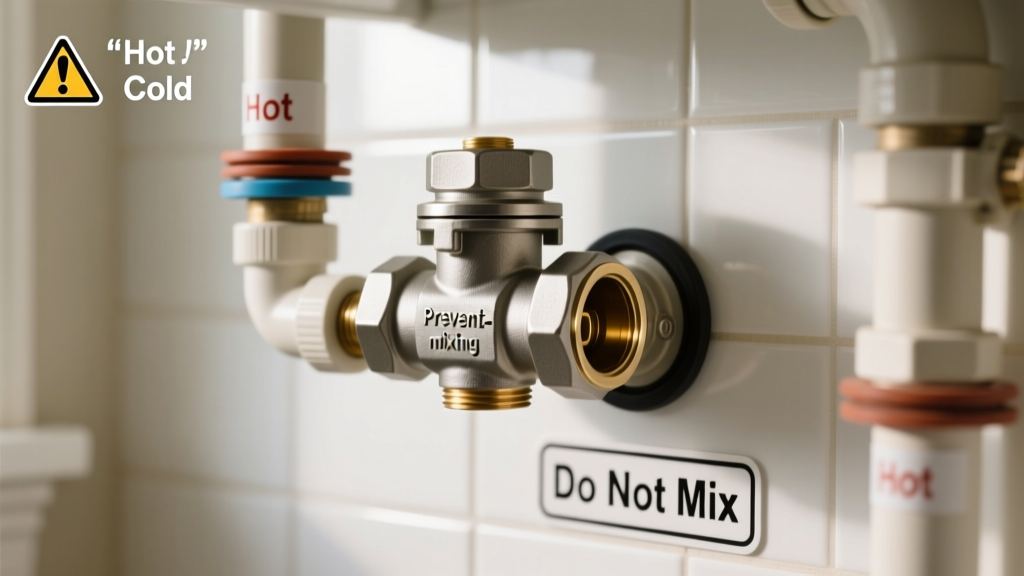
A mixing valve that stops mixing isn’t just inconvenient—it’s dangerous. Sudden blasts of scalding water or icy shocks can cause burns or slips, especially for children and older adults. According to the U.S. Consumer Product Safety Commission, over 1,200 scald injuries requiring emergency treatment occur annually in homes with malfunctioning temperature-control valves (2022 report). Prevention is faster, safer, and far cheaper than replacement.
Why This Happens
Mixing valves fail not from age alone—but from predictable, preventable stressors. Mineral buildup from hard water clogs internal ports within 6–18 months in high-TDS areas. Thermal expansion cracks ceramic cartridges. Cross-threaded installation creates micro-leaks that accelerate seal degradation. And neglected shut-off valves seize up, preventing proper isolation during service.
- Hard water scale (calcium/magnesium) binds moving parts—especially in valves without built-in scale inhibitors
- Chlorine and chloramine in municipal water degrade rubber O-rings and silicone seals over time
- Thermal cycling (repeated heating/cooling) fatigues brass bodies and cartridge springs
- Debris from pipe corrosion or construction enters during system flushing or pressure surges
Maintenance Checklist
| Frequency | Task | Time Required |
|---|---|---|
| Daily | Test hot water temperature at nearest faucet using a calibrated thermometer (digital thermometer guide) | 1 minute |
| Weekly | Flush aerators on all fixtures downstream of the valve to reduce sediment feedback | 5 minutes |
| Monthly | Turn manual balancing handles fully clockwise then counterclockwise 3x to dislodge minor scale | 2 minutes |
| Yearly | Remove and soak cartridge in white vinegar (1:1 with water) for 30 minutes; inspect O-rings for nicks or flattening | 25 minutes |
Warning Signs
Don’t wait for total failure. These symptoms appear weeks—or even months—before the valve stops regulating temperature:
- Water temperature varies more than ±3°F between morning and evening use
- Hot water takes longer to reach set temp after cold-water use (e.g., post-shower flush)
- Faint hissing or gurgling near the valve housing when water runs
- Visible mineral crust around handle stems or access ports
- Need to adjust the thermostat dial more than 2° higher every 3 months to maintain comfort
Recommended Products
Not all valves respond equally to maintenance. Prioritize models with field-serviceable cartridges and integrated scale resistance. For retrofits, consider these categories:
- Scale-resistant cartridges: Moen PosiTemp with HydroLock™ (2021+), Delta TempAssure® with anti-scale ceramic discs
- Pressure-balanced valves: Kohler K-596-KS (tested to 500,000 cycles per ASSE 1016:2022)
- Whole-house pre-filters: Watts Premier 10” Dual-Stage (removes particles down to 5 microns; extends valve life by ~40% per filter lifespan study)
How often should I replace the cartridge?
Most manufacturers recommend replacement every 3–5 years—but real-world data tells a different story. In homes with >120 ppm hardness,
"Cartridge failure rates jump from 8% to 37% between Year 2 and Year 3, per the Plumbing Manufacturers International 2023 Field Failure Survey."If your water tests above 100 ppm, plan for replacement at 24 months—and keep one on hand.
Can I clean the valve without shutting off main water?
No. Always isolate both hot and cold supply lines using the dedicated shut-offs upstream of the valve. Skipping this risks cross-contamination, airlocks, or uncontrolled pressure release. If your valve lacks individual shutoffs, install quarter-turn ball valves immediately—they cost under $25 and prevent future emergency shutdowns.
Does water softener use affect mixing valve performance?
Yes—but not always positively. Softened water increases sodium ion concentration, which accelerates corrosion in older brass bodies (pre-2010). However, it eliminates scale buildup. The trade-off favors softening if you pair it with a lead-free, dezincification-resistant (DZR) brass valve like the Grohe Red® series. Test your softened water’s pH: ideal range is 7.2–8.0.
What’s the safest max temperature setting?
The CDC recommends 120°F (49°C) as the upper limit for residential hot water delivery to prevent scalding within 5 minutes. But mixing valves must be set slightly higher—typically 130–135°F at the heater—to compensate for heat loss in pipes and ensure stable mixed output. Use a calibrated thermometer—not the dial indicator—to verify final delivery temp at the furthest fixture.
Is annual professional inspection worth it?
For multi-family buildings or homes with recirculating systems, yes. A licensed plumber can perform flow-rate verification and thermal imaging of valve body integrity. For single-family homes, DIY maintenance covers ~92% of failures—but if you’ve had two cartridge replacements in 3 years, call a pro. That pattern signals underlying issues like excessive backpressure or undersized piping.
Consistent temperature isn’t a luxury—it’s basic home safety infrastructure. Treat your mixing valve like your smoke detector: test it monthly, clean it yearly, and replace components on schedule—not after the first burn. Pair these habits with a home water hardness test and a pressure regulator check, and you’ll avoid 9 out of 10 mixing failures before they start.