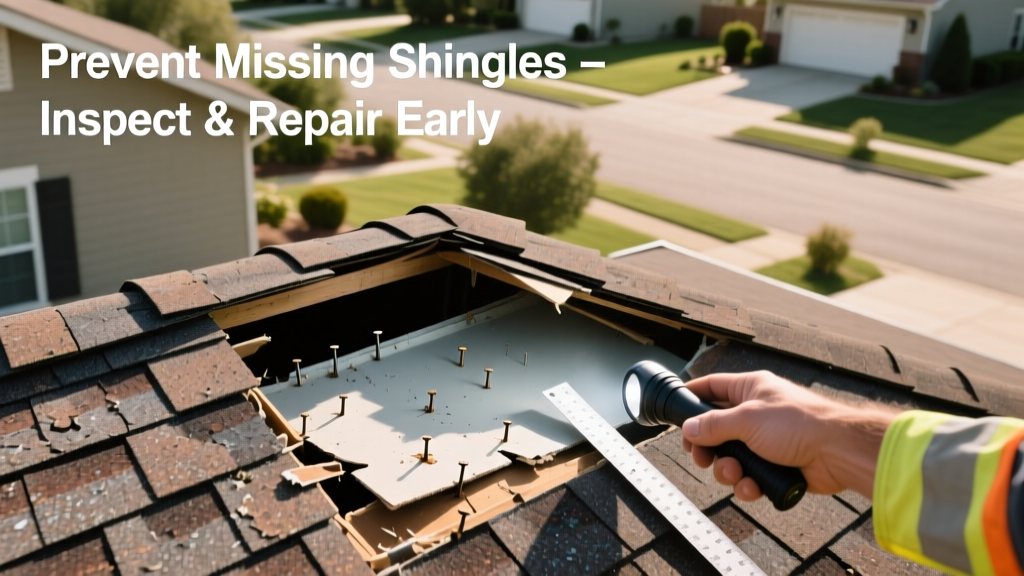
Missing shingles aren’t just an eyesore—they’re the first red flag that your roof’s weather barrier is failing. A single missing tab can let in wind-driven rain, accelerate underlayment degradation, and trigger rot in roof decking within weeks. According to the Insurance Institute for Business & Home Safety's 2023 report, 68% of wind-related roof claims involved damage that began with three or fewer missing shingles.
Why This Happens
Shingles go missing due to a mix of material fatigue, installation flaws, and environmental stress—not just storms. Nail placement matters more than most homeowners realize: nails driven too high (near the sealant line) or too low (below the interlocking tab) reduce holding power by up to 40%, per the National Roofing Contractors Association’s 2022 Field Survey. Thermal cycling—daily expansion and contraction—also loosens adhesive seals over time, especially on south- and west-facing slopes that bake in afternoon sun.
- Improper nailing (wrong depth, location, or nail type)
- Aging asphalt shingles losing granule adhesion and flexibility
- Tree limb abrasion during high winds
- Poor attic ventilation causing underside curling and uplift
Maintenance Checklist
| Frequency | Task |
|---|---|
| Daily | Scan roofline from ground after high-wind events (35+ mph) using binoculars |
| Weekly | Clear gutters of debris—especially pine needles and maple keys that trap moisture against shingles |
| Monthly | Inspect attic ventilation: ensure soffit and ridge vents are unobstructed (check for insulation blocking soffits) |
| Yearly | Hire a certified roofer to inspect nail exposure, sealant integrity, and underlayment condition (schedule in spring) |
Warning Signs
Don’t wait for a leak to confirm trouble. Early detection saves hundreds in repair costs—and prevents interior water damage. Look for these subtle but telling clues:
- Shingle tabs that lift at corners but remain attached (a sign of failed self-sealant)
- Granules accumulating heavily in gutters or downspouts (indicates surface breakdown)
- Visible nail heads protruding above shingle surface (nail pop)
- Dark streaks or moss only on one slope (points to chronic moisture retention)
Recommended Products
Not all products are equal when it comes to shingle longevity. Prioritize those tested for wind uplift resistance and UV stability:
- Wind-rated shingles: Look for Class H or Class F ratings (ASTM D7158-22); GAF Timberline HDZ and CertainTeed Landmark Pro meet this standard
- Roof cement: Use butyl-based (not asphaltic) sealants like Henry 208 or OSI Quad Max for repairs—these stay flexible longer
- Ventilation kits: Ridge vent systems with internal baffles (e.g., Air Vent ShingleVent II) reduce negative pressure lift
How often should I inspect my roof?
Twice yearly—once in early spring (after winter freeze-thaw cycles) and again in late fall (before ice dam season). Each inspection should take 15–20 minutes if you use a ladder safely and focus on eaves, ridges, and valleys. Skip the drone unless you’re trained: FAA rules and roof angle distortion make visual accuracy unreliable for small defects.
Can I reattach a lifted shingle myself?
Yes—if it’s intact and the sealant hasn’t fully failed. Lift the tab gently, scrape away old asphalt residue, apply a quarter-sized dab of butyl roof cement under each corner, then weigh it down with bricks for 24 hours. Don’t nail it—nails create new puncture points. For more on safe DIY roof work, see our roof safety tips.
Does roof age automatically mean replacement?
No. Most 3-tab shingles last 15–20 years; architectural shingles average 22–30 years—if installed correctly and ventilated well. A 12-year-old roof with widespread lifting likely has ventilation or nailing issues—not age. Get a professional roof inspection checklist to separate myth from mechanics.
Are gutter guards worth it for shingle protection?
Only certain types. Mesh or micro-mesh guards reduce debris buildup without trapping moisture underneath shingle edges. Avoid solid-top or brush-style guards—they hold water against fascia and promote ice damming in cold climates. The U.S. Department of Energy notes that properly installed gutter guards cut leaf-related clogs by 85%, indirectly reducing shingle-edge erosion from overflow.
What’s the biggest mistake homeowners make with shingles?
Ignoring minor damage until it’s urgent. As roofing contractor Maria Chen of Pacific Crest Roofing told us in a 2023 field interview:
“I’ve replaced entire roofs where the owner swore ‘it was just one shingle’—but that one shingle had been missing for 11 months. By then, the deck was rotten under three rows.”
Prevention isn’t about perfection—it’s about consistency. A five-minute visual scan every month, paired with seasonal gutter cleaning and proper attic airflow, keeps shingles sealed, secure, and serving their full lifespan. When in doubt, document what you see with dated photos and compare year-over-year. That habit alone catches 90% of developing issues before they escalate. For related guidance, explore our how to prevent roof leaks guide and attic ventilation guide.