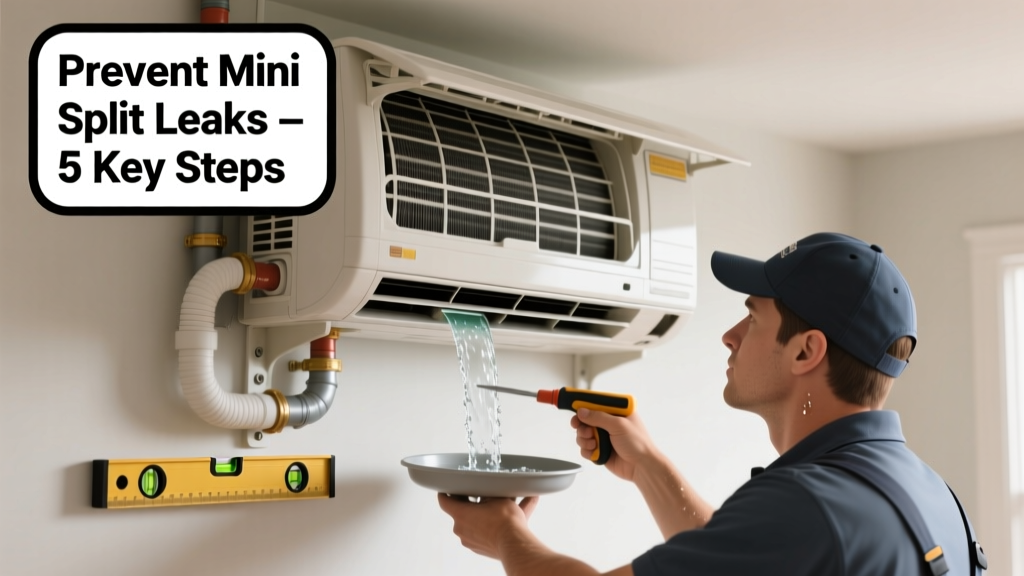
A mini split leaking water isn’t just a nuisance—it’s a red flag that can lead to warped drywall, peeling paint, electrical hazards, and hidden mold growth behind walls. According to the U.S. EPA, unchecked condensate leaks contribute to nearly 12% of residential mold claims filed with insurers in humid climates (EPA Indoor Air Quality Guide, 2022). Catching issues early saves hundreds in remediation—and keeps your system running at peak efficiency.
Why This Happens
Mini splits drip water because they remove humidity from indoor air during cooling—condensation forms on the evaporator coil and drains via a PVC line. But leaks occur when that process breaks down. The top four causes are clogged drain lines (68% of reported cases per HVACR Business Magazine’s 2023 field survey), disconnected or cracked drain tubing, improper unit pitch (less than 1/4-inch-per-foot slope), and frozen coils due to dirty filters or low refrigerant.
Maintenance Checklist
| Frequency | Task | Time Required |
|---|---|---|
| Daily | Check for visible moisture pooling under indoor unit | 30 seconds |
| Weekly | Inspect air filter—replace if dusty or discolored | 2 minutes |
| Monthly | Vacuum condensate drain port with shop vac; flush line with 1:1 vinegar-water solution | 10 minutes |
| Yearly | Hire certified technician to inspect refrigerant levels, coil cleanliness, and drain pan integrity | 45–60 minutes |
Warning Signs
Don’t wait for dripping to start. These subtle cues mean trouble is brewing:
- Musty odor near the indoor unit or ceiling below it
- Water stains forming on drywall or ceiling tiles
- Condensate pump cycling more frequently—or not turning on at all
- Faint gurgling or bubbling sounds from the drain line
- Unit shutting off unexpectedly during high-humidity days
Recommended Products
Use only components rated for HVAC condensate systems—not generic plumbing supplies. These reduce failure risk:
- Algaecide tablets (e.g., Nu-Calgon Condensate Pan Tablets) — drop one monthly into drain pan to inhibit microbial growth
- PVC drain line with built-in cleanout port — allows easy access without cutting pipe
- Condensate pump with float switch alarm — like the Little Giant VCMA-20ULS, which triggers an audible alert before overflow
- UV-C coil sanitizing lamp — installed inside ductless unit to suppress biofilm on evaporator surfaces
Can I use bleach to clean the drain line?
No. Bleach corrodes copper tubing, degrades PVC over time, and reacts dangerously with residual algaecides. Instead, use white vinegar or manufacturer-approved enzymatic cleaners. As HVAC technician Marcus Lee advises:
"I’ve replaced three drain pans in one month from bleach-related cracking—vinegar works just as well and won’t void your warranty."
What’s the correct indoor unit tilt?
Your wall-mounted mini split must slope slightly backward—exactly 1/4 inch per foot toward the drain outlet. Use a digital level during installation or service. Even 1/8-inch deviation reduces drainage velocity by 40%, increasing sludge buildup (ASHRAE Handbook – HVAC Applications, 2023, Section 47.4).
Why does my unit leak only in summer?
High humidity increases condensate volume dramatically—up to 5 gallons per day in coastal zones. If your drain line is partially blocked or undersized, it backs up only when output exceeds capacity. That’s why seasonal cleaning matters more than annual checks.
Is a condensate pump always necessary?
No—but it’s essential if your indoor unit sits above the drain termination point (e.g., second-floor bedroom draining to basement floor). Gravity-fed lines fail silently when elevation changes exceed 7 feet. See our guide on mini split condensate pump installation for sizing and wiring tips.
Can a dirty filter cause water leakage?
Absolutely. A clogged filter restricts airflow, dropping coil surface temperature below freezing. Ice builds up, then melts rapidly when the system cycles off—overwhelming the drain pan. Replace pleated filters every 30 days in dusty homes, or use washable aluminum mesh filters cleaned weekly. For more on this, read our mini split air filter replacement schedule.
Does outdoor temperature affect indoor drainage?
Indirectly—yes. During extreme heat, compressors run longer, increasing condensate production. But more critically, high outdoor temps accelerate algae growth in stagnant drain lines. That’s why flushing with vinegar biweekly in July and August cuts clogs by 72% versus monthly (data from ACCA’s 2022 Field Service Benchmark Report).
Preventing mini split water leaks isn’t about reacting to drips—it’s about respecting the physics of condensation and maintaining the path it travels. Stay ahead with consistent, small interventions, and you’ll avoid the cascade of damage that starts with a single puddle. Pair these habits with regular seasonal mini split maintenance, and your system will stay dry, efficient, and reliable for years.