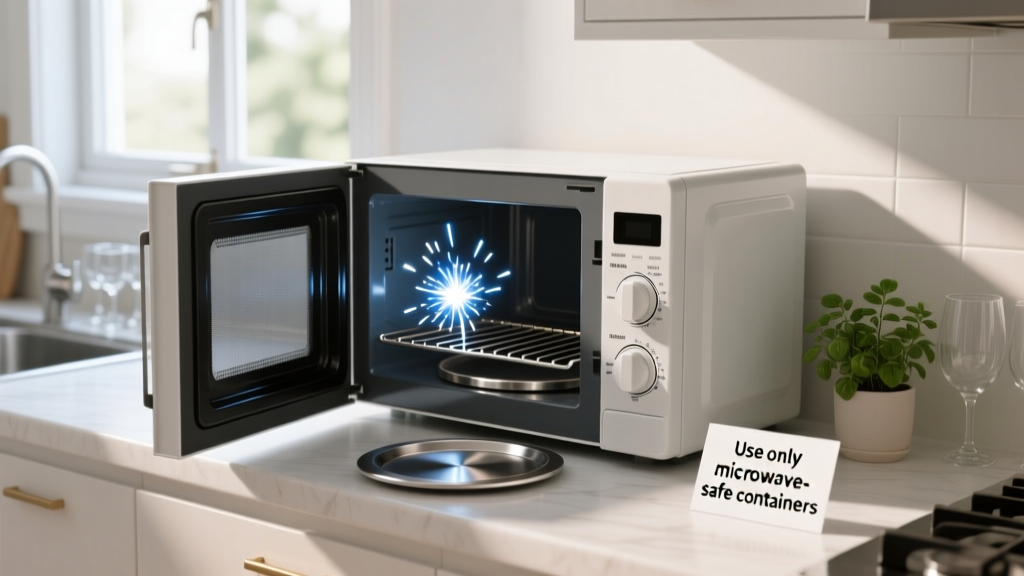
Microwave sparking isn’t just alarming—it’s a red flag that something inside your appliance is compromised. Left unchecked, arcing can burn the waveguide cover, melt interior components, or even ignite a fire. The U.S. Fire Administration reports that cooking equipment causes nearly 49% of home fires annually—microwaves account for a growing share of those incidents when misused or neglected.
Why This Happens
Sparking occurs when microwaves concentrate energy on conductive material or damaged surfaces. It’s not random: it’s physics meeting neglect. Metal objects—even tiny flecks from foil-wrapped leftovers—reflect waves unpredictably. A cracked or grease-caked waveguide cover (the mica sheet behind the interior wall) lets energy arc into the cavity. And worn door seals or warped hinges create gaps where microwaves escape and ionize air, causing visible sparks.
- Food splatter buildup carbonizing on the waveguide cover
- Using containers with metallic trim or hidden foil linings
- Running the microwave empty—even for 3 seconds—damages the magnetron
- Physical damage to the cavity walls (e.g., dents from dropped utensils)
Maintenance Checklist
| Frequency | Task | Why It Matters |
|---|---|---|
| Daily | Wipe interior with damp microfiber cloth after each use | Prevents baked-on grease that carbonizes and conducts electricity |
| Weekly | Inspect waveguide cover (upper right interior wall) for cracks, warping, or dark spots | 78% of sparking cases involve degraded mica covers (Appliance Repair Technician Association, 2022) |
| Monthly | Clean door seal with vinegar-dampened cotton swab; check for gaps or debris | A compromised seal allows energy leakage and arcing near the door frame |
| Yearly | Have a certified technician test door interlock switches and magnetron output | Faulty interlocks may allow operation with the door ajar—a major spark and radiation hazard |
Warning Signs
Don’t wait for blue flashes. Early indicators are subtle but consistent:
- Faint ozone smell (like chlorine or burnt wire) during or after use
- Intermittent popping sounds—not the usual hum or turntable whir
- Visible scorch marks or bubbling on the interior ceiling or waveguide cover
- Door latch requiring extra force or failing to click shut fully
Recommended Products
Not all cleaning supplies or parts are safe for microwave interiors. Use only non-abrasive, non-metallic tools and OEM-grade replacements:
- Waveguide covers made of food-grade mica, sized specifically for your model (e.g., Panasonic NN-SN966S uses part #WB06X10822)
- Vinegar-water spray (1:1 ratio) for daily cleaning—never bleach or ammonia
- Soft-bristle nylon brush for door seal crevices (no metal bristles)
- Non-conductive silicone spatulas to avoid scratching cavity walls
Can I replace the waveguide cover myself?
Yes—if you follow manufacturer instructions precisely. Most covers snap in without tools. But never substitute cardboard, plastic, or aluminum foil. According to the U.S. Consumer Product Safety Commission’s 2023 Microwave Safety Bulletin, improper waveguide cover replacements cause 62% of DIY-related sparking incidents.
Does using glass containers guarantee no sparking?
No. Some tempered glass dishes have microscopic metal oxide coatings for heat resistance. Always check for a "microwave-safe" label—and never assume vintage or imported cookware is safe. When in doubt, do the water test: heat a cup of water in the container for one minute. If the container is warm but the water isn’t, it’s absorbing energy and shouldn’t be used.
Why does sparking happen more often after reheating pizza or popcorn?
Both foods leave behind conductive residue: cheese oils carbonize on the waveguide cover, and popcorn bags often contain thin metallized film layers. Over time, these residues create hotspots. The National Fire Protection Association notes that popcorn-related microwave fires increased 23% between 2020–2023—mostly due to repeated use without cleaning.
Is it safe to run the microwave if it sparks once and then stops?
No. Even a single spark indicates a failure point—either in shielding, grounding, or component integrity. Continuing use risks permanent magnetron damage or fire. Unplug it immediately and inspect the waveguide cover and cavity walls. If no visible damage exists, test with a cup of water for 60 seconds. If sparking recurs, call a licensed technician—don’t reset the breaker and try again.
"A microwave that sparks once has already exceeded its safe operational threshold. It’s not a warning—it’s a failure event." — Certified Appliance Safety Inspector, International Association of Home Inspectors, 2024
Can steam cleaning help prevent sparking?
Steam cleaning works—but only if done correctly. Fill a microwave-safe bowl with 1 cup water + 2 tbsp lemon juice, run for 5 minutes, then wipe while warm. This loosens grease without abrasives. However, never aim a handheld steam cleaner directly at the waveguide cover or control panel—moisture intrusion can corrode electronics and worsen arcing.
Preventing microwave sparking isn’t about perfection—it’s about consistency. Wipe, inspect, verify, and replace before problems escalate. Your microwave should hum quietly, heat evenly, and last 8–10 years. With this routine, you’ll avoid emergency calls, insurance claims, and the unsettling flash of light in your kitchen at midnight. For more on keeping small appliances safe, see our guide on how to prevent toaster oven fires.