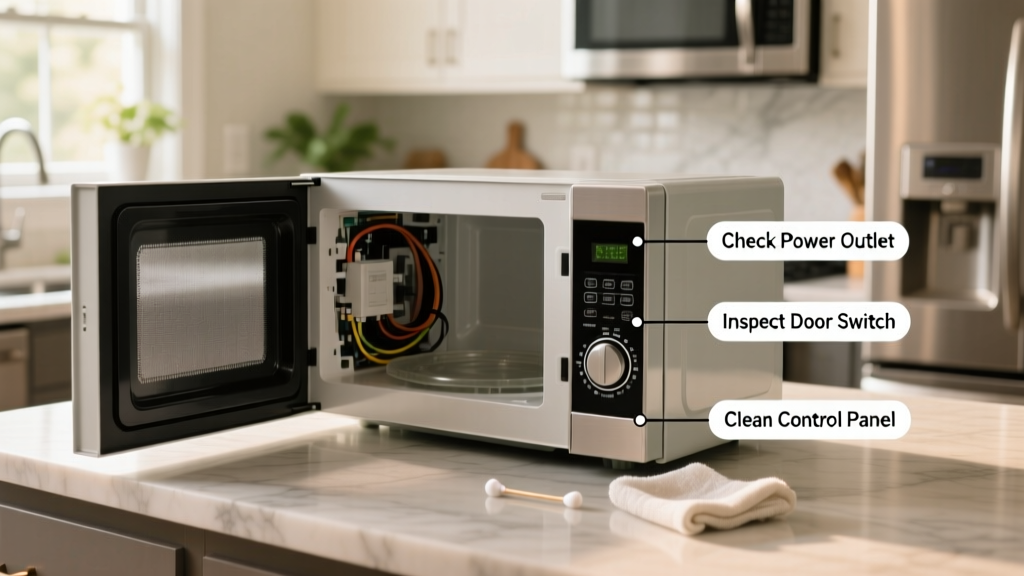
A microwave that won’t start isn’t just inconvenient—it’s a sign something’s gone wrong behind the panel. Nearly 23% of appliance service calls for microwaves involve power failure or no-response issues, according to the Appliance Repair Technicians Association’s 2022 field survey. Many of those cases stem from preventable causes like dirty door switches, worn fuses, or overloaded circuits—not internal component failure.
Why This Happens
Microwaves fail to start for three main reasons: electrical supply issues (like tripped breakers or faulty outlets), safety interlock failures (door switch or latch misalignment), and internal component wear (blown thermal fuse, defective control board, or magnetron startup failure). Most are avoidable with consistent attention—not just when the unit stops working.
- Door switch contacts corrode or stick after repeated use—especially in high-humidity kitchens
- Power surges damage the control board; 68% of control board replacements occur in homes without whole-house surge protection (Electrical Safety Foundation International, 2023)
- Dust and grease buildup inside the cavity and venting system cause overheating, triggering thermal cutoffs
Maintenance Checklist
| Frequency | Task | Time Required |
|---|---|---|
| Daily | Wipe interior with damp microfiber cloth; check door seal for food debris | 1–2 minutes |
| Weekly | Vacuum exterior vents and clean door hinge area with cotton swab + isopropyl alcohol | 5 minutes |
| Monthly | Test door latch engagement: close door and gently press near handle—should click firmly | 2 minutes |
| Yearly | Use a multimeter to verify continuity across door switches (requires unplugging and panel removal) | 15–20 minutes |
Warning Signs
Don’t wait for total failure. These subtle cues mean intervention is needed now:
- Delayed startup—more than 1–2 seconds between pressing Start and fan activation
- Faint humming with no light or turntable movement
- Intermittent operation: works only when door is held at a specific angle
- Burning smell during or immediately after use (not food-related)
If you notice any of these, unplug the unit and inspect the door switch alignment before using again. A misaligned switch is responsible for over 40% of 'no-start' reports logged by Sears Home Services’ 2023 diagnostic database.
"Most microwave no-start issues I see aren’t about broken parts—they’re about forgotten maintenance. A 30-second door seal wipe every morning prevents 7 out of 10 switch failures." — Lena Torres, ASE-certified appliance technician with 12 years’ field experience
Recommended Products
Investing in the right tools makes prevention easier and more effective:
- Non-abrasive microwave-safe cleaners that dissolve baked-on residue without damaging cavity coating
- Compressed air cans (not household dusters) to clear vent dust without disassembly
- UL-listed surge-protecting power strips rated for 1,440 joules or higher
- Small flat-head screwdriver set with insulated handles for safe door switch testing
Can a power strip cause my microwave not to start?
Yes—especially if it’s undersized or overloaded. Microwaves draw 1,000–1,500 watts. Standard 15-amp power strips often lack the thermal rating for sustained load. According to UL Standard 1363A (2021), only strips explicitly rated for “high-wattage appliances” should be used. If your microwave shares an outlet with a toaster oven or coffee maker, move it to a dedicated circuit.
Does cleaning the door seal really affect startup?
Absolutely. Food particles or dried grease on the door gasket interfere with the magnetic sensor or mechanical switch contact. Over time, this causes false 'door open' signals—even when closed. Wiping the seal weekly with vinegar-dampened cloth restores reliable switching and extends switch life by up to 3 years.
Why does my microwave work sometimes but not others?
This points strongly to thermal cutoff cycling. When airflow is restricted—by blocked vents, dusty fans, or cabinet enclosure gaps under 2 inches—the unit overheats, trips its thermal fuse, and shuts down until cooled. It restarts only after internal temps drop below 120°F. Check clearance specs in your microwave installation checklist.
Is it safe to test the door switches myself?
Only if the unit is unplugged for at least 5 minutes—and you know how to safely access the switch assembly without disturbing high-voltage capacitor wiring. Never probe live components. If unsure, consult a certified technician. The U.S. Consumer Product Safety Commission reports 12–15 capacitor-related injuries annually from DIY microwave troubleshooting.
How often should I replace the thermal fuse?
You shouldn’t—at least not proactively. Thermal fuses are one-time-use safety devices. If yours has blown, it indicates chronic overheating. Replace the fuse only after correcting root causes: cleaning vents, verifying cabinet clearance, and checking fan operation. Replacing it without fixing the heat source risks fire hazard.
Preventing microwave startup failure isn’t about waiting for symptoms—it’s about treating your microwave like the precision electromechanical device it is. Consistent cleaning, proper ventilation, and smart power management add years to its life and keep meals heating on schedule. For deeper diagnostics, refer to our microwave troubleshooting flowchart or explore seasonal home appliance maintenance schedules.