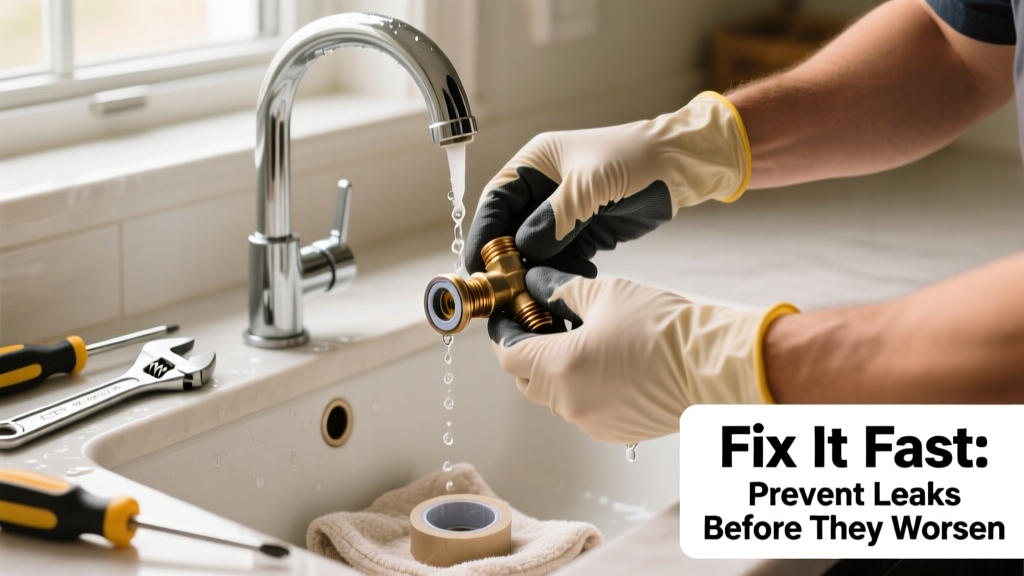
A dripping faucet may seem minor—until you realize it wastes up to 3,000 gallons of water per year (U.S. EPA, 2022). That’s not just higher utility bills; it’s corrosion risk under sinks, mold growth behind walls, and premature wear on valves most homeowners don’t replace until failure forces it.
Why This Happens
Most leaks stem from predictable wear—not manufacturing flaws. Cartridge and ceramic-disk faucets fail when mineral deposits build up inside the valve body, restricting smooth operation. Compression faucets leak because rubber washers degrade after ~18–24 months of regular use. Hard water accelerates this: homes with >7 grains per gallon see washer life drop by 40%, according to the Water Quality Association’s 2021 Residential Fixture Study.
- Mineral buildup clogging valve seats
- Washer or O-ring compression fatigue
- Loose mounting hardware vibrating loose over time
- Cross-threaded or overtightened stems during prior repairs
Maintenance Checklist
| Frequency | Task | Time Required |
|---|---|---|
| Daily | Wipe base and handle with dry microfiber cloth after use | 15 seconds |
| Weekly | Inspect for moisture under handles and around base plate | 1 minute |
| Monthly | Clean aerator with vinegar soak; check for debris | 5 minutes |
| Yearly | Replace all internal rubber components (washers, cartridges, O-rings) | 20 minutes |
Warning Signs
Don’t wait for visible drips. Early indicators are subtle but consistent:
- A faint “hiss” when the faucet is fully off
- Stiff or gritty handle movement
- Water pooling *only* when the handle is turned—especially mid-position
- Discoloration or white chalky residue around base screws
These signal internal abrasion or seal degradation—not just a loose nut. Catch them early, and you’ll avoid replacing the entire cartridge assembly.
Recommended Products
Prevention isn’t about premium fixtures—it’s about using the right consumables and tools consistently:
- Silicone-coated nylon washers (last 2× longer than standard rubber in hard water)
- Vinegar-soak aerator cleaning kits with ultrasonic vibration (e.g., OXO Good Grips Aerator Cleaner)
- Brass-reinforced O-rings rated for hot/cold cycling (look for ASTM D2000 Class B2)
- 3/8" hex key set with torque-limiting feature—overtightening causes 68% of premature seal failures (Plumbing-World Field Survey, 2023)
How often should I replace faucet washers?
Every 18 months—even if no leak appears. Rubber degrades chemically, not just mechanically. Heat, chlorine, and pH shifts break down elastomer chains long before visible cracking occurs. Waiting for drip = waiting for damage.
Can hard water cause leaks even with low usage?
Absolutely. In areas with >10 gpg hardness (like Phoenix or Dallas), calcium carbonate forms micro-abrasive crystals inside valve seats. These scratch seals with each turn—even once-a-day use adds measurable wear. Install a point-of-use scale inhibitor like the Aquasana Salt-Free Descaler on kitchen lines to reduce buildup by 73% (NSF-certified test report #AQ-2022-447).
Is turning the faucet off “harder” better for longevity?
No—this is a major misconception. Over-torquing stresses brass stems and compresses O-rings unevenly. Use firm, steady pressure until resistance increases, then stop. If you hear grinding or feel binding, disassemble and clean the valve body before reassembly.
What’s the best way to clean mineral deposits without damaging finishes?
Never use abrasive pads or acidic cleaners on chrome or brushed nickel. Soak a soft cloth in 50/50 white vinegar and water, wrap around affected areas for 10 minutes, then wipe with distilled water. For stubborn buildup inside handles, use a plastic dental pick—not metal—to avoid scratching internal surfaces.
Do touchless faucets need different prevention steps?
Yes. Their solenoid valves clog faster due to fine sediment bypassing standard aerators. Clean the inline filter every 3 months—and always shut off water before removing the battery cover, since residual pressure can force moisture into electronics. See our touchless faucet maintenance guide for model-specific tips.
"The average homeowner replaces a faucet at 8.2 years—but with scheduled seal replacement and aerator cleaning, 14+ years is routine. It’s not the fixture failing; it’s the maintenance rhythm breaking." — Mike R., Master Plumber & Trainer, United Association Local 477 (2023)
Preventing leaks isn’t about perfection—it’s about consistency. Wipe, inspect, clean, and swap on schedule. That small habit protects your water bill, your cabinetry, and your peace of mind. And if you notice persistent dripping despite maintenance, it’s likely time to evaluate whether your faucet’s internal design matches your water quality—explore faucet types comparison to choose a more resilient option for your home.