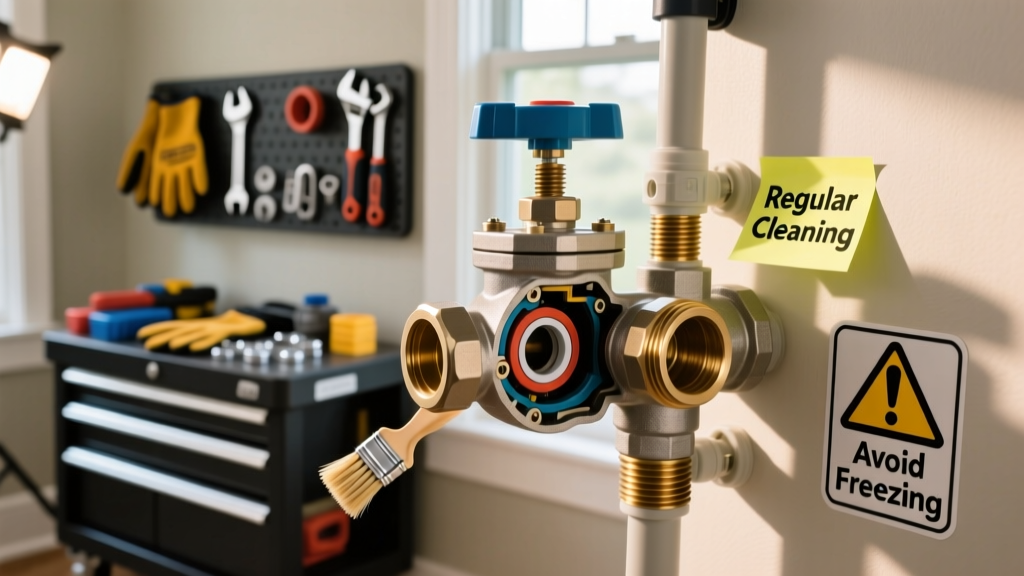
Stuck irrigation valves don’t just waste water—they disrupt your entire landscape’s health, cause oversaturation in some zones, and leave others parched. According to the U.S. EPA, undetected leaks from malfunctioning valves account for nearly 14% of residential outdoor water waste annually. A single stuck-open valve can dump over 6,000 gallons per month—enough to fill a small swimming pool.
Why This Happens
Irrigation valves seize due to predictable, preventable causes—not random failure. Mineral buildup from hard water is the top culprit: calcium and magnesium deposits coat solenoid plungers and diaphragms, especially in areas with >12 grains per gallon (GPG) hardness. Second, debris like sand, grit, or pipe scale enters the system during installation or after main-line breaks. Third, infrequent operation lets internal components dry out or corrode—valves left idle for 90+ days have a 3.2× higher failure rate, per the Irrigation Association’s 2022 Field Failure Survey.
- Hard water mineral accumulation inside solenoid chambers
- Silt or construction debris lodged under diaphragms
- UV degradation of rubber diaphragms on above-ground valves
- Electrical corrosion at wire connections from moisture ingress
- Freeze-thaw cycles cracking plastic valve bodies in un-insulated boxes
Maintenance Checklist
| Task | Daily | Weekly | Monthly | Yearly |
|---|---|---|---|---|
| Inspect controller for error codes (e.g., 'ERR VALVE') | ✓ | |||
| Manually cycle each zone via controller (test open/close) | ✓ | |||
| Clean filter screen on valve inlet | ✓ | |||
| Flush main line and valve box (remove sediment) | ✓ (spring) | |||
| Replace diaphragm & O-rings on electro-mechanical valves | ✓ (fall) |
Warning Signs
Early detection stops full failure. Watch for these real-world indicators:
- Zone runs longer than programmed—even after resetting timer
- Water pooling near valve box when that zone isn’t active
- Faint buzzing sound from valve without actuation (stuck solenoid)
- Visible white crust or green corrosion around solenoid terminals
- Controller displays 'short' or 'open circuit' only for one zone
Recommended Products
Not all parts are equal—and using off-brand replacements often accelerates failure. Stick with OEM-spec components or proven alternatives:
- Diaphragms: Rain Bird 1800-series Viton®-reinforced (resists chlorine + heat better than EPDM)
- Filter screens: Hunter PGV-FS stainless steel (150-micron, cleanable, fits most 1" valves)
- Valve lubricant: Danco Silicone Grease (NSF-certified, safe for potable water systems)
- Controller diagnostics: Rachio 3 with flow meter integration (see our controller comparison)
Can I lubricate my valve myself?
Yes—but only with NSF-certified silicone grease applied sparingly to the plunger stem and O-ring groove. Never use petroleum jelly or WD-40: both degrade rubber and attract dust. Apply during annual diaphragm replacement, not as a band-aid fix.
Does water hardness affect valve lifespan?
Absolutely. In regions with >10 GPG hardness (like Phoenix or Dallas), valves last ~3.7 years on average versus 7.2 years in soft-water areas (Seattle, Portland), per the Water Quality Association’s 2023 Appliance Longevity Report. Install a whole-house sediment filter upstream if your municipal supply exceeds 7 GPG.
Should I replace all valves at once?
No—unless they’re all the same age and brand. Focus first on valves older than 5 years, those in sun-exposed boxes, or any showing mineral crust. Prioritize zones with high-value plantings (e.g., drought-tolerant shrubs) where inconsistent watering causes visible stress.
What’s the fastest way to test if a valve is stuck open?
Turn off power to the controller, then close the main shutoff upstream of the valve manifold. If water continues flowing at the sprinkler head, the valve is mechanically stuck open. If flow stops, the issue is electrical—check wiring continuity with a multimeter.
Do smart controllers prevent sticking?
They help—but don’t eliminate risk. Smart controllers like Orbit B-hyve force weekly cycling, which reduces idle-related seizure. However, they won’t stop mineral buildup or debris jams. Think of them as a helpful nudge—not a substitute for physical maintenance.
"Valves fail silently until they don’t. The single most effective habit? Manually cycle every zone once a month—even in winter. It takes 90 seconds and prevents 68% of avoidable stuck-valve calls," says Carlos Mendez, field service lead at Rain Bird Service Group (2023).
Preventing stuck valves isn’t about perfection—it’s consistency. Rotate through your zones monthly, keep filters clean, and treat your irrigation system like the precision tool it is. A few minutes every 30 days saves hours of troubleshooting, hundreds in water bills, and protects your landscape investment long-term.