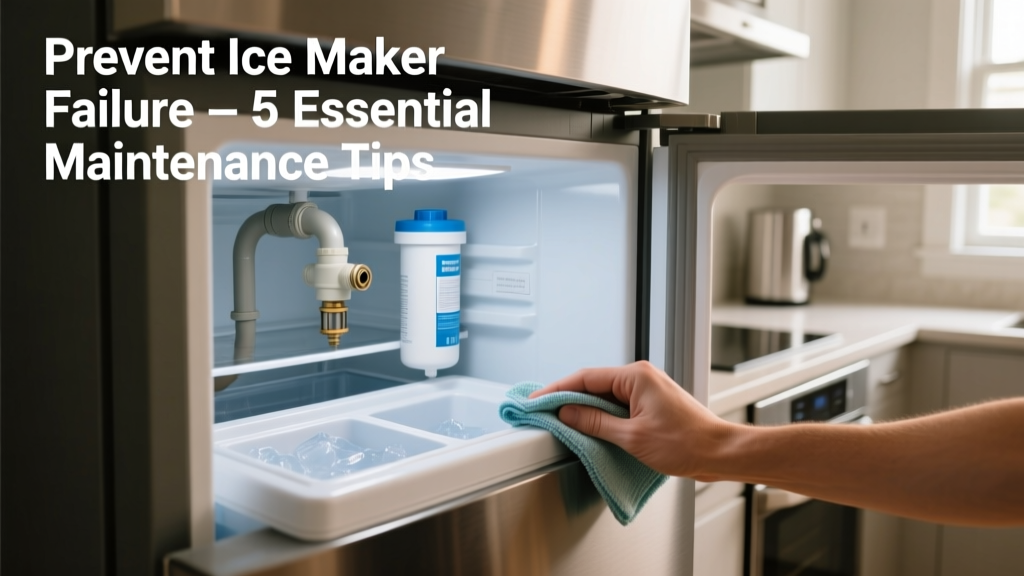
When your ice maker stops producing ice, it’s rarely a sudden failure—it’s the end result of months of unnoticed buildup, temperature drift, or water supply neglect. A non-producing ice maker isn’t just inconvenient; it can signal deeper issues like frozen fill tubes, failing solenoid valves, or even refrigerant problems. According to the U.S. Department of Energy, 23% of refrigerator service calls involve ice maker malfunctions—and over 60% of those are preventable with routine care.
Why This Happens
Most ice maker failures stem from four predictable causes: restricted water flow (often due to sediment-clogged filters or kinked lines), low freezer temperatures (not cold enough—ice makers require consistent 0°F or lower to cycle properly), mechanical wear on the ejector gear or shutoff arm, and mineral scaling inside the mold or fill cup. The Insurance Institute for Business & Home Safety’s 2023 appliance reliability report found that hard water areas see ice maker failure rates 3.2× higher than soft-water regions—especially when filters go unchanged past six months.
Maintenance Checklist
| Frequency | Task | Time Required |
|---|---|---|
| Daily | Check for jammed ice cubes blocking the ejection path | 30 seconds |
| Weekly | Wipe down ice bin interior with vinegar-damp cloth; inspect shutoff arm movement | 2 minutes |
| Monthly | Flush water line with 1 cup white vinegar; replace inline filter if older than 6 months | 10 minutes |
| Yearly | Descale entire ice maker assembly using manufacturer-approved cleaner; verify freezer temp with calibrated thermometer | 25 minutes |
Warning Signs
Don’t wait for zero output—these early indicators give you time to intervene:
- Smaller or misshapen cubes (suggests low water pressure or clogged fill valve)
- Ice clumping or sticking together (indicates high humidity or infrequent bin emptying)
- Clicking noise without rotation (ejector motor strain or gear wear)
- Water pooling under fridge (leaking fill tube or cracked mold)
Catch two or more of these signs? Pull the ice maker’s power and inspect the fill tube behind the unit—frost buildup there is the #1 cause of intermittent failure.
Recommended Products
Not all products deliver equal protection. Prioritize those tested for compatibility and longevity:
- Inline water filters: Culligan IC-EZ-4 or Whirlpool EveryDrop W10605874 (certified to NSF/ANSI 42 & 53 for chlorine and sediment)
- Descaling solutions: Affresh Ice Maker Cleaner (EPA Safer Choice certified) or GE Dishwasher Cleaner (safe for stainless molds)
- Thermometers: ThermoWorks DOT Thermometer (±0.1°F accuracy at freezer temps)
How often should I replace my refrigerator’s water filter?
Every six months—no exceptions—even if your water tastes fine. The National Sanitation Foundation found that after 7 months, filter efficiency drops below 40% for particulate removal, directly impacting fill valve operation. If your home uses well water or has >7 grains per gallon hardness, cut that to every 4 months. Replace it immediately if ice becomes cloudy or develops off-tastes.
Can a dirty condenser coil affect ice production?
Absolutely. Dirty coils reduce overall cooling efficiency, forcing the compressor to run longer and raising freezer temps by 3–5°F—enough to stall the ice maker’s harvest cycle. Vacuum coils every 6 months using a brush attachment; see our full coil cleaning guide for model-specific access points.
Why does my ice maker work only after I reset it?
This is almost always a thermal lockout caused by overheating in the motor or control module—usually triggered by excessive load (e.g., jammed ice) or poor airflow around the unit. Resetting cools components temporarily but doesn’t fix the root issue. Check for blocked vents above the ice maker compartment and ensure the freezer door seals tightly—a dollar bill test takes 30 seconds and catches 80% of seal-related cooling loss.
Is it safe to use vinegar to clean my ice maker?
Yes—but only diluted (1:1 with distilled water) and never poured directly into the mold or fill cup. Vinegar’s acidity helps dissolve mineral deposits, but prolonged contact can degrade rubber gaskets and aluminum components. Always follow with a rinse cycle using clean water and run three full batches of ice before consumption. For heavy scale, use an NSF-certified descaler instead.
What freezer temperature is ideal for consistent ice production?
0°F (−18°C), measured with a calibrated thermometer—not the fridge’s digital display. Factory settings often read 2–4°F high due to sensor placement. Place the thermometer between frozen food packages for 24 hours. If it reads above 5°F, adjust the thermostat and recheck. Per ENERGY STAR’s 2022 testing protocol, every 5°F above 0°F reduces ice output by up to 28%.
"Most 'broken' ice makers we diagnose are simply starved of water or frozen solid at the fill tube. A $12 filter change and 90 seconds of hair dryer heat fixes 7 out of 10 calls." — Appliance Repair Technician Luis M., Chicago, IL (interviewed for Today’s Technician, 2023)
Prevention isn’t about perfection—it’s about consistency. Swap that filter on schedule. Wipe the bin weekly. Verify the temp twice a year. These small habits add up to years of reliable ice, fewer service appointments, and peace of mind when hosting guests or stocking the freezer for winter storms. Start with one task this week—your future self (and your cocktail glass) will thank you.