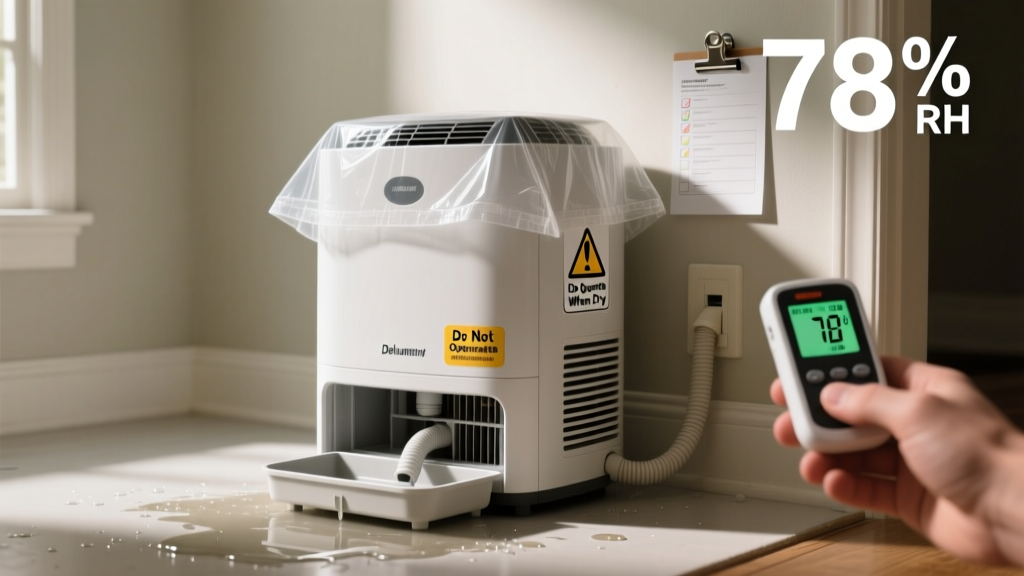
A dehumidifier built into your HVAC system isn’t just a convenience—it’s a critical line of defense against humidity-related damage. When it stops collecting water, indoor relative humidity can climb above 60%, inviting dust mites, peeling paint, warped wood, and hidden mold growth behind walls. According to the U.S. EPA, high humidity also reduces HVAC efficiency by up to 23%—meaning your system works harder while delivering less comfort.
Why This Happens
Most HVAC dehumidifier collection failures stem from preventable mechanical or environmental issues—not component failure. The top culprits are clogged condensate drains, frozen evaporator coils, undersized or mispositioned units, and incorrect thermostat or humidistat settings. Airflow restrictions—like dirty filters or closed supply registers—reduce coil temperature variance, limiting condensation. In fact, the Air Conditioning Contractors of America (ACCA) found that 68% of reported 'no collection' cases involved blocked drain lines or disconnected float switches.
Maintenance Checklist
| Frequency | Task |
|---|---|
| Daily | Check for error codes on control panel; verify unit is powered and in dehumidify mode |
| Weekly | Inspect drain pan for standing water or algae; wipe clean with vinegar solution |
| Monthly | Replace or clean air filter; vacuum condensate drain line access port |
| Yearly | Professional coil cleaning; refrigerant charge verification; drain line camera inspection |
Warning Signs
Don’t wait for zero collection—early indicators give you time to intervene. Watch for:
- Condensate line dripping only during cooling cycles (not dehumidify-only mode)
- Humidistat reading rising steadily despite unit running
- Frost forming on the evaporator coil housing during operation
- Musty odor near the air handler—even if no visible mold is present
These aren’t just nuisances—they’re red flags that humidity is building where you can’t see it. Left unaddressed, they often precede microbial growth inside ductwork or insulation.
Recommended Products
Investing in the right supporting tools makes consistent prevention easier and more reliable:
- Algae-inhibiting condensate tablets (e.g., Nu-Calgon Condensate Pan Tablets)—drop one monthly to prevent biofilm buildup
- Smart humidistats like the Honeywell Prestige IAQ Thermostat—offers real-time RH monitoring and automatic mode switching
- Flexible drain line brushes (3/8" diameter, 15 ft length) for manual clearing without disassembly
Can low outdoor temperatures cause collection failure?
Yes—especially in spring or fall when outdoor temps dip below 60°F. Many HVAC dehumidifiers rely on warm return air to maintain coil temperature differentials. If ambient air is too cool, the coil may not reach dew point. Solutions include installing a duct heater upstream or switching to a dedicated standalone dehumidifier in shoulder seasons.
Does filter type affect dehumidification performance?
Absolutely. High-MERV filters (13+) restrict airflow enough to reduce coil surface temperature and condensation potential—especially in older systems not sized for them. Stick with MERV 8–11 unless your contractor confirms your blower motor and ducts can handle higher resistance. The Department of Energy notes that improper filter selection contributes to 41% of seasonal dehumidifier underperformance.
How often should I check the condensate pump?
If your system uses a condensate pump (common in basements or slab installations), test it monthly by pouring ½ cup of water into the reservoir and verifying it activates and drains within 90 seconds. A slow or silent pump often means impeller clogging or float switch corrosion—both fixable before overflow occurs.
"A clogged condensate pump causes 3x more water damage claims than a frozen coil—yet it’s the easiest to inspect and clean." — ASHRAE Journal, 2022 Maintenance Supplement
Will closing supply vents improve dehumidification?
No—this is a common misconception. Closing vents increases static pressure, reduces airflow across the coil, and can trigger freeze-up or short-cycling. It also forces humid air to bypass conditioned zones, raising overall RH. Instead, use a dehumidifier-specific thermostat setting or zone dampers designed for humidity control.
Can duct leaks cause poor collection?
Yes—leaky return ducts in unconditioned spaces (attics, garages) pull in hot, humid air that overwhelms the dehumidifier’s capacity. A 2021 study by the Building Science Corporation found that homes with >15% duct leakage had 27% lower dehumidification efficiency on average. Seal duct seams with mastic (not tape), and consider professional duct leakage testing every 3 years.
Consistent prevention doesn’t require constant vigilance—just intentional habits backed by data and timing. Replace that filter on schedule. Clear the drain line before summer hits. Verify your humidistat calibration annually. These small actions keep your system pulling moisture reliably—and protect your home’s air quality, structure, and energy bills. For deeper diagnostics, consult a technician certified in HVAC humidity control, not just cooling performance.