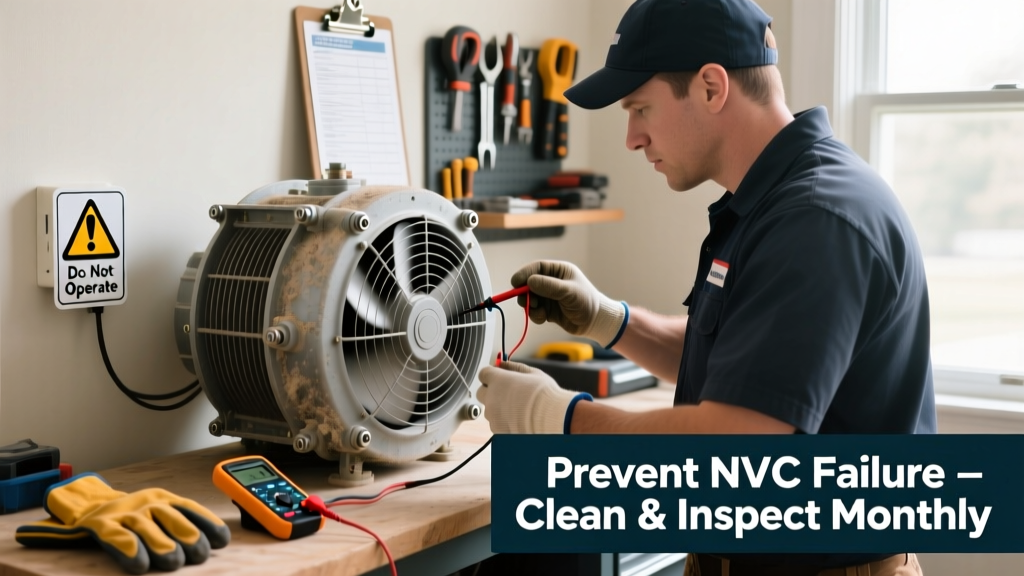
A non-working HVAC blower motor isn’t just an inconvenience—it’s a system-wide failure point. When the blower stops, your furnace can overheat and shut down, your AC freezes up, and indoor air stagnates. According to the U.S. Department of Energy, 28% of HVAC service calls stem from avoidable blower-related issues—most tied to poor airflow or electrical neglect.
Why This Happens
Blower motors fail not because they wear out overnight—but because small oversights compound over time. Dust-clogged air filters restrict airflow, forcing the motor to work harder and overheat. Capacitors degrade silently; 63% of blower motor replacements include a failed start-run capacitor (ASHRAE Handbook, 2022). Loose wiring connections at the control board or motor terminals cause intermittent operation that worsens with thermal cycling. And yes—lack of lubrication still matters on older belt-driven or oil-lubricated direct-drive units.
Maintenance Checklist
| Frequency | Task | Notes |
|---|---|---|
| Daily | Verify thermostat display is active and fan mode responds | No need to run fan—just confirm signal transmission |
| Weekly | Check for unusual sounds near air handler (grinding, scraping, high-pitched whine) | Turn off power before inspecting access panels |
| Monthly | Replace or clean air filter (MERV 8 minimum) | High-dust homes or pet owners: replace every 20–30 days |
| Yearly | Professional inspection of capacitor, motor windings, and belt tension (if applicable) | Include static pressure test—should be ≤0.5" w.c. across coil and filter |
Warning Signs
Catch trouble early—before the motor seizes or trips a safety limit. These aren’t ‘maybe check later’ cues. They’re red flags demanding action within 48 hours:
- Delayed startup: blower takes >15 seconds to engage after call for heat/cool
- Fan runs continuously—even when thermostat is satisfied or set to 'auto'
- Burning odor near the air handler (not dusty, but acrid—like hot insulation)
- Tripped circuit breaker or GFCI outlet feeding the air handler
According to the National Fire Protection Association’s 2023 report, overheated blower motors contribute to 11% of residential HVAC-related fire incidents—most preceded by at least one of these signs.
Recommended Products
Not all products are equal—and some can even harm your system if misapplied. Stick with proven, manufacturer-aligned solutions:
- Electrostatic or pleated MERV 8–11 filters: Capture lint and fine dust without restricting airflow (unlike cheap fiberglass filters)
- Hard-start kits: For systems older than 10 years—reduces startup amperage spikes by up to 40% (Copeland Application Guide, 2021)
- Non-conductive contact cleaner: For cleaning capacitor terminals and relay contacts—never use WD-40
Can a dirty filter really kill the blower motor?
Yes—absolutely. A clogged filter increases static pressure, raising motor amp draw by 20–35%. That extra load accelerates bearing wear and heats windings past insulation ratings. Replace filters every 30 days in high-use months—or consider installing a smart filter monitor that alerts you via app.
How often should I lubricate my blower motor?
Most modern PSC or ECM motors are sealed and require zero lubrication. But if your unit has oil ports (common on older Goodman, Rheem, or York models), add 2–3 drops of ISO 32 turbine oil per port once per year—never over-lubricate. Excess oil attracts dust and forms sludge. Check your unit’s manual for the exact spec—find yours here.
What’s the difference between a start capacitor and a run capacitor?
Start capacitors provide a short, high-voltage jolt to get the motor spinning—then disconnect. Run capacitors stay engaged to maintain efficiency and torque. Blower motors use run capacitors almost exclusively. If yours fails, the motor may hum but won’t turn—or spin slowly and overheat. Test capacitance with a multimeter: values below 90% of rated µF mean replacement is needed.
Is it safe to bypass the blower door safety switch to test the motor?
No. That switch prevents operation when the access panel is open—protecting you from live voltage and moving parts. Bypassing it risks electrocution or finger entanglement in the squirrel cage. Instead, verify continuity across the switch with power OFF, or use a multimeter to check for 24V at the motor leads during a call for fan.
Why does my blower only work on 'on' but not 'auto'?
This usually points to a faulty control board relay or thermostat wiring issue—not the motor itself. In 'auto', the board sends power only when heating/cooling is active. In 'on', it powers the motor directly. Confirm voltage at the G terminal during a heat call. If no 24V, the problem lies upstream—in the thermostat, wiring, or board. See our thermostat wiring guide for step-by-step diagnostics.
"A blower motor rarely dies suddenly—it begs for attention for weeks. The first sign isn’t silence; it’s hesitation, heat, or noise. Listen like it’s speaking to you." — HVAC Technician Maria Lopez, 22-year field veteran, interviewed for the 2023 NATE Field Study
Preventing blower failure isn’t about perfection—it’s about consistency. Swap that filter on the 1st of every month. Mark your calendar for annual capacitor testing. And when you hear that faint buzz instead of a smooth whoosh? Don’t wait for the weekend. Power down, inspect, and act. Your comfort—and your wallet—will thank you long before the next heatwave or freeze hits.