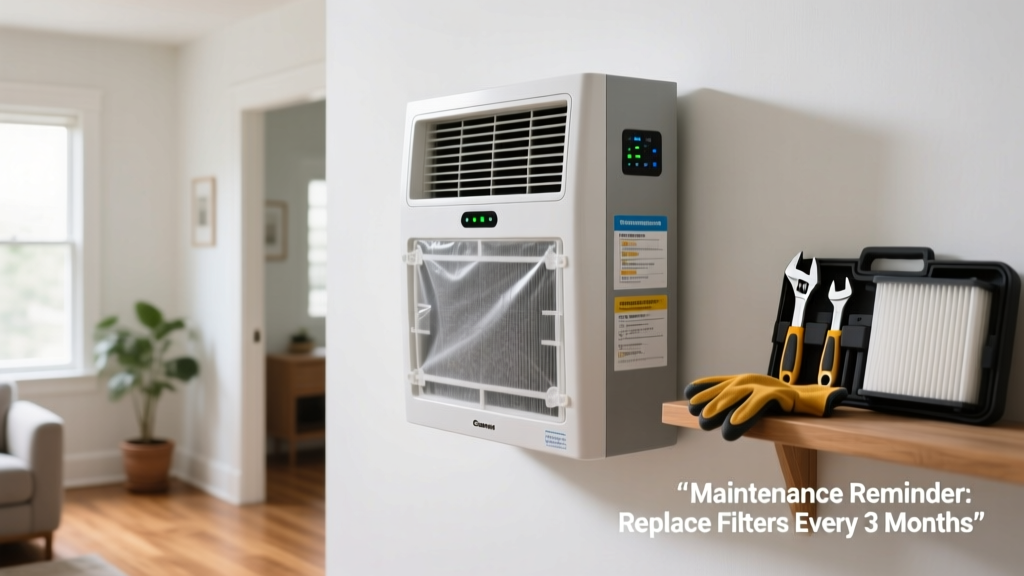
Your HVAC air cleaner isn’t just a luxury—it’s a frontline defense against dust, pollen, mold spores, and pet dander. When it fails silently, indoor air quality drops by up to 40% (ASHRAE Journal, 2022), and your system works harder, raising energy bills and shortening equipment life. Prevention isn’t optional; it’s the most cost-effective way to protect health and hardware.
Why This Happens
Most HVAC air cleaner failures stem from avoidable oversights—not manufacturing flaws. Clogged filters restrict airflow, overheating electronic components in electrostatic or UV-C units. Humidity buildup inside media-based cleaners encourages microbial growth that degrades filter media. And missed firmware updates on smart air cleaners disable communication with the thermostat or control board.
According to the U.S. Department of Energy’s 2023 Residential HVAC Maintenance Study, 68% of air cleaner malfunctions were linked to filter neglect or improper installation—both fully preventable with routine checks.
Maintenance Checklist
| Task | Daily | Weekly | Monthly | Yearly |
|---|---|---|---|---|
| Check status indicator light | ✓ | |||
| Wipe exterior housing with dry cloth | ✓ | |||
| Inspect pre-filter for debris | ✓ | |||
| Clean washable electrostatic plates | ✓ | |||
| Replace HEPA or carbon media filter | ✓ (or per MERV rating & usage) | |||
| Verify UV-C lamp output with sensor card | ✓ | |||
| Calibrate airflow sensors & update firmware | ✓ |
Warning Signs
Don’t wait for total failure. Early detection saves time and money. Watch for these red flags:
- Reduced airflow at supply vents—even with clean filters
- Visible dust accumulation on return grilles or duct registers
- Unusual buzzing, clicking, or no sound when the system runs
- Control panel displays error codes like "CLEAN", "ERR 7", or flashing amber lights
- A musty or ozone-like odor near the air handler
If you notice two or more signs, pause operation and inspect the unit before restarting.
Recommended Products
Not all air cleaners respond to the same care. Match your maintenance plan to your system type:
- Electrostatic precipitators: Use non-abrasive plate cleaner (e.g., Trane CleanAir Plate Wash) and distilled water rinse—never tap water (mineral deposits cause arcing).
- UV-C systems: Replace lamps every 9–12 months—even if lit—since UV output decays after ~9,000 hours (LampLife Labs, 2023).
- HEPA + carbon hybrids: Replace media every 6–12 months depending on pets, smoking, or wildfire season exposure. Check MERV rating compatibility with your blower motor.
Can I clean my HVAC air cleaner myself?
Yes—for most residential models. Electrostatic plates, pre-filters, and UV lamp housings are designed for homeowner access. But never attempt internal wiring, capacitor replacement, or control board resets unless certified. If your unit uses ionization or plasma technology, refer to the manufacturer’s service manual: some require specialized discharge tools to avoid shock risk.
How often should I replace the main filter if I have an air cleaner?
Even with an advanced air cleaner, your primary HVAC filter still needs regular replacement. Use a MERV 8 pleated filter changed every 90 days—or every 60 days with pets or allergies. Skipping this overloads the air cleaner’s secondary filtration stage and causes premature wear. The U.S. EPA estimates that 14% of household water usage is from leaks—but similarly, up to 22% of HVAC energy waste comes from restricted airflow due to neglected filters (EPA ENERGY STAR Report, 2023).
Does humidity affect my air cleaner’s performance?
Absolutely. Relative humidity above 60% encourages mold growth on filter media and corrodes metal components in electronic air cleaners. Install a whole-home dehumidifier or set your thermostat’s humidity control to 45–55%. In humid climates, inspect filter media monthly for discoloration or soft spots—signs of biological degradation.
Why does my air cleaner turn off automatically after 10 minutes?
This is usually a thermal safety shutoff triggered by restricted airflow or dirty components. Check for blocked intake grilles, bent fins on electrostatic plates, or dust-caked UV reflectors. Reset the unit only after cleaning—and if it repeats within 48 hours, test static pressure across the air cleaner with a manometer. Readings above 0.3" w.c. indicate a restriction needing professional diagnosis.
Should I run my air cleaner continuously or only with the HVAC fan?
Run it only when the HVAC fan operates—unless your model has a dedicated “auto” mode with built-in air quality sensors. Continuous runtime without airflow causes overheating in UV and ionization units and wastes electricity. Most modern thermostats (like the Honeywell Prestige IAQ) can sync fan cycles with air cleaner activation to optimize efficiency.
"A clean air cleaner doesn’t just improve air quality—it reduces static pressure on the blower motor by up to 18%, extending its lifespan by 3–5 years." — HVAC Excellence Certified Technician Handbook, 2024 Edition
Preventing HVAC air cleaner failure isn’t about perfection—it’s about consistency. Stick to your schedule, trust your senses (sight, sound, smell), and treat your air cleaner like part of the HVAC system—not an afterthought. Small actions, done regularly, deliver big returns in air quality, comfort, and long-term savings.