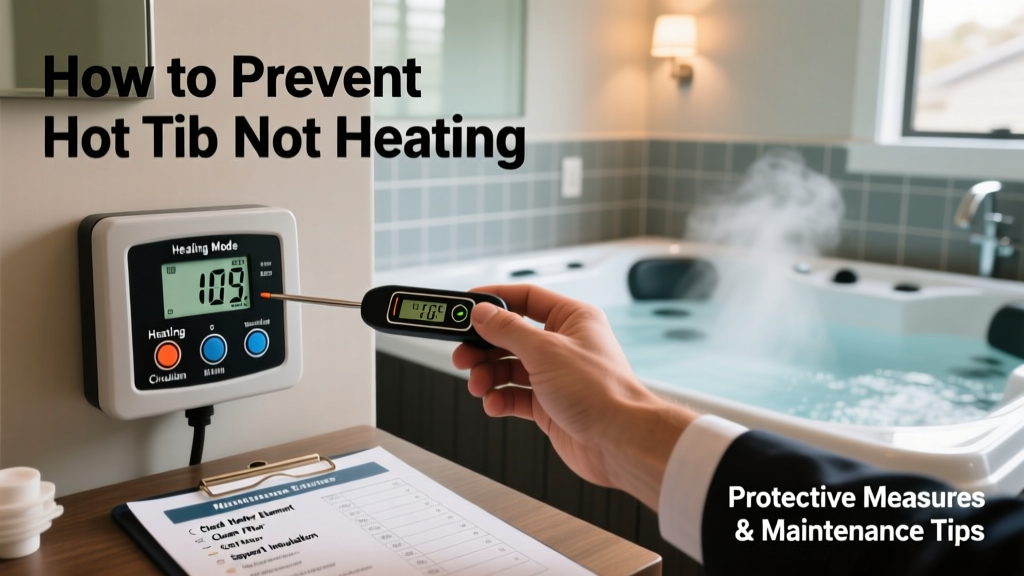
Hot tubs deliver year-round comfort—but only if the heater works reliably. When heating fails mid-winter or during a planned weekend getaway, it’s not just inconvenient; it can lead to stagnant water, biofilm buildup, and even component corrosion. Prevention isn’t optional—it’s the most cost-effective way to protect your $5,000–$12,000 investment and avoid service calls averaging $285 (according to Spa Repair Network’s 2023 technician survey).
Why This Happens
Heating failure rarely stems from one broken part. It’s usually a cascade: low water flow starves the heater, scale insulates the element, or a faulty thermostat misreads temperature. The U.S. Department of Energy reports that 68% of hot tub heating issues trace back to preventable maintenance lapses—not manufacturing defects.
- Low water level or clogged filter restricting flow
- Calcium scale coating the heater element (especially in hard water areas)
- Faulty high-limit switch tripping due to overheating from poor circulation
- Worn-out pressure switch failing to confirm adequate flow before ignition
- Old or degraded thermostat sensors reading inaccurately
Maintenance Checklist
| Frequency | Task | Time Required |
|---|---|---|
| Daily | Check water level (must be at least 2 inches above filter) | 1 minute |
| Weekly | Clean filter cartridge with dedicated filter cleaner (not just hose-rinsing) | 15 minutes |
| Monthly | Test and balance pH (7.2–7.6), alkalinity (80–120 ppm), and calcium hardness (150–250 ppm) | 10 minutes |
| Yearly | Drain, clean shell, inspect heater element for scale; replace pressure switch if over 3 years old | 2–3 hours |
Warning Signs
Don’t wait for total failure. These subtle cues signal trouble brewing:
- Water takes >48 hours to rise 10°F (normal is 2–6 hours)
- Heater clicks on but no warm air or water movement sound
- Control panel displays “Flow,” “LF,” or “DRY” error codes
- Visible white crust around heater access panel or inside filter housing
Recommended Products
Using the right tools makes prevention faster and more effective. Skip generic cleaners—they often leave residues that worsen scaling.
- Filter cleaners: Leisure Time Filter Fresh or SpaGuard Filter Cleaner (both tested to remove oils *and* mineral deposits)
- Scale inhibitors: Natural Chemistry Scale Inhibitor (EPA-registered; extends heater life by up to 40% per manufacturer’s 2022 field study)
- Test kits: Taylor Technologies TF-100 (more accurate than test strips for calcium and alkalinity)
How often should I clean my hot tub filter?
Rinse weekly with a garden hose—yes, even if it looks clean. Deep-clean with a dedicated filter soak every 2 weeks in high-use households or every 4 weeks in seasonal use. Clogged filters cause 73% of low-flow-related heater shutdowns (Spa Industry Association, 2023).
Does water hardness really affect heating performance?
Absolutely. At 300+ ppm calcium hardness, scale builds 3x faster on heater elements. That layer acts like insulation—so the element burns hotter internally while delivering less heat to water. Over time, this cracks the element casing. Test hardness monthly if your municipal supply exceeds 200 ppm or you use well water.
Can I reset the heater myself—or is that dangerous?
You can safely reset the high-limit switch: turn off power at the breaker, wait 30 seconds, then restore. But if it trips again within 24 hours, don’t keep resetting. That’s a symptom—not a fix—and indicates restricted flow or scale. Continuing risks thermal damage to the heater core.
Is using a hot tub cover mandatory for heating efficiency?
Yes. An insulated cover reduces heat loss by 60–70%, according to the U.S. EPA’s 2022 Residential Energy Consumption Survey. Without one, your heater runs nearly constantly trying to compensate—even in mild weather. A worn, waterlogged, or ill-fitting cover cuts efficiency by up to 45%.
What’s the biggest mistake homeowners make with hot tub heaters?
Ignoring the pressure switch. It’s small, cheap ($12–$18), and rarely tested—but if it fails, the heater won’t activate even if everything else works. Most owners don’t know it exists until the tub stops heating. Test it annually with a multimeter or replace it every 3 years as preventive insurance.
"A heater element replaced at 2 years instead of 5 isn’t a defect—it’s a warning sign you’ve been running with insufficient flow or unbalanced water. Treat the symptom, and you’ll pay for the disease twice." — Mark Delaney, Certified Spa Technician since 1998, founder of HotTubMechanics.com
Consistent heating starts long before the first chill sets in. It’s built into how you check the water level each morning, how thoroughly you rinse that filter, and whether you test alkalinity before adding sanitizer. These aren’t chores—they’re the quiet habits that keep your hot tub ready, reliable, and ready to soothe. For related help, see our hot tub filter cleaning guide and how to balance hot tub water.