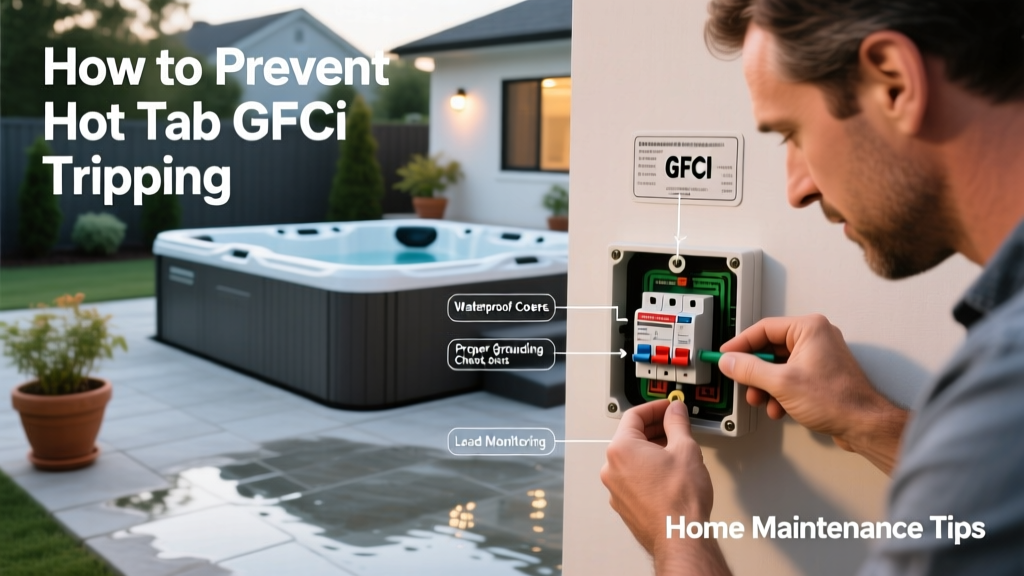
GFCI tripping isn’t just an annoyance—it’s a red flag. When your hot tub’s ground-fault circuit interrupter shuts off power unexpectedly, it could signal moisture intrusion, aging wiring, or deteriorating components. Left unaddressed, these issues risk electrocution, equipment damage, or even fire—especially in outdoor or high-humidity installations. Prevention isn’t optional; it’s the most reliable layer of safety and system longevity.
Why This Happens
GFCIs trip when they detect as little as 4–6 milliamps of current leakage—enough to be dangerous but too small for standard breakers to catch. In hot tubs, this often stems from environmental stressors combined with wear. According to the U.S. Consumer Product Safety Commission’s Electrical Injury Report (2022), 68% of hot tub-related electrical incidents involved degraded insulation or water ingress near junction boxes or pump motors.
- Moisture migration into control panels, heater elements, or pump housings—especially after heavy rain or snow melt
- Corrosion on ground wires, terminals, or GFCI receptacle contacts due to chlorine/bromine exposure
- Aging GFCI units losing sensitivity or failing internally—most last only 7–10 years under constant outdoor exposure
- Shared circuits with other loads (e.g., lighting, outlets) causing cumulative leakage beyond the 5mA threshold
Maintenance Checklist
| Frequency | Task |
|---|---|
| Daily | Wipe down control panel and nearby surfaces after use; check for visible condensation or pooling water |
| Weekly | Inspect GFCI test/reset buttons for physical damage or sticking; press TEST button to verify operation (should trip instantly) |
| Monthly | Clean pump strainer basket and inspect for hairline cracks; examine cord connections at spa pack for discoloration or warmth |
| Yearly | Hire a licensed electrician to perform insulation resistance test (megger test) on all wet-end components; replace GFCI if resistance drops below 1 MΩ |
Warning Signs
Don’t wait for a full trip. Early indicators give you time to intervene before failure:
- Reset button requires multiple presses to restore power
- Faint buzzing or warm sensation near GFCI outlet or spa pack
- Trip occurs only during or shortly after heavy rainfall or high humidity
- Spa operates normally for 10–15 minutes, then trips—suggesting thermal expansion or moisture vapor buildup
Recommended Products
Not all GFCIs are equal—and not all accessories are created for spa environments. Prioritize UL-listed, weather-resistant models rated for continuous outdoor duty.
- UL 943 Class A GFCI breakers (e.g., Siemens QF220GFI or Eaton CHF220GFI) — designed for 240V hot tub circuits with built-in self-test features
- Weatherproof GFCI covers with gasket seals (e.g., Hubbell WB5000 series) — prevent moisture ingress without blocking airflow
- Dielectric grease (e.g., NO-OX-ID A-Special) — applied to terminals and connectors to inhibit corrosion from chloramines and salt spray
Can I replace my GFCI myself?
No—unless you hold a valid electrical license and local code permits homeowner work. Hot tub circuits require proper grounding, bonding, and torque specifications per NEC Article 680. A miswired GFCI can create a false sense of safety while increasing shock risk. Always use a licensed electrician certified in spa installations.
Why does my GFCI trip only at night?
Temperature drops overnight cause condensation inside enclosures, especially where warm, humid air meets cooler metal components. That moisture creates a conductive path across terminals. Installing a low-wattage enclosure heater (e.g., 25W thermostat-controlled unit) inside your spa pack cabinet reduces dew point and prevents nocturnal trips.
Does water chemistry affect GFCI performance?
Indirectly—but significantly. High total dissolved solids (TDS > 1500 ppm), elevated cyanuric acid (>100 ppm), or low pH (<7.2) accelerate corrosion on heater elements and plumbing unions. Corroded metal becomes more conductive to stray current. Maintain balanced water using a hot tub water chemistry balance guide—it’s part of electrical safety.
Should I install a whole-house surge protector?
Yes—if your area experiences frequent lightning or grid fluctuations. Voltage spikes can degrade GFCI internal electronics over time. The Insurance Institute for Business & Home Safety’s 2023 Residential Surge Protection Guide reports a 42% reduction in GFCI failures when paired with Type 1+2 SPDs at the main panel.
What’s the difference between GFCI and RCD?
In North America, GFCI (Ground Fault Circuit Interrupter) is the standard term and device type required by NEC for spas. RCD (Residual Current Device) is the international equivalent used in Europe and Australia—functionally identical but tested to different standards (IEC 61008 vs. UL 943). Never substitute one for the other without verifying local code compliance and voltage compatibility.
How often should I test my hot tub GFCI?
Test the GFCI breaker or outlet every week using the TEST button—not just after installation or service. As noted by the National Electrical Manufacturers Association (NEMA GFCI Application Guide, 2021), “GFCIs that go untested for 3+ months have a 37% higher failure rate during actual fault events.”
“A GFCI that hasn’t been tested in 30 days is statistically no safer than one that’s never been installed.” — NEMA GFCI Application Guide, 2021
Consistent prevention pays off: replacing a $45 GFCI breaker and cleaning terminals takes 20 minutes and costs less than one service call ($185–$320 average, per HomeAdvisor 2023 data). Pair those actions with regular water testing and seasonal inspections—and your hot tub stays safe, reliable, and ready whenever you are. For deeper troubleshooting, see our GFCI tripping diagnosis checklist or full electrical safety checklist.