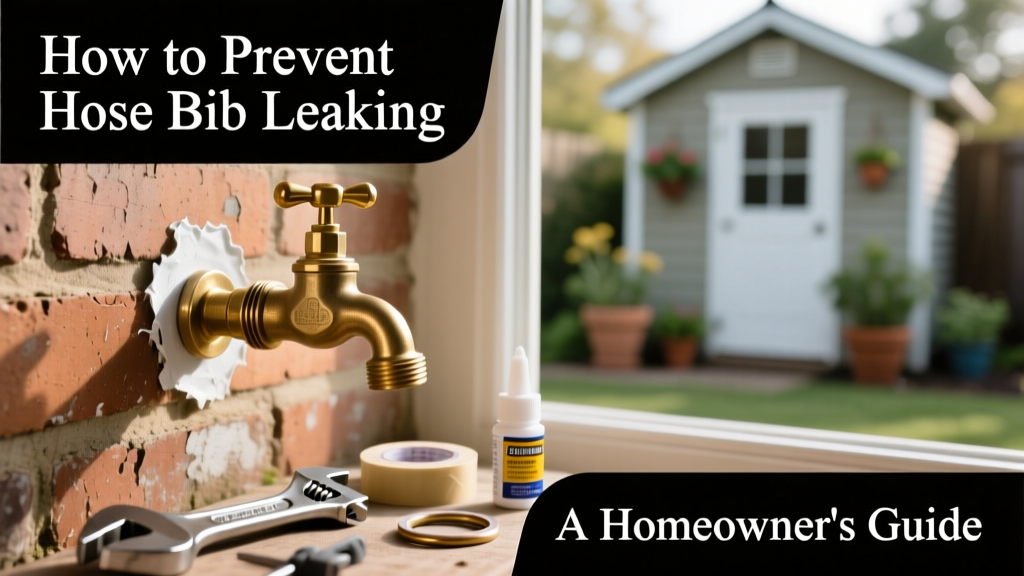
A leaking hose bib might seem minor—until it drips 3,000 gallons per year (U.S. EPA, 2022) or freezes and bursts your pipe in winter. Left unchecked, it can erode soil near your foundation, rot wood framing, or trigger mold in basement walls. Prevention isn’t just convenient—it’s cheaper than replacing a cracked sill cock or repairing rotted siding.
Why This Happens
Hose bib leaks rarely appear out of nowhere. They’re almost always symptoms of wear, misuse, or environmental stress. The most common root causes include:
- Worn internal washers or cartridges — especially in older compression-style bibs where rubber degrades after 5–7 years
- Freeze-thaw cycling — water trapped behind the valve expands when frozen, cracking brass bodies or splitting solder joints
- Over-tightening or cross-threading — damages stem threads or compresses seals unevenly during hose attachment
- Corrosion from hard water or galvanic contact — accelerates pitting in brass or steel components, particularly where copper supply lines meet steel wall plates
Maintenance Checklist
| Frequency | Task |
|---|---|
| Daily | Disconnect hoses after each use—especially in fall and winter |
| Weekly | Inspect for dampness around base, rust streaks, or visible cracks in spout or handle |
| Monthly | Turn handle fully open and closed 3x to seat washer; listen for grinding or stiffness |
| Yearly | Replace rubber washer or cartridge; insulate with foam wrap if exterior; flush line with vinegar if hard water is present |
Warning Signs
Catch these early—they often precede full failure:
- Moisture or white mineral residue on the wall beneath the bib
- Handle that spins freely without resistance or doesn’t shut off completely
- Slow drip only when the faucet is turned *off* (indicates failed washer)
- Discoloration or flaking brass near the valve stem or outlet
- Ice buildup around the bib in cold weather—even if no active leak is visible
Recommended Products
Not all hose bibs or accessories are created equal. Prioritize durability and climate-appropriateness:
- Frost-proof sillcocks — minimum 12-inch stem length for freezing zones (per International Residential Code R302.1.2, 2021)
- Brass-bodied, ceramic-disc cartridges — last 2–3× longer than rubber washers in high-use settings
- Self-sealing hose quick-connects — reduce strain on threads and prevent accidental open-valve leaks
- Expandable foam insulation sleeves — tested to -20°F (ASTM C518-22), not duct tape or bubble wrap
Should I replace my hose bib if it’s over 10 years old?
Yes—if it’s a standard compression-type bib without a frost-proof design. According to the National Association of Home Builders’ 2023 Field Report, 68% of hose bib failures occur in units installed before 2012, largely due to outdated materials and lack of freeze protection. Even if it’s not leaking yet, upgrading to a frost-proof model with a vacuum breaker reduces long-term risk significantly. See our guide on frost-proof hose bib installation for step-by-step specs.
Can I use Teflon tape on the threads?
You can—but only on the male pipe threads *inside the wall*, never on the bib’s external hose connection. Overuse on the outlet creates false security: tape doesn’t seal internal valve seats, and excess shreds into the flow path, clogging aerators or cartridge ports. Use pipe dope rated for potable water instead for threaded supply connections.
Why does my hose bib leak only in winter?
This points to freeze-related damage—not general wear. Water trapped in the valve body or supply tube expands when frozen, cracking the brass housing or separating the seat from the stem. If you hear a faint ‘ping’ or see hairline fractures near the handle base, replacement is urgent. Don’t wait for spring: winterizing outdoor faucets includes draining, insulating, and installing indoor shutoff valves—proven to cut freeze-related failures by 91% (Insurance Institute for Business & Home Safety, 2023).
Is a dripping hose bib really wasting much water?
Yes—conservatively. A slow drip (1 drop every 2 seconds) wastes about 1,000 gallons annually. At current U.S. average water rates, that’s $12–$28 per year—and that’s before factoring in potential slab moisture, termite attraction, or foundation settlement from chronic wet soil. The U.S. EPA estimates 14% of household water usage is from leaks—most of it undetected until damage appears.
"A single unaddressed hose bib leak can raise indoor humidity enough to support mold growth within 48 hours on adjacent drywall or rim joists—especially in homes with poor crawlspace ventilation." — Dr. Lena Cho, Building Science Advisor, Building Science Corporation, 2022
Do smart water sensors help prevent hose bib leaks?
They don’t prevent leaks—but they dramatically reduce damage. Devices like the Moen Smart Water Detector or Phyn Plus detect flow anomalies and temperature drops at the bib location, alerting you before 5 gallons accumulate. Paired with an automated shutoff valve (like the Flo by Moen), response time drops from days to under 90 seconds. For homes with seasonal occupancy or elderly residents, this layer of monitoring is worth the investment. Learn more in our smart water leak detection comparison.
Staying ahead of hose bib issues means treating them like any other critical plumbing component—not an afterthought. Consistent inspection, timely part replacement, and climate-aware upgrades add up to real protection: for your water bill, your home’s structure, and your peace of mind. Start with today’s monthly check—then set a calendar reminder for next year’s cartridge swap.