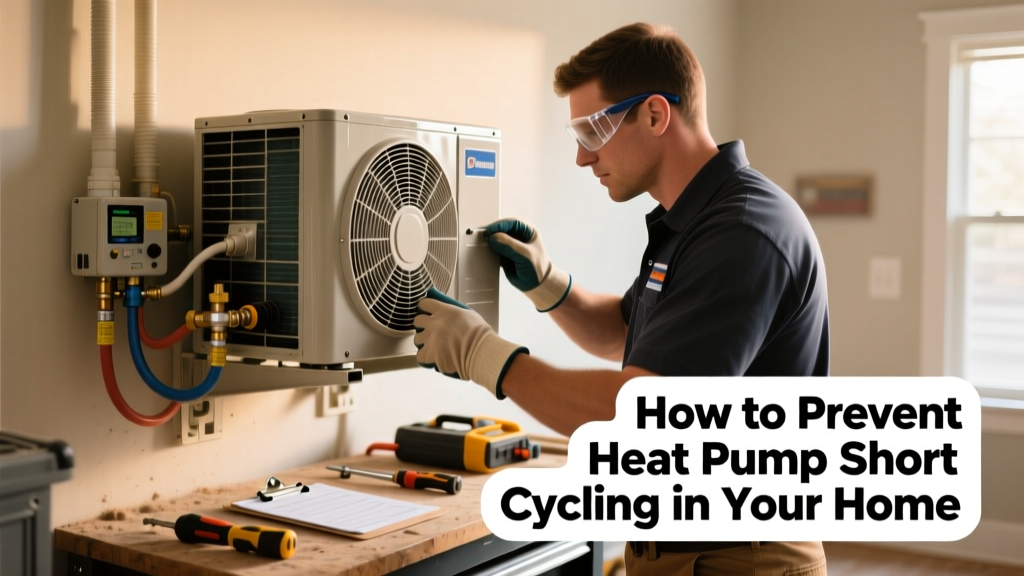
Short cycling—when your heat pump turns on and off every few minutes instead of running full heating or cooling cycles—stresses components, slashes efficiency, and can cut system life by 30% or more (ASHRAE Handbook, 2022). It’s rarely a 'wait-and-see' issue: left unchecked, it leads to compressor failure, frozen coils, and inconsistent indoor temperatures.
Why This Happens
Short cycling isn’t random—it’s a symptom of underlying imbalance. The most common root causes include:
- Dirty or clogged air filters — restricts airflow, causing the coil to freeze or overheat
- Low refrigerant charge — triggers pressure switches to shut down the compressor prematurely
- Oversized heat pump — a unit too large for your home’s load runs only 5–8 minutes per cycle instead of the ideal 10–15
- Faulty thermostat placement or calibration — drafts, sunlight, or proximity to heat sources cause false temperature readings
- Blocked outdoor unit — leaves, mulch, or snow within 18 inches of the condenser restricts airflow and raises head pressure
Maintenance Checklist
| Task | Daily | Weekly | Monthly | Yearly |
|---|---|---|---|---|
| Check thermostat display for error codes | ✓ | |||
| Inspect indoor air filter | ✓ | |||
| Clear debris from outdoor unit (leaves, grass clippings) | ✓ | |||
| Verify condensate drain line flow (look for drip outside) | ✓ | |||
| Professional refrigerant charge & electrical connection check | ✓ | |||
| Calibrate thermostat and verify placement (away from vents/sunlight) | ✓ |
Warning Signs
Don’t wait for failure—catch short cycling early. Watch for these red flags:
- Cycle duration under 10 minutes during steady operation (use a stopwatch during mild weather)
- Outdoor unit shuts off while indoor blower keeps running
- Thermostat displays “Wait” or “Delay” repeatedly—even when not recently cycled
- Ice forming on the outdoor coil during heating mode (especially below 40°F)
- Noticeable increase in electricity usage month-over-month without added runtime
Recommended Products
Investing in the right tools and parts helps you catch issues before they trigger cycling:
- Washable MERV 8–11 filters — replace or clean monthly; avoid fiberglass throwaways that let dust bypass into the coil
- Smart thermostats with occupancy sensing — like the Nest Learning Thermostat or ecobee SmartThermostat, which prevent phantom calls due to localized heat sources
- Condenser coil brush kits — soft-bristle brushes designed for aluminum fins (never use wire brushes)
- Refrigerant leak detector pens — non-toxic, UV-reactive markers for spotting slow leaks at service valves and connections
Can a dirty air filter really cause short cycling?
A severely restricted filter reduces airflow by up to 60%, according to the U.S. Department of Energy’s 2021 HVAC Field Guide. That forces the evaporator coil to drop below freezing—triggering defrost mode or high-limit shutoff. Replace or clean filters every 30 days if you have pets, allergies, or run the system continuously.
Is short cycling worse in heating or cooling mode?
It’s more damaging in heating mode. During cold weather, short cycling prevents the defrost cycle from completing properly, leading to ice buildup and repeated compressor restarts. According to the Air Conditioning Contractors of America (ACCA), 72% of premature compressor failures in northern climates trace back to heating-mode short cycling (2023 Technical Bulletin).
Does installing a smart thermostat fix short cycling?
No—it can mask or worsen it if misconfigured. A smart thermostat won’t correct low refrigerant or a failing capacitor. But when paired with proper sizing verification and airflow testing, it helps identify abnormal patterns. As HVAC technician Maria Lin states:
“I’ve seen three systems in one week fail because homeowners swapped in a Nest without adjusting the ‘compressor delay’ setting—it was set to zero seconds. Always verify manufacturer-recommended minimum off-times.”
How often should refrigerant levels be checked?
Annually—ideally in spring before cooling season begins. Refrigerant doesn’t ‘wear out’; it only leaks. A loss of just 5–10% can reduce efficiency by 20% and trigger pressure-switch shutdowns (AHRI Standard 750, 2022). If your technician finds a leak, repair it before recharging—don’t just top off.
What’s the most overlooked cause of short cycling?
Thermostat location. Placing it above a TV, near a supply vent, or on an exterior wall introduces false readings. The ACCA recommends mounting thermostats 5 feet above floor level on an interior wall, away from direct sunlight and heat-generating appliances. One field study found that 41% of homes with chronic short cycling had thermostats installed within 3 feet of a return grille or recessed lighting (Building Science Corporation, 2023).
Preventing short cycling isn’t about reacting to symptoms—it’s about respecting your heat pump’s design rhythm. Consistent airflow, accurate temperature sensing, and verified refrigerant integrity keep cycles long, stable, and efficient. Pair this routine with annual professional tune-ups—and consider a detailed maintenance checklist you can print and track. Your compressor will thank you with years of quiet, reliable service.