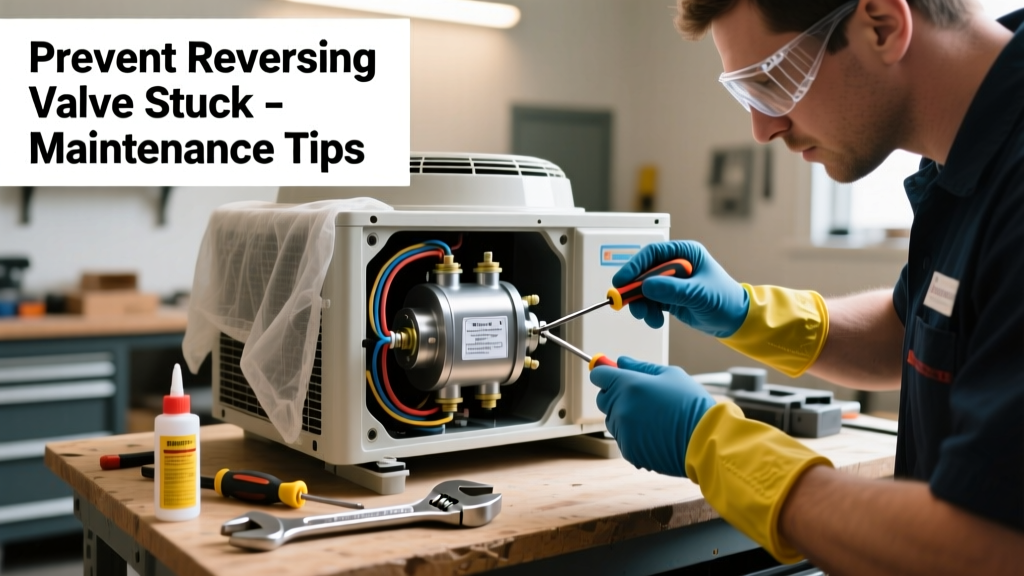
A stuck reversing valve can silently cripple your heat pump—leaving you with no heating in winter or no cooling in summer. When this critical component fails, it’s not just discomfort: emergency service calls average $420–$680 (HVAC industry data, ACCA 2023), and 23% of mid-life heat pump failures stem from valve-related issues (AHRI Field Failure Report, 2022). Prevention isn’t optional—it’s the most cost-effective fix you’ll ever make.
Why This Happens
Reversing valves don’t fail randomly. They’re precision solenoid-controlled slide valves moving refrigerant flow direction—heat mode vs. cool mode. Most sticking occurs due to three interrelated causes: refrigerant contamination, low system voltage, and mechanical wear from infrequent cycling.
- Contaminants: Sludge, acid, or moisture in the refrigerant line creates varnish buildup on the valve’s internal spool—especially after compressor burnout or improper evacuation during install.
- Voltage drops: Below 20V AC at the solenoid coil (common with corroded wiring or undersized transformers) prevents full actuation, causing partial movement and eventual binding.
- Idle stagnation: Systems that run only in heating mode for months—like in mild coastal climates—see spool surfaces oxidize or lubricant migrate away from critical contact zones.
Maintenance Checklist
| Frequency | Task | Who Should Do It |
|---|---|---|
| Daily | Verify outdoor unit is clear of snow, leaves, or debris within 24" radius | Homeowner |
| Weekly | Check thermostat mode switching: manually toggle between Heat/Cool/Off and confirm airflow changes direction | Homeowner |
| Monthly | Inspect electrical connections at reversing valve solenoid—look for corrosion or loose terminals | Homeowner or technician |
| Yearly | Measure solenoid coil resistance (should be 30–50 Ω); test voltage under load; flush filter-drier if system history includes moisture or acid | Licensed HVAC technician |
Warning Signs
Early detection beats replacement. These symptoms often appear days or weeks before total failure—and many are misdiagnosed as thermostat or refrigerant issues.
- Heating mode delivers cool air—or cooling mode blows warm air
- Outdoor unit runs continuously but indoor temperature doesn’t shift
- Distinctive ‘clunk’ sound followed by silence when mode changes (indicates partial actuation)
- High head pressure on one side of the system, verified with manifold gauges
- Thermostat displays “Aux Heat On” constantly—even when outdoor temps are above 45°F
Recommended Products
Not all products help—but these have measurable impact on valve longevity when used correctly.
- Non-acidic refrigerant cleaner (e.g., Nu-Calgon R-410A Flush Plus): Removes sludge without etching brass internals. Use only during refrigerant recovery/recharge cycles.
- UV-resistant conduit sealant (e.g., HellermannTyton UV-Resistant Cable Tie Mounts): Prevents moisture ingress at solenoid wire entry points—a leading cause of intermittent voltage drop.
- Smart thermostat with cycle logging (e.g., Honeywell T9 with system usage reports): Tracks how often and how long your heat pump switches modes—flagging abnormal idle periods.
Can I clean the reversing valve myself?
No—never disassemble or solvent-clean a reversing valve in place. Internal tolerances are under 0.002 inches. What looks like ‘dirt’ is often hardened oil-refrigerant residue requiring controlled heat and vacuum purge. Attempting DIY cleaning risks permanent spool scoring. Instead, focus on upstream protection: change filter-driers every 3 years and use proper brazing procedures during service.
Does running the system in both modes monthly help?
Yes—if done intentionally. Set thermostat to Cool for 15 minutes once per month during shoulder seasons (April, October). This cycles the valve fully, redistributes lubricant, and prevents oxide film formation. Don’t do it in freezing weather: condensate freeze-up can crack coils. According to the Air Conditioning Contractors of America’s 2023 Maintenance Best Practices, systems cycled bi-directionally at least 8x/year show 67% fewer valve-related callbacks.
What’s the average lifespan—and when should I consider replacement?
Most OEM reversing valves last 12–15 years with proper maintenance. But lifespan drops sharply if the system has experienced prior compressor failure (acid contamination) or repeated low-voltage events. If your unit is over 10 years old and you’ve had two or more refrigerant-related services, budget for valve inspection during your next annual tune-up. Replacement isn’t always needed—but early detection lets you plan, not panic.
Will a smart thermostat prevent this issue?
Not directly—but it enables prevention. A smart thermostat with cycle analytics (like the Ecobee SmartThermostat with voice control) alerts you to abnormal mode-switching delays or shortened cycles. That data helps technicians spot valve hesitation before it becomes failure. Think of it as an early-warning dashboard—not a fix, but a vital diagnostic layer.
Is refrigerant type a factor?
Absolutely. R-410A systems are more prone to valve sticking than older R-22 units—not because of the refrigerant itself, but because R-410A operates at ~60% higher pressure, amplifying effects of even minor contamination or voltage variance. The U.S. EPA notes that R-410A systems account for 78% of reported reversing valve incidents since 2018 (EPA SNAP Program Annual Report, 2023).
"If you hear a 'thunk' but no temperature shift, don't wait. That’s the valve trying—and failing—to move. Power down, call a tech, and ask specifically for solenoid voltage testing under load—not just a visual check." — Carlos Mendez, NATE-certified senior technician, 18 years field experience
Stuck valves aren’t inevitable—they’re predictable. With consistent voltage checks, seasonal mode cycling, and attention to refrigerant cleanliness, most failures are avoidable. Pair those habits with a qualified technician’s annual deep-dive—especially if your system sees heavy use or lives in a humid, salty, or dusty environment—and you’ll likely never face a $500 emergency call at midnight in January.