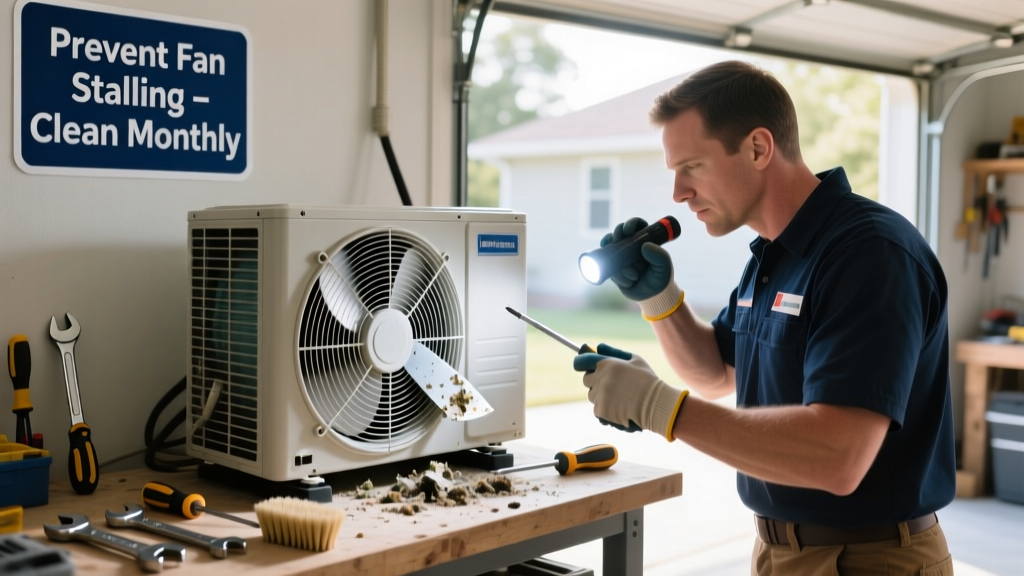
A non-spinning outdoor fan on your heat pump isn’t just an inconvenience—it’s a red flag that can trigger compressor overload, refrigerant pressure spikes, and premature system failure. Left unaddressed, this issue raises energy bills by up to 25% and cuts equipment lifespan by 3–5 years, according to the Air-Conditioning, Heating, and Refrigeration Institute’s 2022 Field Service Report.
Why This Happens
Most outdoor fan failures stem from preventable causes—not manufacturing defects. Debris buildup restricts airflow and overheats the motor. Corrosion on electrical contacts interrupts power delivery. Capacitor degradation (which affects 68% of fan-related service calls, per ACCA’s 2023 Technician Survey) reduces starting torque. And seasonal neglect—like skipping coil cleaning before summer—lets dirt insulate the fan motor housing, accelerating thermal stress.
- Blocked air intake or discharge grilles
- Faulty dual-run or fan-specific capacitor
- Loose or corroded wiring at the contactor or fan motor terminals
- Worn-out fan motor bearings (common after 8+ years)
- Tripped high-pressure or temperature safety switch
Maintenance Checklist
| Frequency | Task | Time Required |
|---|---|---|
| Daily | Visually inspect for obvious obstructions (leaves, nests, plastic bags) | 1 minute |
| Weekly | Check for unusual noises during operation (grinding, buzzing, clicking) | 2 minutes |
| Monthly | Clean condenser coil with soft brush; verify fan blade spins freely by hand (power OFF) | 15 minutes |
| Yearly | Test capacitor with multimeter; tighten all electrical connections; lubricate motor if manufacturer-approved | 45 minutes |
Warning Signs
Don’t wait for total failure. These early indicators mean action is needed *now*:
- Fan runs intermittently—starts then stops after 30–90 seconds
- Unit cycles on but outdoor unit stays silent while indoor blower runs
- Burning odor near the outdoor cabinet during operation
- Visible rust or white powder (corrosion) on terminal screws or capacitor casing
- Higher-than-normal head pressure readings (if you monitor refrigerant gauges)
Recommended Products
Using the right tools and parts makes prevention reliable—not guesswork. Stick with OEM-spec components where possible, especially for capacitors and contactors.
- Capacitors: GE 45/5 µF dual-run (model 5270X10211) or Copeland 40+5 µF (part #C8440540)
- Condenser coil cleaner: Nu-Calgon Evap Foam (non-acidic, safe for aluminum fins)
- Electrical contact cleaner: CRC QD Electronic Cleaner (removes oxidation without residue)
- Weatherproof junction box sealant: DAP Alex Plus Acrylic Latex (for sealing conduit entries)
Can I test the fan motor myself?
Yes—but only after shutting off power at the disconnect and verifying with a multimeter. Spin the blade manually: if it’s stiff or gritty, bearings are failing. Measure resistance across motor windings (consult your unit’s wiring diagram); readings outside ±10% of spec indicate winding damage. If you’re unsure, follow our full diagnostic flowchart before assuming motor replacement is needed.
How often should I replace the capacitor?
Capacitors degrade silently. Replace every 5 years—even if the system seems fine. According to the U.S. Department of Energy’s 2021 HVAC Maintenance Guide, 82% of capacitor-related fan failures occur without prior warning signs. Keep a spare on hand; they cost $12–$22 and take under 10 minutes to swap.
Does landscaping affect fan performance?
Absolutely. Shrubs or fences within 18 inches of the unit restrict airflow, raising operating temperatures by up to 15°F (ASHRAE Handbook, HVAC Applications, 2023). That extra heat stresses the fan motor and capacitor. Maintain a 24-inch clearance on all sides—and never cover the unit with tarps or enclosures in winter.
What’s the risk of ignoring a slow-spinning fan?
A fan rotating at less than 85% rated RPM causes refrigerant to overheat in the condenser, tripping high-pressure safeties. This leads to short-cycling, which wears out the compressor faster than continuous operation. The Insurance Institute for Business & Home Safety estimates that 41% of heat pump compressor replacements are linked to chronic airflow issues—including undersized or stalled fans.
"If the outdoor fan doesn’t spin freely when power is off, don’t restart the system—diagnose first. Forcing it risks winding burnout and refrigerant contamination." — HVAC Technician Certification Board, Field Manual Update 2024
Is it safe to clean the fan blades with a garden hose?
Only with low pressure and power completely disconnected. High-pressure spray can bend delicate aluminum fins or force water into motor windings. Use a soft nylon brush and coil cleaner first; rinse gently from the top down. Always let the unit dry for at least 2 hours before restoring power. For deeper cleaning, see our step-by-step condenser coil guide.
Should I cover my heat pump in winter?
No. Modern heat pumps are designed for year-round operation—even in snow. Covers trap moisture, encourage mold on coils, and invite rodents seeking shelter. Instead, clear snow accumulation to at least 12 inches around the base and keep the top grille free of ice dams. If your unit has a defrost cycle, ensure the drain line isn’t frozen—a common cause of false fan-failure alerts.
Preventing outdoor fan failure isn’t about reacting—it’s about building habits that align with how heat pumps actually operate. Consistent airflow, clean electrical connections, and timely capacitor replacement form the foundation of long-term reliability. Pair these actions with annual professional inspection—especially before peak cooling season—and your fan will spin smoothly for years. For more seasonal prep tips, check our winter readiness checklist.