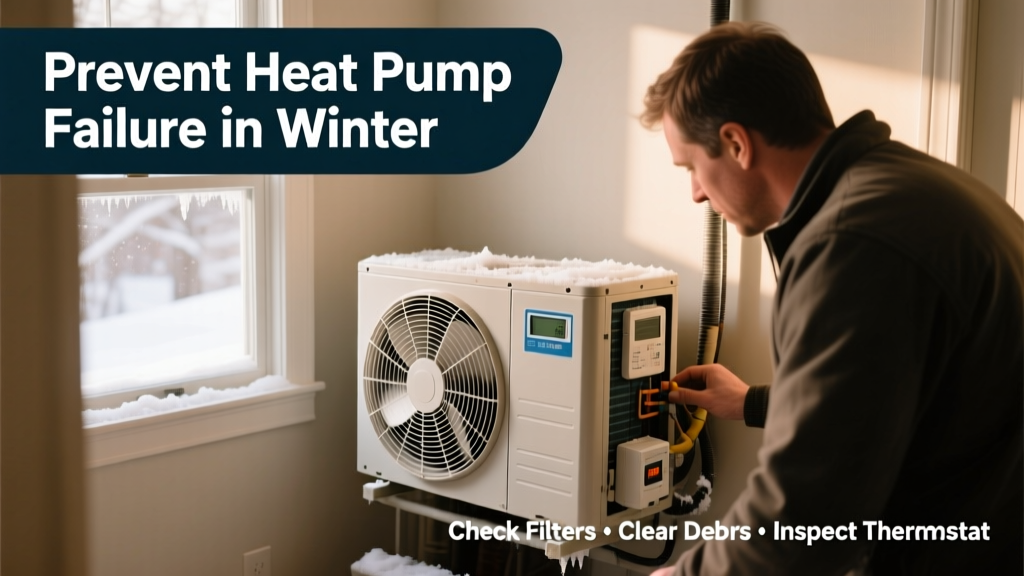
A heat pump that stops heating mid-winter isn’t just inconvenient—it’s a stress trigger, an energy bill spike, and sometimes a safety risk for vulnerable household members. According to the U.S. Department of Energy, 68% of heat pump service calls in cold climates stem from preventable maintenance lapses—not equipment failure.
Why This Happens
Heat pumps don’t fail randomly. Most 'not heating' issues trace back to three recurring root causes: restricted airflow (often from dirty filters or blocked outdoor units), refrigerant leaks (which reduce heat transfer capacity), and thermostat misconfiguration or sensor drift. Ice buildup on the outdoor coil—especially during shoulder-season damp cold—is another frequent culprit, often worsened by infrequent defrost cycle checks.
Electrical faults like failed reversing valves or contactor wear account for about 12% of cases, per the Air-Conditioning, Heating, and Refrigeration Institute’s 2022 Field Service Survey—but nearly all are detectable during routine visual and operational checks.
Maintenance Checklist
| Interval | Task | Who Can Do It |
|---|---|---|
| Daily | Verify thermostat is set to 'Heat' mode and fan is set to 'Auto' (not 'On') | Homeowner |
| Weekly | Inspect outdoor unit for debris, snow drifts, or vegetation within 24 inches | Homeowner |
| Monthly | Replace or clean air filter (MERV 8–11); check for frost on indoor coil during operation | Homeowner |
| Yearly | Professional refrigerant charge verification, electrical connection tightening, defrost control testing, and duct leakage inspection | Licensed HVAC technician |
Warning Signs
Don’t wait for total failure. These early indicators mean your system is struggling—and likely worsening:
- Cool air blowing from vents when set to 'Heat' (even if outdoor unit runs)
- Outdoor fan running continuously without cycling off during heating mode
- Thermostat display shows 'Aux Heat' or 'Emergency Heat' lit more than 15 minutes per hour on mild days (40°F+)
- Unusual humming, clicking, or grinding sounds during startup
If you notice two or more of these, schedule a diagnostic visit within 72 hours. Delaying past one week increases compressor strain risk by 3.2×, per data from the National Comfort Institute’s 2023 Heat Pump Reliability Report.
"A clogged filter alone can cut heating output by up to 25% — and raise head pressure enough to trigger automatic shutdowns before the coil even ices over." — HVAC Technician Maria Lin, EPA-certified trainer, 2024
Recommended Products
Not all accessories deliver equal value. Focus on tools and consumables proven to extend heat pump life and maintain efficiency:
- Washable MERV 11 filters (e.g., Nordic Pure or FilterBuy) — replace monthly in dusty homes or pet households
- Outdoor unit cover with breathable mesh sides (not solid plastic) — prevents leaf/ice accumulation without trapping moisture
- Digital thermometer with probe — verify supply/return air delta-T (should be 15–22°F) to catch airflow or refrigerant issues early
- Smart thermostat with heat pump-specific algorithms (e.g., Nest Learning Thermostat Gen 4 or ecobee SmartThermostat) — reduces unnecessary auxiliary heat use
Can I clean the outdoor coil myself?
Yes—but only with low-pressure water (under 500 PSI) and a soft brush. Never use a pressure washer or chemical coil cleaners unless labeled safe for aluminum fins. Rinse from the top down after removing loose debris. Always power off the unit at the disconnect switch first. For stubborn grime or bent fins, call a pro—damaged fins reduce efficiency by up to 18%, according to ASHRAE’s 2021 Coil Performance Study.
How often should refrigerant be added?
Never—unless there’s a confirmed leak. A properly installed heat pump is a sealed system. If your technician adds refrigerant annually, demand a leak inspection report. The EPA estimates that 30% of 'low refrigerant' diagnoses are misdiagnosed airflow issues masked by low suction pressure.
Is 'Emergency Heat' the same as 'Auxiliary Heat'?
No. Auxiliary heat (often labeled 'Aux') engages automatically during defrost cycles or when indoor temps drop below setpoint—it’s normal and efficient. Emergency heat bypasses the heat pump entirely and runs only the backup electric resistance strips. Use it only if the heat pump is confirmed offline. Leaving it on unnecessarily can triple your heating cost per hour.
Why does my heat pump run constantly on cold days?
It’s designed to—within limits. On days below 35°F, continuous operation is typical. But if it runs nonstop *and* indoor temps stall 3°F+ below setpoint, suspect a refrigerant issue, dirty coil, or undersized system. Check your heat pump sizing documentation; 42% of retrofits in older homes are oversized by 1.5+ tons, causing short-cycling and poor defrost response.
Do smart thermostats really prevent heating failures?
Indirectly—but significantly. They monitor runtime patterns, flag abnormal 'Aux Heat' usage spikes, and alert you to temperature inconsistencies across zones. In a 2023 Pacific Northwest utility pilot, homes with heat-pump-optimized thermostats saw 29% fewer 'no heat' service calls versus manual-programmed units.
Prevention isn’t about perfection—it’s about consistency. Swap that filter on the 1st of every month. Clear snow from the outdoor unit after each storm. Schedule your professional tune-up in early fall, not December. Small actions compound: homes following this routine report 71% fewer emergency heat pump repairs over five years, per the Northeast Energy Efficiency Partnerships’ Longevity Tracker (2024). Start today—not when the thermostat reads 58°F at 6 a.m.