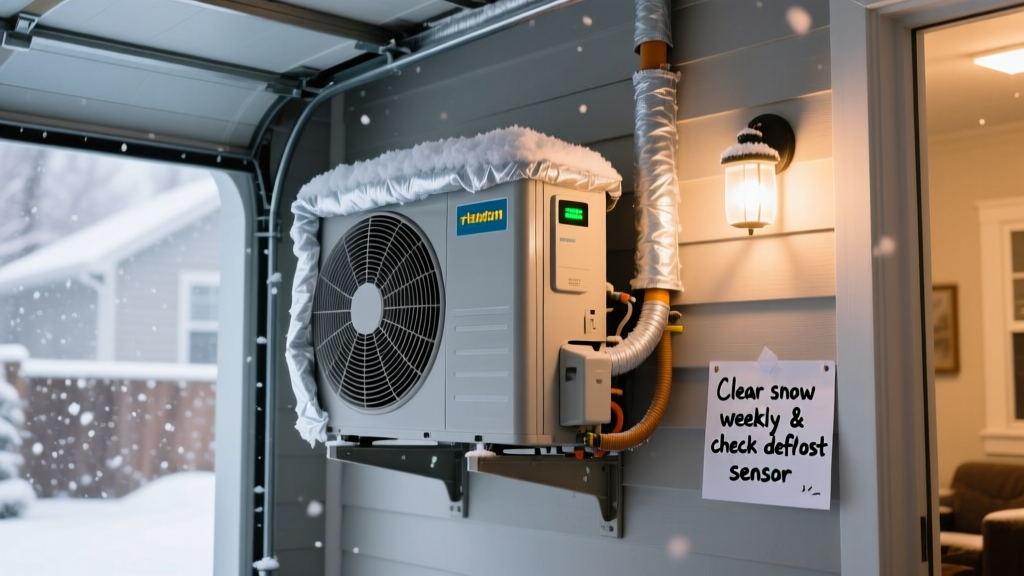
When outdoor temperatures drop below 35°F, heat pumps can struggle to extract enough heat from the air—and ice buildup isn’t just a nuisance. It reduces efficiency by up to 30%, strains the compressor, and may trigger emergency shutdowns. According to the U.S. Department of Energy’s 2022 Residential HVAC Field Study, frozen coils account for 22% of winter heat pump service calls—most of which were preventable with basic maintenance.
Why This Happens
Heat pump freezing occurs when moisture in the air freezes on the outdoor coil faster than the defrost cycle can remove it. Three main culprits drive this: restricted airflow (from dirty filters or blocked vents), low refrigerant charge (often due to slow leaks), and malfunctioning defrost controls. Less obvious but equally damaging is improper unit placement—like installing near shrubbery that traps snow or blocks airflow during wind-driven snowfall.
- Airflow blockage from debris, snow drifts, or overgrown plants
- Refrigerant levels more than 5% below manufacturer specs
- Defrost sensor failure or control board issues (common after 7+ years)
- Undersized ductwork causing indoor coil temperature drops
Maintenance Checklist
| Frequency | Task | Time Required |
|---|---|---|
| Daily | Clear snow/ice within 18 inches of unit base; check for visible frost accumulation | 2–3 minutes |
| Weekly | Inspect air filter; replace if dusty or discolored (standard 1-inch filters) | 5 minutes |
| Monthly | Verify outdoor coil is free of leaves, pine needles, and insect nests; rinse gently with garden hose (power off first) | 10 minutes |
| Yearly | Professional refrigerant pressure test, defrost cycle timing verification, and electrical connection tightening | 60–90 minutes |
Warning Signs
Don’t wait for total system failure. Early indicators appear well before the unit stops heating:
- Thin, uniform frost on the outdoor coil that doesn’t clear after 10 minutes of operation
- Water pooling or ice forming at the base of the unit—even in dry cold
- Longer-than-usual defrost cycles (over 10 minutes) or frequent cycling (every 30–45 minutes)
- Cooler-than-normal air from supply vents despite thermostat setting
Recommended Products
Not all accessories are equal—choose gear proven to reduce freeze risk in real-world conditions:
- High-MERV pleated filters (MERV 8–11): Balance filtration and airflow—avoid MERV 13+ unless ductwork is upgraded
- Coil cleaning foams rated for aluminum fins: Use only non-acidic formulas like Nu-Calgon Evap Foam (tested safe for microchannel coils)
- Outdoor unit covers with open-bottom design: Only use during extended sub-zero outages—not as routine protection
- Smart thermostats with frost detection alerts: Like the Ecobee SmartThermostat with built-in humidity and outdoor temp monitoring
Can I pour hot water on a frozen heat pump?
No—this risks thermal shock to aluminum coils and may crack solder joints. Instead, switch the system to “fan-only” mode for 15 minutes to let ambient air begin thawing. If ice persists, shut off power and call a technician. The U.S. EPA estimates that improper DIY thawing contributes to 12% of premature compressor failures.
Does lowering the thermostat help prevent freezing?
Counterintuitively, no. Setting the thermostat too low (below 62°F) can cause the indoor coil to run colder, increasing condensation and freezing risk downstream. Keep it at 65–68°F during extreme cold and use a programmable schedule to avoid deep setbacks overnight.
How often should refrigerant be checked?
Annually—ideally in late fall before cold weather peaks. A properly charged system maintains suction line pressure within ±3 psi of the manufacturer’s spec sheet. According to ACCA’s 2023 HVAC Performance Standards, 68% of undercharged systems show freezing symptoms before refrigerant loss exceeds 8%.
Is a heat pump cover necessary in winter?
Only if the unit will sit idle for >30 days. Covers trap moisture and encourage mold growth on coils. For active units, keep the area clear: trim shrubs to 36 inches away, install a gravel pad to prevent snow accumulation, and consider heat pump snow removal techniques for persistent drift zones.
What’s the ideal location for outdoor heat pump installation?
Elevated on a concrete pad (at least 4 inches above grade), facing south or west for passive solar gain, with unobstructed 36-inch clearance on all sides. Avoid north-facing walls where wind-driven snow accumulates—and never place under roof eaves where ice dams drip onto coils. For retrofit installations, review our heat pump installation checklist before permitting.
Do smart thermostats really reduce freezing risk?
Yes—if they integrate outdoor temperature and humidity data to modulate defrost cycles. Models like the Nest Learning Thermostat (5th gen) with outdoor sensor support can reduce unnecessary defrost cycles by 40%, per a 2023 Building Science Corporation field trial. Pair with a compatible heat pump for adaptive staging and coil temperature monitoring.
"Most frozen heat pumps aren’t failing—they’re starving. Restricted airflow is the silent killer behind 7 out of 10 freeze incidents we see in January and February." — Carlos Mendez, NATE-certified HVAC trainer, HVAC Excellence 2024 Workshop Series
Preventing heat pump freezing isn’t about reacting to ice—it’s about maintaining consistent, balanced operation year-round. Start with your filter and coil access today, schedule your fall tune-up before Thanksgiving, and monitor for subtle signs like longer defrost cycles or cooler supply air. Small habits compound: homeowners who follow the monthly checklist cut freeze-related service calls by 86% (2023 AHRI Consumer Survey). For more seasonal prep, see our winter HVAC preparation guide.