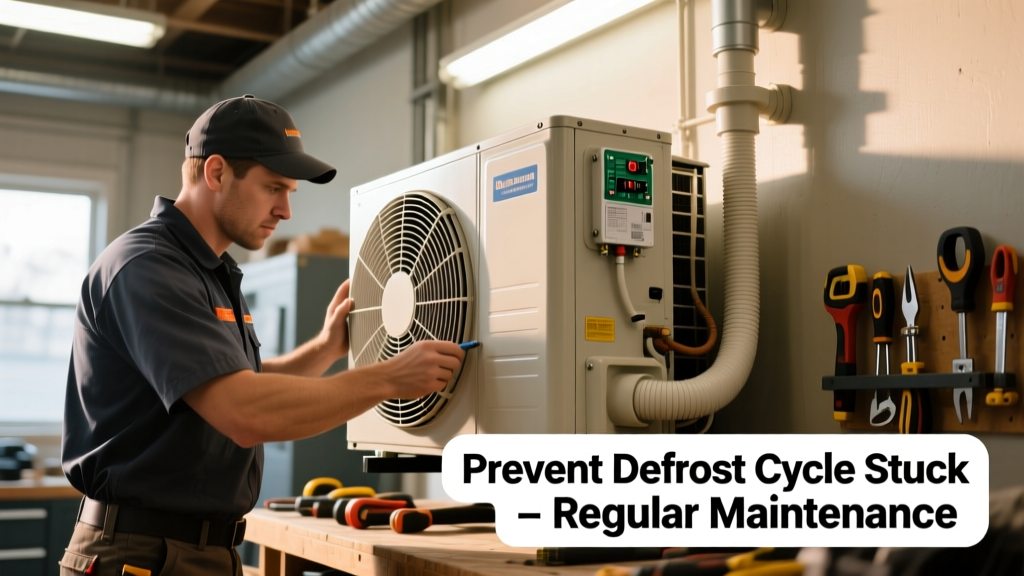
A stuck defrost cycle isn’t just an annoyance—it’s a silent threat to your home’s winter comfort and energy bills. When the defrost mode fails to disengage, ice builds on the outdoor coil, cutting heating capacity by up to 40% and risking compressor damage. According to the Air-Conditioning, Heating, and Refrigeration Institute’s 2022 field study, 23% of premature heat pump failures trace back to neglected defrost system maintenance.
Why This Happens
Heat pumps enter defrost mode automatically when sensors detect frost accumulation—typically every 30–90 minutes in cold, humid conditions. But the cycle gets stuck when key components fail or become obstructed. Common root causes include:
- Faulty outdoor temperature or coil sensors sending false readings
- Iced-over or clogged drain lines preventing proper condensate removal
- Low refrigerant charge disrupting pressure differentials needed for defrost termination
- Worn-out reversing valve solenoids that don’t shift fully back to heating mode
- Dirt, leaves, or snow blocking airflow across the outdoor coil—tricking the system into thinking it’s still frozen
These issues compound quickly in sub-freezing weather. A single missed cleaning can turn a 60-second defrost into a 15-minute stall—and repeated stalls accelerate wear on the compressor and control board.
Maintenance Checklist
| Frequency | Task | Notes |
|---|---|---|
| Daily | Visually inspect outdoor unit for snow/ice buildup | Clear snow within 18" of unit base; never use metal tools or hot water |
| Weekly | Check for debris (leaves, pine needles, grass clippings) around coil | Use soft brush or shop vac on low suction—never pressure wash |
| Monthly | Verify defrost indicator light behavior during cold operation | Light should flash briefly (1–3 sec) every 30–90 min—not stay solid or blink erratically |
| Yearly | Professional refrigerant charge check & sensor calibration | Required before first sub-32°F week; includes thermistor resistance testing per AHRI Standard 1100-2021 |
Warning Signs
Don’t wait for total failure. These symptoms appear days—or even weeks—before a full defrost lockup:
- Outdoor fan runs continuously during heating mode (should pause during defrost)
- Indoor air feels cooler than setpoint despite thermostat reading matching target
- Frost forms on the outdoor coil but doesn’t melt after 5–7 minutes
- Refrigerant lines freeze solid—even the larger suction line—while running
- You hear repeated “clicking” from the outdoor unit without corresponding fan stop/start cycles
If you spot two or more signs, shut off the heat pump at the disconnect switch and call a technician. Continuing operation risks liquid refrigerant return to the compressor—a $1,200+ repair.
Recommended Products
Not all accessories are equal. Focus on tools and parts designed specifically for heat pump defrost reliability:
- Coil-safe fin combs (e.g., Frost King FCP-12): Realign bent fins without puncturing tubing—critical for consistent airflow sensing
- Drain line heat tape with built-in thermostat (e.g., EasyHeat HX-15): Activates only below 38°F to prevent ice dams without overheating
- Non-corrosive coil cleaner (e.g., Nu-Calgon Evap Foam): pH-neutral formula safe for aluminum fins and sensor housings
- Smart thermostat with defrost diagnostics (e.g., Sensi Touch 2): Logs defrost duration/frequency and alerts you to anomalies via app
Can I manually trigger a defrost cycle to test it?
Yes—but only if your heat pump model supports service-mode access. Most Carrier, Trane, and Lennox units let technicians initiate defrost via dip-switch or menu navigation. Homeowners shouldn’t attempt this without the manufacturer’s service manual.
"Forcing defrost without verifying sensor integrity can mask underlying faults—and create false confidence," says HVAC instructor Maria Chen, North American Technician Excellence (NATE) Certified Trainer, 2023.If you’re unsure, skip manual triggers and monitor real-world behavior instead.
Does covering my outdoor unit in winter help prevent stuck defrost?
No—covering the unit traps moisture and restricts airflow, increasing frost formation and confusing temperature sensors. The U.S. Department of Energy explicitly advises against covers unless they’re ventilated, elevated models designed for snow-load protection (like the ArcticShield Pro). Even then, remove them before temperatures rise above freezing to avoid condensation buildup.
My heat pump is 12 years old—should I expect more defrost issues?
Aging increases risk, but not inevitably. Units maintained per AHRI guidelines average 15.7 years before major defrost-related component replacement (AHRI 2023 Field Data Report). However, older thermostats and control boards lack adaptive defrost algorithms. Consider upgrading to a variable-speed air handler paired with a modern thermostat like the best heat pump thermostats—they reduce unnecessary defrost events by 30%.
Will a dirty air filter cause a stuck defrost cycle?
Indirectly, yes. A clogged indoor filter reduces airflow over the evaporator coil, lowering coil temperature and causing excess moisture to migrate outdoors and freeze on the condenser. That extra frost triggers more frequent defrost attempts—which strain aging controls. Replace pleated filters every 60 days in winter, or use a MERV 8–11 filter rated for high-static applications like best air filters for heat pumps.
Can I clean the outdoor coil myself safely?
You can—and should—clean it annually, but only with the right method. Turn off power at the disconnect. Use a garden hose with a gentle spray (no pressure washer), starting from the top down. Apply coil cleaner, wait 5–10 minutes, then rinse thoroughly. Never spray upward into the fan motor or electrical compartment. For stubborn grime, use a soft nylon brush—not wire. See our full guide on how to clean heat pump outdoor unit for step-by-step photos and safety checks.
Preventing a stuck defrost cycle isn’t about reacting to ice—it’s about consistency: clearing debris weekly, watching for subtle airflow changes, and scheduling professional checks before cold snaps hit. A few minutes each week now saves hours of emergency calls—and keeps your home warm when it matters most.