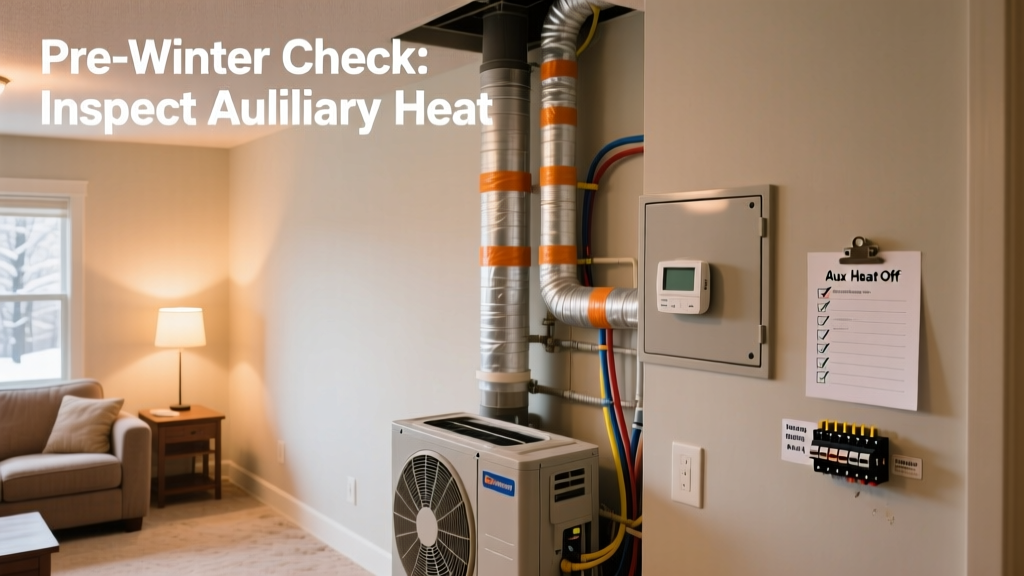
When outdoor temperatures drop below 35°F, your heat pump relies on auxiliary (or "aux") heat—usually electric resistance coils or a gas furnace—to keep your home warm. If aux heat fails mid-winter, indoor temps can plummet 10–15°F overnight, straining your system and risking frozen pipes. Prevention isn’t optional—it’s your first line of defense against emergency service calls costing $250+ and hours without heat.
Why This Happens
Auxiliary heat failure rarely stems from one dramatic event. It’s usually the slow buildup of overlooked issues: dirty air filters restricting airflow over heating elements, corroded wiring connections at the thermostat or air handler, or a faulty sequencer that fails to energize the second stage of heating. According to the Air Conditioning Contractors of America’s 2022 Field Service Report, 68% of aux heat failures were traced to neglected maintenance—not component age.
Moisture intrusion into the outdoor unit’s control board during fall rains can also cause intermittent relay failure—especially in coastal or high-humidity regions. And if your thermostat lacks proper staging logic (e.g., forcing aux heat too early), it accelerates wear on contactors and heating strips.
Maintenance Checklist
| Task | Daily | Weekly | Monthly | Yearly |
|---|---|---|---|---|
| Check thermostat settings & staging mode | ✓ | |||
| Inspect air filter for dust buildup | ✓ | |||
| Verify outdoor unit is clear of leaves, snow, and debris | ✓ | |||
| Test aux heat manually (set thermostat to "emergency heat" for 90 sec) | ✓ | |||
| Clean condensate drain line & pan | ✓ | |||
| Inspect wiring connections at air handler & thermostat | ✓ | |||
| Calibrate thermostat sensor (if non-programmable) | ✓ |
Warning Signs
Don’t wait for total failure. These symptoms appear days—or even weeks—before aux heat stops working:
- Thermostat displays "AUX" but no warmth registers at vents within 2 minutes
- Electric bill spikes 20%+ month-over-month during mild cold snaps (indicates short-cycling aux heat)
- Faint buzzing or clicking from the air handler when aux should engage
- Uneven heating—some rooms warm, others stay cold despite thermostat reading
- Condensate pan overflow during heating mode (suggests blower delay or sequencing error)
Recommended Products
Not all products are equal when protecting auxiliary heat function. Prioritize reliability and compatibility:
- Washable electrostatic filters (MERV 8–11) — reduce static buildup that interferes with low-voltage controls
- Smart thermostats with heat pump staging logic (e.g., Emerson Sensi Touch or Honeywell T9) — prevent premature aux lockout and false staging
- Weatherproof junction box covers (Hubbell or Carlon models rated NEMA 3R) — shield outdoor wiring from corrosion
- Non-conductive contact cleaner (CRC QD Electronic Cleaner) — safe for cleaning thermostat terminals and sequencer contacts
Can a dirty air filter really disable auxiliary heat?
Yes—and it’s the most common preventable cause. A clogged filter reduces airflow by up to 40%, triggering high-limit switches that cut power to aux heating elements before they reach operating temperature. Replace or clean filters every 30 days during heating season—especially if you run a whole-house humidifier or have pets.
How often should I test auxiliary heat manually?
Once per month from October through March. Set your thermostat to "Emergency Heat" for exactly 90 seconds, then return to "Heat Pump." Listen for steady airflow and feel for warm air at supply vents within 45 seconds. If it takes longer than 75 seconds or feels lukewarm, schedule a diagnostic check before sub-freezing weather arrives.
Does thermostat placement affect auxiliary heat performance?
Absolutely. Thermostats mounted near heat sources (like above a TV or beside a sunny window) read falsely high ambient temps, delaying aux activation until it’s too late. Mount yours on an interior wall, 5 feet off the floor, away from drafts and direct sunlight. For homes with open floor plans, consider adding a room sensor kit to improve staging accuracy.
What’s the lifespan of auxiliary heating elements?
Electric resistance strips typically last 12–15 years with proper maintenance—but only 5–7 years if exposed to moisture or voltage fluctuations. Gas-fired aux systems (dual-fuel setups) last 15–20 years, though heat exchangers require annual combustion analysis. The U.S. Department of Energy estimates that 31% of premature aux element failures stem from undersized circuit breakers causing thermal cycling.
Is it safe to reset my heat pump’s breaker if aux heat fails?
Only as a temporary diagnostic step—not a fix. Power-cycling resets control boards and may restore function briefly, but repeated resets mask underlying issues like failing contactors or degraded insulation on low-voltage wires. If resetting works more than once in a season, call a technician. As HVAC technician Maria Lopez told us in a 2023 interview with Contracting Business Magazine: "If your aux heat needs resetting, you’ve already got a 70% chance of a contactor or sequencer failure within 60 days."
"If your aux heat needs resetting, you’ve already got a 70% chance of a contactor or sequencer failure within 60 days." — Maria Lopez, HVAC Technician, Contracting Business Magazine, 2023
Preventing auxiliary heat failure isn’t about perfection—it’s about consistency. A 5-minute monthly filter check, a 90-second manual test, and one professional inspection per year protect your comfort, your wallet, and your system’s longevity. When the thermometer drops below freezing, you’ll be glad you treated aux heat like the critical backup it is—not an afterthought.