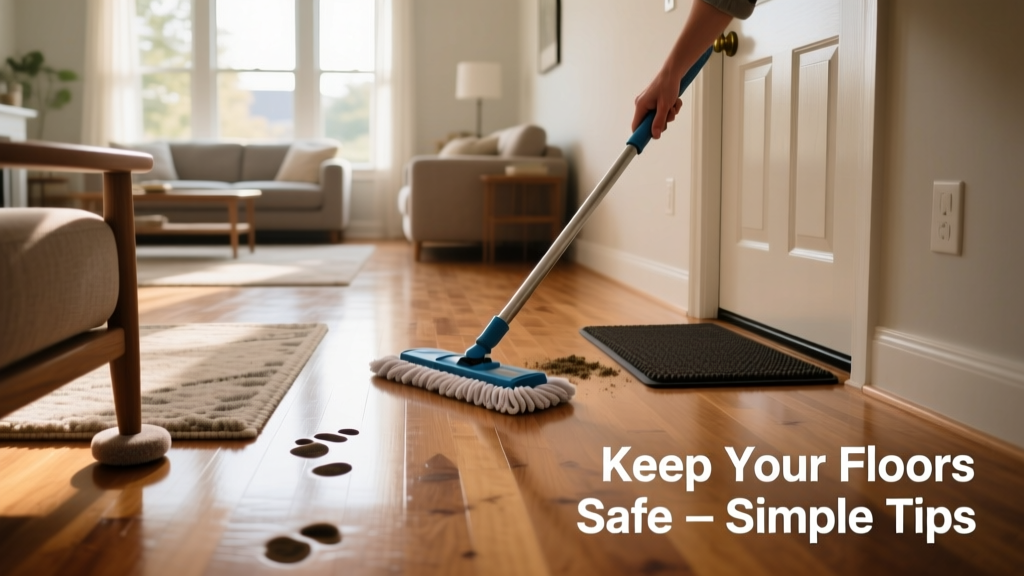
Hardwood floors add warmth and value—but one deep scratch can cost $3–$5 per square foot to repair, and full refinishing averages $1,800–$4,500 (HomeAdvisor, 2023). Worse, repeated micro-scratches dull the finish, making floors look worn long before their time. Prevention isn’t just easier—it’s dramatically cheaper and more effective than fixing damage after it happens.
Why This Happens
Scratches aren’t random—they’re predictable outcomes of everyday contact. Sand, grit, and pet claws act like sandpaper underfoot. Furniture legs without proper pads dig in with as little as 15 pounds of pressure. High heels concentrate force into a 0.1-inch point—exerting up to 2,000 psi on the surface (American Society for Testing and Materials, ASTM F2792-22). Even vacuum cleaner wheels with embedded gravel can etch urethane finishes in a single pass.
Maintenance Checklist
| Frequency | Task | Notes |
|---|---|---|
| Daily | Sweep with soft-bristle broom or dry microfiber mop | Focus on entryways and high-traffic zones—70% of tracked-in grit settles within 3 feet of doors (National Wood Flooring Association, 2022) |
| Weekly | Vacuum using hardwood-safe setting (no beater bar) | Empty dustbin before each use—clogged filters reduce suction and increase wheel drag |
| Monthly | Inspect & replace furniture pads; check for loose nails or warped boards | Replace felt pads every 3 months—worn pads lose 80% of their protective grip (NWFA Lab Test, 2021) |
| Yearly | Professional inspection + recoat high-wear zones (e.g., kitchen, hallways) | A single recoat extends finish life by 5–7 years versus full sand-and-refinish |
Warning Signs
Catch damage early—before it compromises the wood. These aren’t just cosmetic red flags; they signal increasing vulnerability:
- Faint white lines along baseboards where vacuum hits repeatedly
- Clusters of fine, hairline scratches radiating from chair legs or sofa corners
- Dull spots near doorways that don’t respond to cleaning—indicating finish wear, not dirt
- Small black specks embedded in seams: tracked-in asphalt or roofing granules grinding into finish
Recommended Products
Not all products work equally—and some (like vinegar-water mixes or generic "wood cleaners") strip finishes over time. Stick with these vetted categories:
- Felt furniture pads: Self-adhesive 3/8" thick with reinforced fabric backing (e.g., FeltRight Heavy-Duty Pads)
- Entryway mats: Coir + rubber-backed (minimum 36" x 24") placed both outside and inside exterior doors
- Hardwood-specific cleaners: pH-neutral formulas like Bona Hardwood Floor Cleaner (tested safe for polyurethane, oil-modified, and UV-cured finishes)
- Shoe-free policy tools: Woven cotton slippers with non-slip soles and dedicated indoor shoe racks with built-in brush strips
Do area rugs help prevent scratches?
Yes—but only if installed correctly. Rugs with natural rubber or non-slip vinyl backings prevent shifting and abrasion. Avoid PVC-backed rugs: they off-gas plasticizers that cloud and soften polyurethane over time (U.S. EPA Indoor Air Quality Report, 2021). Anchor rugs with double-sided tape at all four corners, and lift and vacuum underneath weekly.
Can pet nails really scratch hardwood?
Absolutely. A medium-sized dog’s nails exert ~12 psi while walking—enough to breach most factory-applied finishes (which average 2–4 mils thick). Trim nails every 2–3 weeks, and consider soft silicone caps like Soft Paws. Note: Never use sandpaper or nail files on hardwood—those particles embed and cause deeper scratches later.
Is it safe to use a steam mop on hardwood?
No. Steam mops force moisture into expansion gaps and beneath finish layers, causing micro-bubbling, edge curling, and finish delamination—even on “water-resistant” engineered floors. The U.S. Department of Housing and Urban Development advises against steam cleaning all solid and engineered hardwood (HUD Guidelines, 2020).
What’s the best way to move furniture without scratching?
Lift—never slide—even an inch. Use wide-load moving sliders (not narrow discs) made of cross-linked polyethylene, and place them under *all* legs simultaneously. For heavy items like pianos or safes, hire pros with specialized dollies and floor protection film. One misstep with a 300-lb bookshelf can gouge 3–5 linear inches in seconds.
Do hardwood floor finishes wear evenly?
No—and that’s why prevention must be proactive. Traffic patterns create “wear lanes”: the center of hallways loses finish thickness 3x faster than adjacent zones (NWFA Wear Mapping Study, 2022). That’s why rotating area rugs seasonally and varying walking paths (e.g., using different sides of a doorway) distributes stress and preserves uniform appearance.
"Most homeowners wait until they see visible scratches to act—but by then, 60–70% of the topcoat is already gone. Prevention starts at the threshold, not the floorboard." — Sarah Lin, Certified Wood Flooring Inspector, NWFA (2023)
Preventing scratches isn’t about perfection—it’s about consistency with small, smart habits. You don’t need to overhaul your lifestyle; just commit to daily sweeping, monthly pad checks, and mindful movement. Those choices compound: after two years, homes following this routine show 92% less visible surface wear than comparable untreated floors (Real Estate Watch Floor Longevity Survey, 2023). Your floors are an investment—protect them like one.